$45B deficit looms over Iraq’s draft 2027 budget


Shafaq News
Iraq is preparing its 2027 budget against an uncertain oil market, a potential deficit of more than 60 trillion Iraqi dinars ($45.8B) and a growing list of spending commitments, with the draft still awaiting cabinet approval.
Much of the budget's final shape remains unsettled. Revenue estimates, the overall spending ceiling, the balance between operating and investment expenditure, the size of the deficit, and assumptions for oil prices and export volumes are still being worked out, Financial and Economic Adviser to Prime Minister Mudher Mohammed Saleh told Shafaq News.
"The full picture of Iraq's 2027 budget has not yet emerged until the Council of Ministers finishes discussing and approving the draft federal budget law and refers it to parliament," Saleh said.
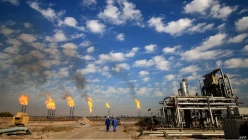
That uncertainty carries particular weight in Iraq, where oil remains the government's main source of revenue. A shortfall in either prices or export volumes could quickly widen the gap between revenues and spending, putting additional pressure on deficit financing and investment plans.
Yet oil is only one part of the challenge facing the budget.
"The preliminary indicators suggest that the 2027 budget was designed, to a large extent, on assumptions closer to those of peacetime economies," Saleh said, pointing to benchmarks based on a financial year that predates the war and the Strait of Hormuz crisis that began on Feb. 28.
That leaves Iraq facing a broader question: whether a budget built around relatively stable conditions can absorb the economic disruption that followed, from trade and transport to energy, imports and supply chains.
For Saleh, the answer does not lie simply in increasing expenditure. Peacetime assumptions may help preserve fiscal stability, but the budget also needs enough financial room to absorb unexpected shocks. Public money, he argued, should be directed toward areas with the strongest economic and development impact rather than used broadly to offset the effects of the crisis.
Oil, however, remains the first major test of that approach. An overly optimistic forecast for crude prices or export volumes could leave the government with a larger-than-expected deficit. A forecast that is too cautious, by contrast, could squeeze funding for essential services and investment. Saleh therefore favors realistic, conservative oil assumptions, supported by alternative scenarios covering lower prices, reduced exports and unexpected spending.
Economist Nabil al-Marsoumi sees the same uncertainty over oil as one of five major obstacles facing the 2027 budget. In a social media post, he pointed to the difficulty of forecasting both prices and export volumes while the regional situation remains unsettled, particularly with the Strait of Hormuz closed and no clear indication of how long the disruption will last.
"The other immediate problem is how to finance the gap," he said, warning that the deficit could exceed 60 trillion dinars ($45.8B) at a time when domestic debt has risen sharply and the scope for securing substantial external borrowing remains limited.
"That would leave the government having to weigh new borrowing against a range of competing demands already built into the budget," he added.
Read more: Delayed 2026 budget pushes Iraq toward 2027 plan
Where Spending Goes
The pressure on the budget is not confined to how much money comes in. What happens to that money once it reaches the spending side will be just as important.
For Saleh, the key question is therefore not simply how large the investment budget will be, but what Iraq gets in return.
Energy, transport, water, infrastructure and public services are among the areas he sees as needing priority, alongside projects that can help the private sector expand and broaden the country's productive base.
At the same time, the government cannot set aside the cost of running the state. A continued rise in operating expenditure would leave less room for investment, while poorly targeted cuts could affect basic services.
"The real challenge facing the 2027 budget is not the size of the figures alone, but its ability to withstand changing conditions," Saleh said.
Some of those pressures are already built into the budget. Al-Marsoumi put the Kurdistan Region's share of the federal budget at 14.1%, or 29 trillion dinars ($22.1B), based on the latest population census.
The public payroll adds another layer. The budget must account for new appointments, the permanent employment of contract and daily-paid workers, as well as financial obligations owed to employees for more than a year, he said.
Al-Marsoumi also expects allocations to the Oil Ministry to rise significantly following the introduction of a new economic model for pricing oil allocated for domestic consumption.
Taken together, those commitments leave limited room for error. The government must finance salaries and services, meet existing obligations, support investment and cover any deficit while remaining heavily dependent on volatile oil revenues.
Read more: 2026 budget: Iraq confronts unprecedented fiscal strain
Governing On Interims
The 2027 budget is being prepared against another complication: Iraq has spent the past two years without a fully approved annual federal budget with valid spending schedules.
Parliament approved a three-year budget law covering 2023, 2024 and 2025, but the spending schedules for 2025 were not approved before the financial year ended. The Finance Ministry then relied on a temporary mechanism under the Financial Management Law, allowing spending at one-twelfth of the previous year's allocations to cover salaries and essential expenditures.
That arrangement has carried into 2026 after parliament did not approve a new budget law, amid political complications, regional tensions and fluctuations in energy markets.
The government is now working toward a new annual budget. The Finance Ministry plans to send the 2027 draft to parliament on Oct. 15, according to lawmaker Jamal Kochar, a member of parliament's Finance Committee, who spoke to Shafaq News.
The timetable is set, but the numbers are not. Saleh has stressed that the preliminary features of the budget can still change before the cabinet approves the final draft. Only then will the balance between revenues and spending, the size of the deficit, the oil assumptions and the split between operating and investment expenditure become clearer.
For now, the budget is being built within a narrow margin: enough discipline to contain the deficit, enough spending to keep the state functioning and investing, and enough financial space to absorb another economic shock.
Read more: Iraq moves to results-based budgeting in 2027
Written and edited by Shafaq News staff.