Iraq’s next Prime Minister held hostage by US-Iran standoff


Shafaq News
Iraqi parties' prolonged negotiations to form a new government have become increasingly entangled with escalating tensions between the United States and Iran, as political leaders await signals from both sides that could determine the country’s next prime minister.
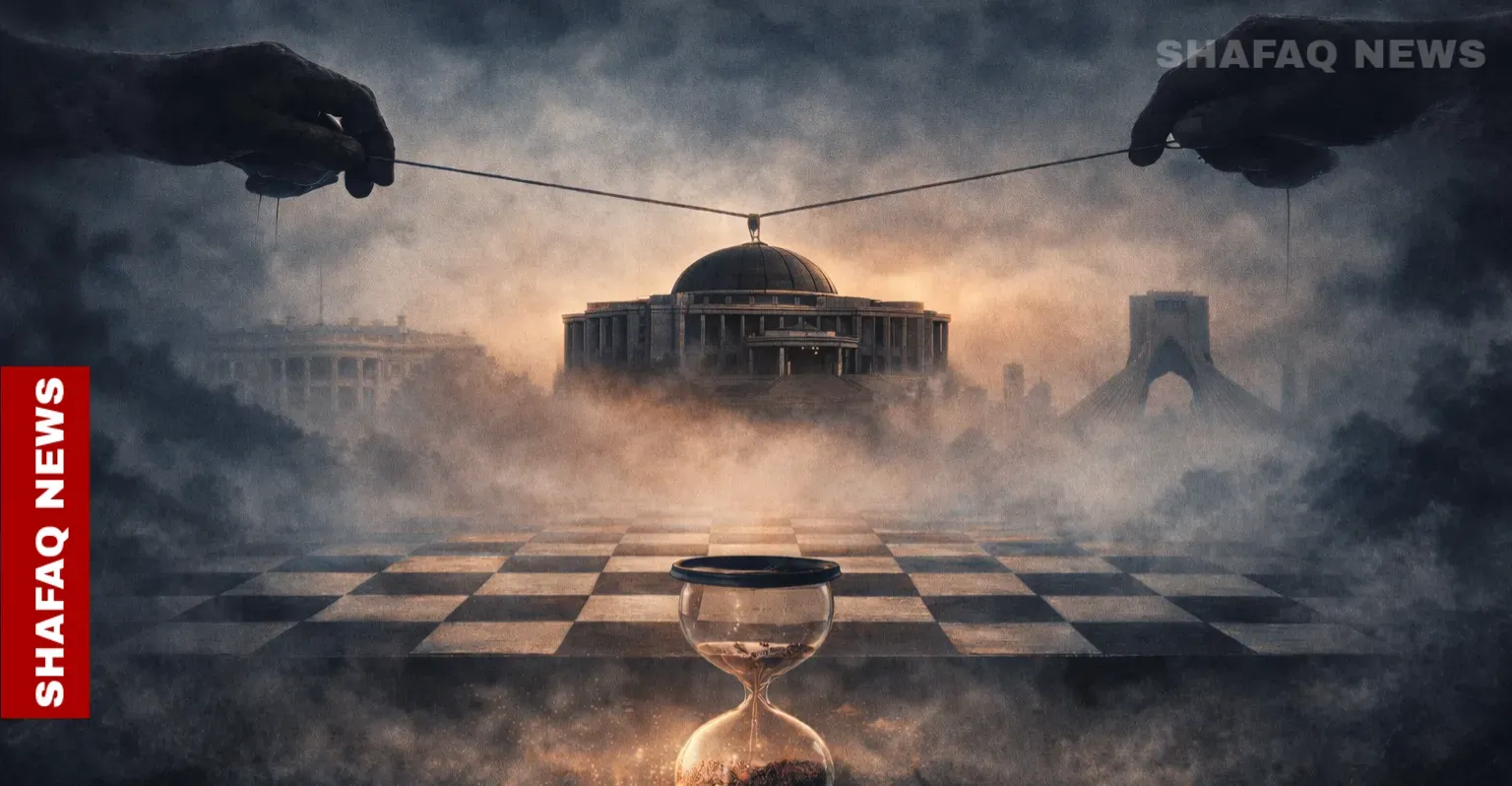
Nearly every day, party leaders shuttle between closed-door meetings, issue brief statements claiming progress, and circulate conflicting leaks about potential candidates. Yet behind the public maneuvering, many politicians privately acknowledge that the decisive arena may lie beyond Baghdad. What appears to be a constitutional process has, in practice, turned into a waiting game shaped by the trajectory of US-Iran relations.
Since 2003, Iraqi government formation has rarely been insulated from foreign influence. What distinguishes the current impasse, according to analysts and political figures who spoke to Shafaq News, is the more visible tilt toward Washington’s leverage and Iran’s diminished capacity to impose consensus within the Shiite political establishment, as it has done in previous cycles.
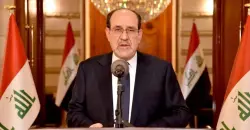
At the center of the dispute stands former Prime Minister Nouri Al-Maliki, leader of the State of Law Coalition. Washington has openly rejected his potential nomination, and Iraqi factions remain divided between supporters and opponents. The debate now appears bound to calculations within the US administration regarding the future shape of authority in Baghdad.
Read more: Iraq slips into constitutional vacuum as presidential deadlock drags on
Al-Maliki’s Dilemma
Australia-based political analyst Ahmed Al-Yasiri said domestic factors remain part of the equation, “but they have become the weakest link.”
Speaking to Shafaq News, he argued that external actors operate through two main channels: the rapidly shifting strategic environment in the region and the evolving US-Iran relationship, which has become a direct pressure tool on Baghdad’s political choices.
“Washington seeks to dismantle what it considers the primary gateway of Tehran’s influence in Iraq: the security power of armed factions,” Al-Yasiri stated, adding that curbing their influence would automatically reduce Iran’s political leverage. This approach, he said, partially surfaced during the tenure of Prime Minister Mohammed Shia Al-Sudani, whose government provided assurances regarding a reduced role for armed groups.
However, other analysts contend that Washington’s objectives extend beyond recalibrating the security landscape to reshaping the broader political order in a way that ends Iran’s position as an indispensable partner in Iraqi decision-making.
Earlier, the US State Department confirmed to Shafaq News that Washington reaffirms its opposition to Al-Maliki’s bid to return as Iraq’s premier, warning that advancing his candidacy could trigger serious diplomatic repercussions. A State Department spokesperson stressed that President Donald Trump’s position remains firm: selecting Al-Maliki would force the US to reassess its relationship with Iraq. He outlined three key priorities guiding the stance: “ending the dominance of Iran-backed militias in Iraqi politics,” reducing Tehran’s hold over state institutions, and building economic partnerships with allies aligned with Washington’s objectives.
Al-Yasiri described US messaging as having come in two phases: prior to Al-Maliki’s name being floated, Washington reportedly emphasized preventing armed factions from participating in government and security institutions. After his nomination entered public discussion, the opposition became explicit, with US officials viewing al-Maliki as closely associated with the rise of factional influence and expanded Iranian sway.
“The timing of the crisis allows Trump to pressure the Coordination Framework,” Al-Yasiri said.
Shrinking Margin for All Sides
Within the Coordination Framework (CF), the largest bloc in Iraq’s parliament, calculations appear pragmatic. If Tehran emerges from its confrontation with Washington with tangible gains, broader options may become viable. If Iran’s position weakens or it absorbs a significant setback, its allies in Baghdad could shift toward a candidate less likely to face international resistance. According to Al-Yasiri, the alliance cannot afford to ignore either Tehran’s trajectory or Washington’s stance.
The uncertainty extends beyond Shiite factions. Among Kurdish political forces, similar assessments circulate. Political analyst Falah Al-Mishaal told Shafaq News that linking delays in government formation to the US-Iran confrontation is not unfounded, “but it becomes dangerous when it turns into a time-management game without calculating its social and financial costs.”
Al-Mishaal described a political scene marked by high ambiguity and intersecting calculations between Shiite and Kurdish actors. While some groups within the CF insist on Al-Maliki’s candidacy, Washington’s rejection remains firm. He also pointed to Iran’s “reduced capacity” to mediate internal Shiite disputes, noting that Tehran is preoccupied with domestic challenges and its dialogue file with the United States.
“In the past, Tehran would intervene to resolve such disputes. Today, its ability to impose a unifying decision among its allies is weaker than ever.”
Read more: Nouri Al-Maliki’s new doctrine for power: Pragmatism over defiance?
According to information circulating between politicians in Baghdad, Al-Mishaal added, Washington may have encouraged Kurdish parties to delay the election of a president until an alternative candidate replaces Al-Maliki. Such allegations, he argued, reflect a deeper reality: Iraq’s sovereign decision-making remains constrained in a crisis that began with the announcement of parliamentary election results and has yet to be resolved.
Broader regional dynamics further complicate the picture. Recent negotiation rounds between Washington and Tehran in Muscat and Geneva have unfolded alongside escalating threats of confrontation. In Baghdad, some political figures anticipate that talks will ultimately produce a settlement, while others interpret mounting military signals as evidence that escalation remains possible.
US Secretary of State Marco Rubio has publicly acknowledged the difficulty of reaching an agreement with Iran, as Iraqi political actors speak of increased US military mobilization near Iranian territory.
Washington’s pressure on Tehran centers on three primary files: the nuclear program, ballistic missiles, and the dismantling of armed regional proxies. Iran, by contrast, maintains that negotiations should focus exclusively on the nuclear issue. Iraqi analysts argue that this divergence does not remain confined to diplomatic channels but directly shapes every political meeting and candidate discussion in Baghdad.
Settlement Out of Reach
From Washington, political analyst Ramadan Al-Badran told Shafaq News that either negotiation or confrontation appears inevitable. He predicted that Iran could ultimately accept stringent conditions to alleviate sanctions and economic pressure, while a Trump administration would not hesitate to open limited engagement if its strategic demands are met.
Iraq, however, may face the most delicate position. “There is a US demand for further reforms and no desire in Washington to maintain a partisan formula that combines political authority with armed wings and a history of regional tensions,” Al-Badran stated, explaining that regional affairs, including Syria, have become highly sensitive within US strategic calculations, raising the possibility that Iraq could become a friction point if an agreement with Iran materializes while Baghdad remains politically fragmented.
Meanwhile, official calls to adhere to constitutional timelines appear to carry diminishing weight. Supreme Judicial Council President Faiq Zidan has urged political actors to respect legal deadlines, yet Al-Mishaal argued that such appeals have lost impact after previous breaches.
As meetings multiply and candidate lists shift, Baghdad appears to be waiting more than deciding. Constitutional deadlines continue to erode under the pressure of a broader contest whose outcome remains unresolved between Washington and Tehran.
Read more: Iran–US nuclear talks 2026: Diplomatic breakthrough or imminent military confrontation?
Written and edited by Shafaq News staff.