Iraq's armed factions sit at the center of a Middle East war, experts say


Shafaq News
On Sept. 30, the US-led Global Coalition's military mission in Iraq is scheduled to end, marking a transition toward a bilateral security relationship between Baghdad and Washington. Six analysts interviewed by Shafaq News say the country it leaves behind is the most exposed battleground in a regional war that no longer runs along a single front.
The experts broadly agree that the Middle East has entered a phase of multi-front escalation. They see the main danger not in one decisive confrontation but in the way violence now moves between Iraq, Syria, Lebanon, Yemen, the Gulf and the Red Sea. A strike in one place can trigger a response in another, often through armed groups that no government fully controls.
Since war broke out between the United States and Iran on February 28, shipping through the Strait of Hormuz has fallen sharply. Traffic through Bab el-Mandeb, the narrow passage between Yemen and the Horn of Africa, has also suffered under attacks by Yemen's Houthi movement.
Read more: Houthi advance raises stakes from Bab al-Mandeb to Iraq
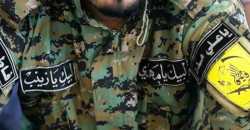
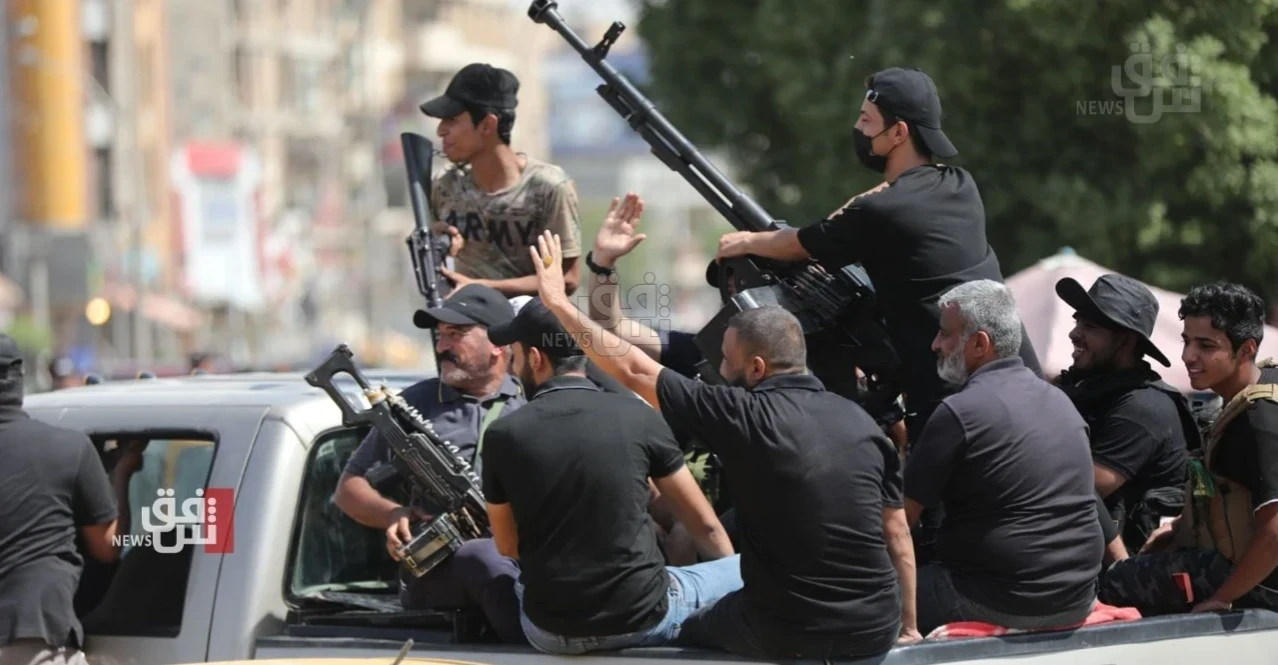
In Iraq, many of the factions operate through formations within the Popular Mobilization Forces (PMF), a state-funded security institution established during the 2014 fight against ISIS and dominated by Shiite formations. Several of those factions keep close ties to Tehran. Their political wings sit inside the Coordination Framework, the principal Shiite political alliance and a central force in government formation. Prime Minister Ali Falih al-Zaidi took office after the November 2025 elections. He is now trying to keep Iraq out of the war while negotiating the disarmament of groups that answer only partly to his government.
Read more:Iran war spreads to Iraq and Red Sea as regional risks mount
No Longer One Bloc
Firas Elias, a professor of international relations at the University of Mosul, argues that treating the region's armed groups as a unified front is now analytically wrong. Their goals, capabilities and dependence on state sponsors differ too widely.
Elias describes three overlapping circles. The first is Iran and the groups aligned with it in Iraq, Lebanon and Yemen. The second is Israel, which relies increasingly on direct military force. The third is the United States, still the most influential outside military power in the region. Turkiye, the Gulf states and Syria each play their own, uneven roles alongside them. These circles now link the Gulf and Hormuz to Iraq, Syria, Lebanon, and the Red Sea. With so many militias, regular armies, foreign bases, oil installations and shipping lanes packed into one theater, he warns that a single "miscalculation" could push the conflict onto a different level. A strike on a strategic facility or one that causes mass casualties would be enough.
He places Iraq at the top of the risk list. The country sits between the warring parties, and some of its factions hold missiles and drones. “Any attack launched from Iraqi territory therefore reaches directly into Baghdad's relations with Washington, Tehran and the Gulf.”
Read more:Saudi pipeline attack deepens pressure on Al-Zaidi over armed factions
For Elias, the real challenge is not only keeping Iraqi soil out of the war. It is whether the Iraqi state can hold a monopoly over the decision to use force and stop the country from becoming a military extension of wider regional conflicts. He adds that if the fighting reaches energy infrastructure or shipping routes, the security crisis would become an economic one. Freight and insurance costs would rise, oil exports would be disrupted, and supply chains would break.
Adnan al-Kinani, an Iraqi security expert, argues that the war has outgrown its three main protagonists: the United States, Israel and Iran. It has spread to fronts where their allies and partners operate. He names the Houthis, Iraq's factions and Lebanon's Hezbollah as potential backup fronts if the war with Iran widens. In his reading, fighting in Syria and Lebanon has eased compared with elsewhere. Yemen, by contrast, has become more closely tied to the regional confrontation, particularly as Saudi Arabia takes a more active role against the Houthis. He also places the conflict within a wider climate of global tension, noting that the war in Ukraine carries its own risks for energy markets and the world economy.
Iran's relationships with the groups are not identical. Hezbollah has maintained a particularly close ideological, financial, and military relationship with Tehran for decades, while the Houthis retain a more distinct political and religious identity despite extensive cooperation with Iran. In both cases, Iranian support has extended their reach well beyond national borders.
Players Outside The Axis
Sami Salam, a political researcher, argues that Turkiye, Saudi Arabia and a transformed Syria make any two-camp reading of the region misleading. He points to the agreement between al-Zaidi and Turkish President Recep Tayyip Erdogan, reached on Sept. 23 on the sidelines of the UN General Assembly in New York. Under the deal, control of the Bashiqa/Zilkan base, a Turkish military installation northeast of Mosul, will pass gradually to the Iraqi government. The two leaders also agreed on steps to restore state authority in Sinjar, the Yazidi-majority district where Ankara has long demanded the removal of armed groups it regards as foreign and banned.
Salam says Saudi Arabia has become a more direct security actor. Syria now weighs heavily in Iraq's calculations, he adds, especially as regional trade and energy routes shift. Since Bashar al-Assad fell in December 2024, the transitional leadership under Ahmed al-Sharaa has widened Damascus's Arab and Western ties. On Aug. 24, Washington formally removed Syria from its list of state sponsors of terrorism, building on broader sanctions relief introduced earlier. The experts argue that Syria no longer serves as the land bridge in Iran's regional network that it did under al-Assad. That change reshapes the calculations of factions operating across the Iraqi-Syrian border.
Asef Melhem, director of the JSM Center for Research and Studies in Moscow, expects Washington to scale back its Middle East presence after years of direct involvement. The mounting cost of unresolved conflicts, from Gaza and Lebanon to Yemen, Iran, and Iraq's factions, is blurring US strategy for the region's future, he argues. Turkiye, Saudi Arabia, Pakistan, Egypt, Iran and Israel would each try to fill the resulting vacuum.
Melhem does not expect any regional alliance to replace the US role. Instead, he warns that the competition could turn into indirect rivalry fought through local allies. Without a regional settlement, that rivalry would keep the region unstable and carry it onto new fronts.
The Weapons Question
Salam says not all factions share al-Zaidi's goal of neutrality. Some have already handed over their weapons or begun integrating into state institutions. Others keep their arms, remain tied to Iran politically and ideologically, and argue that continuing regional threats justify what they call "resistance weapons."
The holdouts include Kataib Hezbollah, whose political wing, the Hoqooq Movement, holds six seats in parliament. They also include Kataib Sayyid al-Shuhada, whose Muntasiroun bloc won about five seats within the State of Law coalition led by former Prime Minister Nouri al-Maliki. Harakat al-Nujaba, which has no parliamentary wing, completes the group. On Sept. 4, al-Nujaba reaffirmed that it would not give up its arms. The holdouts tie any handover to a full withdrawal of foreign forces, and some also demand defense guarantees, including stronger Iraqi air defenses.
Other factions have shown more willingness to work with the state. They include Asaib Ahl al-Haq, whose Sadiqoon bloc won 27 seats in the 2025 vote. Another is Saraya al-Salam, the armed wing of cleric Muqtada al-Sadr's movement, which boycotted the elections. The third is Kataib al-Imam Ali, which leads the five-seat Khadamat Alliance.
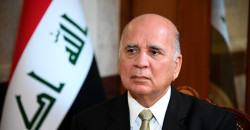
The timetable has evolved. Sept. 30 was initially treated by Iraqi political forces as a key deadline for bringing factional weapons under state control, but al-Zaidi has since outlined a phased process extending to June 30, 2027. Foreign Minister Fuad Hussein said on Sept. 25 that the government is drafting a new plan to bring unlicensed weapons under state control while talks with the factions continue.
Even within the Coordination Framework, the approach has critics. A source in the alliance told Shafaq News on Sept. 23 that fixing a hard deadline could complicate negotiations with faction leaders.
Read more: Iraq's disarmament deadline pits Baghdad against Iran-aligned factions
The US-led Coalition's forces have been withdrawing from their remaining mission sites as Baghdad and Washington transition toward a bilateral security relationship. Iraq says its forces can manage internal security and the remaining ISIS threat, while intelligence sharing, training and arms cooperation are expected to continue.
Beyond Security
Ahmed Fouad Anwar, a professor of Israeli studies at Egypt's Alexandria University, sees risks on two levels. At home, any security breakdown or delay in payments owed to some armed groups could spill into Iraq's internal security. Abroad, the factions' behavior will track the pressure on Iran. He argues that ordinary Iraqis would be the first to feel any wider shock through fuel prices, flight disruptions and insurance costs. “Because so many outside powers are involved, disarming the factions will also require broader regional arrangements. It may even require a review of Iraq's political and constitutional framework.”
From Beirut, political analyst Hussein Chaito argues that Iraq's geography and the overlapping presence of regional powers on its soil make it impossible to separate from events around it. He considers Iraq a key front for Iran's allies and sees the dispute over weapons as inseparable from the US presence and the regional balance of power. He describes the standoff between the government and the factions as a fire smoldering beneath the surface, though he believes dialogue can still prevent armed confrontation. He stresses the role of Grand Ayatollah Ali al-Sistani, Iraq's senior Shiite cleric in Najaf, in calming public anger and preventing a slide into internal conflict. Iraq's stability, he concludes, is essential to the stability of the region as a whole.
Al-Zaidi's 90-day phase runs until late December. That period covers the first weeks after the Coalition mission ends and a US-Iran war that shows no sign of ending. The plan is built around factions refraining from attacks. Whether that restraint survives a sharper escalation against Iran could shape not only Iraq's internal stability, but the wider regional conflict.
Written and edited by Shafaq News staff.