Drone attack on Nechirvan Barzani: A message at the peacemaker’s door


Shafaq News
The house was empty when the drone hit. No guards in the wrong place, no staff caught in the blast. By the grim arithmetic of the Middle East, that counts as luck. But what arrived at Nechirvan Barzani's residence in Duhok on that quiet holiday was not really a weapon. It was a message —and the message was not addressed to a building. It was addressed to an idea.
The Man the Drone Was Looking For
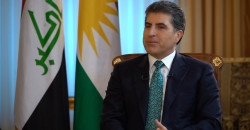
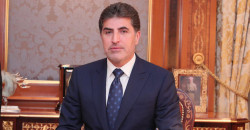
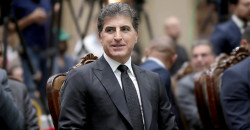
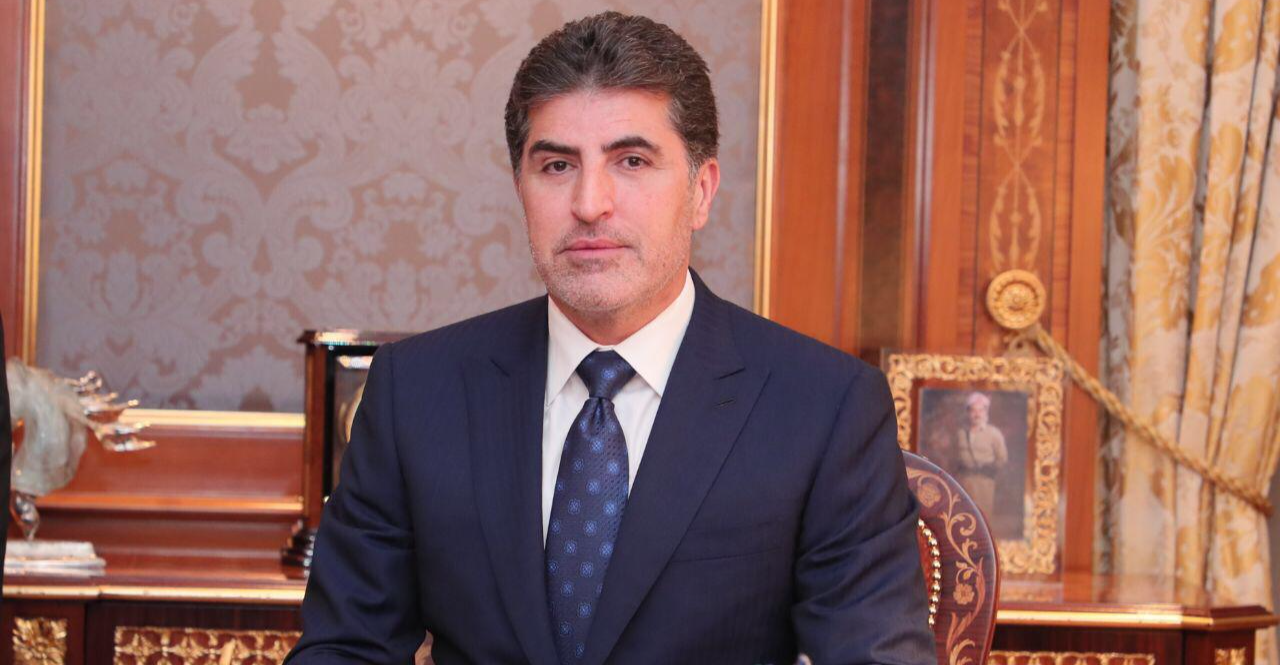
Barzani, 64, is the President of the Kurdistan Region of Iraq, the autonomous northern territory that has functioned, since the 1990s, as the most stable corner of one of the world's most unstable countries. He is not a general. He is not a firebrand. In a political landscape populated by men who speak in ultimatums, he has built his career on the quieter arts of negotiation, back-channel diplomacy, and the strategic management of impossible relationships.
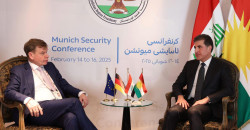
His family name is the most powerful in Kurdish politics —his uncle, Masoud Barzani, led the Kurdistan Democratic Party (KDP) for decades and remains a towering figure in the movement. But Nechirvan carved his own reputation as something rarer in the region: a pragmatist whom opposing sides, including Tehran, Ankara, Paris, and Washington, could still call. That is not an accident. It is the result of years of careful positioning, and it is precisely what made him a target.
Read more: Beyond the Chaos: How Nechirvan Barzani is Redefining Kurdish Diplomacy
Kurdistan's Impossible Geography
The Kurdistan Region of Iraq is not a country, though it sometimes functions like one. It has its own parliament, its own army —the Peshmerga— its own flag, and its own foreign relationships. But it sits inside Iraq's borders, squeezed between four neighbors: Turkiye to the north, Iran to the east, Syria to the west, and the rest of Iraq to the south— each of whom has, at various points in history, viewed Kurdish autonomy as either a threat or a tool.
It also hosts American military assets. That fact, which Erbil did not entirely choose and cannot entirely undo, places the region directly in the crosshairs of any confrontation between Washington and Tehran. When the US and Iran fight —through proxies, missiles, and pressure —Kurdistan absorbs the shockwaves, whether it wants to or not.
This is the geography Barzani has spent years trying to navigate. His doctrine, stated plainly and repeatedly in recent months, has been one of deliberate neutrality: Iraqi Kurdistan will not be a staging ground for anyone's war. It will not be a base for attacks on Iran. It will not take sides. It will talk to everyone and shoot at no one.
It is a doctrine that is very easy to state and very hard to maintain —as the events of the past weeks have made brutally clear.
War Arrives at the Doorstep
The regional escalation that forms the backdrop to this attack has been building for months, accelerating sharply as US-Israeli military pressure on Iran intensified and Iranian-backed armed factions across Iraq, Syria, and Lebanon recalibrated their posture in response. Iraq, and Kurdistan specifically, became caught in the middle of this war as US facilities came under fire hundreds of times —a familiar position, but one that has grown significantly more dangerous.
Days before the drone struck Barzani's home in Duhok, Iranian ballistic missiles hit Peshmerga military positions in Soran, in the Kurdistan Region's northeast. Six fighters were killed, and thirty more were wounded. Tehran subsequently acknowledged the strike, described it as an error, and promised an investigation —an unusual admission that reflected the diplomatic sensitivity of hitting Kurdish forces that Iran does not consider enemies.
Barzani's response to Soran was telling. He condemned the strike directly, calling it an unprovoked, aggressive attack. But within the same breath, he reaffirmed that Kurdistan posed no threat to its neighbors and that he remained in contact with Iranian officials. It was a careful line to walk —firm enough to satisfy his own constituency, restrained enough not to slam shut the doors he had spent years keeping open.
Then the drone came to Duhok.
Reading the Message
No group has claimed responsibility for the attack on Barzani's residence. That silence is itself significant. In the current regional environment, the most capable actors when it comes to precision drone strikes inside Iraqi Kurdistan are Iranian-backed factions that operate with considerable autonomy across Iraq —groups that exist in a complex relationship with Tehran, sometimes acting on orders, sometimes acting on initiative, and sometimes acting in ways that embarrass their patrons.
Barzani himself was careful not to point fingers publicly. But he was also careful to make clear that this was not a private matter. Speaking to the Rudaw media network, he framed the attack explicitly as a political and security development with national implications —not just for Kurdistan, but for Iraq as a whole. His argument was pointed: when armed groups feel empowered to strike the residence of a regional president without fear of consequence, the problem is no longer one of personal security. It is a problem of state authority, of deterrence, and of what kind of country Iraq is becoming.
The Condemnation That Wasn't Supposed to Come
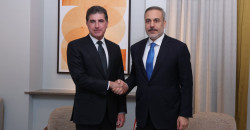
The local and international reactions to the attack were swift and, in their breadth, politically revealing. French President Emmanuel Macron called Barzani directly to condemn the strike. Turkish Foreign Minister Hakan Fidan expressed support for Kurdistan's security. Iraqi caretaker Prime Minister Mohammed Shia al-Sudani, along with a broad spectrum of Iraqi political leaders —Shia, Sunni, and Kurdish— issued condemnations that pointed, however carefully, toward the same conclusion: this attack was not just against a man or a building, but against the idea of functioning political order in Iraq.
But the condemnation that stopped observers cold came from an unexpected source.
The Islamic Revolutionary Guard Corps (IRGC) —Iran's most powerful military institution and the primary patron and organizer of armed factions across Iraq— issued a statement condemning the drone attack on Barzani's home as a "terrorist act." The IRGC described it as part of broader efforts to undermine regional peace, stability, and cooperation, and pointed blame toward what it called the enemies of the region— namely, the United States and Israel.
This is remarkable because the IRGC is not a conventional military force. It is the ideological and operational arm of the Iranian state's regional forces, with deep organizational ties to the very factions most likely to have the capability and motivation to carry out a strike like this one. When the IRGC condemns an attack, and simultaneously blames Washington and Tel Aviv for it, it is performing a very specific kind of political theater— one that says: we did not do this, and whoever did was working against our interests.
Whether that is true or not, the political fact of the condemnation is significant in itself. It means that Tehran —even the institution most invested in pressuring Kurdistan through its network of armed proxies— calculated that publicly standing against this attack served its interests better than silence. That calculation only makes sense if Barzani represents something that Iran, too, cannot afford to lose: a channel, a buffer, a line of communication that still works when others have gone dead.
The Limits of Neutrality
Ali Hussein Feili, a former member of the Kurdistan Parliament, put the political stakes plainly. The attack, he argued, was not an accident of timing or targeting. It was a deliberate signal, “to declare the end of the diplomatic era and replace it with the logic of coercion and chaos.”
The fact that Barzani survived, he noted, does not diminish the message. If anything, it clarifies it. “The goal was not assassination but a warning to the region's most visible advocate of restraint that restraint itself is now a vulnerability.”
That reading might be aligned with the broader pattern of how this regional conflict has evolved. In earlier phases and now, the Islamic Resistance in Iraq has largely targeted military installations, US bases, and Israeli-linked infrastructure. The escalation toward political figures and civilian symbols of governance marks a qualitative shift: one that suggests either a deliberate strategic choice to widen the target set, or a loss of centralized control over who can be struck and when.
Iraqi political analyst Mithal al-Alusi captured something of this anxiety when he warned of “the maneuvering of political mercenaries in the region,” suggesting that the attack may reflect internal score-settling as much as external pressure. “Weak actors lashing out at those who have, in their eyes, been too accommodating, too diplomatic, too willing to talk to the wrong people.”
Professor Dana Mawlood, CEO of the Vision Education Foundation, framed it in terms of what is ultimately at stake: the attack was not just against Barzani personally, but against the meaning of the state itself —against the principle that political leaders and institutions deserve protection, and that those who threaten them will face consequences.
What the Drone Actually Hit
In the end, the drone did not find Nechirvan Barzani. But it found something else —and damaged it.
For months, Barzani has been the living embodiment of a proposition: that a small, landlocked, politically exposed region can survive a regional war by being genuinely useful to everyone and threatening to no one. That it can keep its borders open, its channels active, its neutrality credible. That diplomacy, even in wartime, is not naivety but strategy.
The attack on his home is a direct challenge to that proposition. It says to Erbil and Baghdad that there is no diplomatic insurance policy that places you beyond reach. That in the current moment, the peacemakers are targets too.
Whether Barzani’s doctrine survives this test will depend on two factors: his own resolve and whether regional and international actors who condemned the attack are willing to back their words with something more durable.
Read more: Nechirvan Barzani: A quiet architect of Kurdish statecraft
Written and edited by Shafaq News staff.