Iraq road accidents: Thousands of deaths annually expose safety crisis


Shafaq News
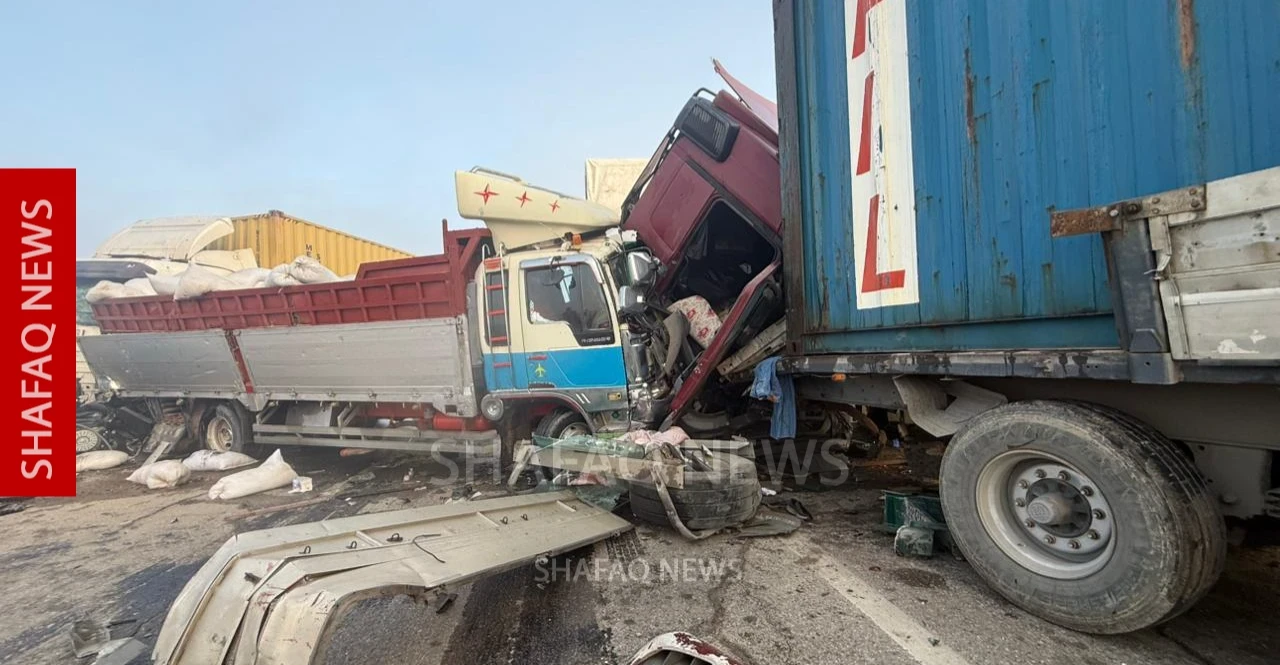
Recent deadly traffic accidents on Iraqi highways have pushed road safety back to the forefront of public concern. Major roads continue to witness recurring human tragedies despite government efforts to modernize traffic enforcement and reduce accident rates.
Despite authorities expanding the use of speed cameras, radar systems, and smart monitoring technologies, the accidents continue to rise. The latest incident was the devastating bus fire on the international highway linking Basra and Dhi Qar, which killed 21 people and injured 19 others as religious pilgrims were returning from Karbala. The accident occurred less than 24 hours after another crash on the same route.
Alarming Numbers, Several Indicators
Official data show that Iraq records around 2,700 traffic-related deaths and more than 11,000 injuries annually. At the same time, the number of registered vehicles has surpassed seven million, a growth rate that increasingly exceeds the capacity of the country’s transport infrastructure.
According to Miqdad Miri, Director of Relations and Media at the Interior Ministry, the deployment of modern radar systems and surveillance cameras has helped reduce traffic accidents by 50% on several key routes, particularly the Baghdad–Karbala, Babil–Karbala, and Najaf–Karbala highways.
The General Traffic Directorate has also reported more than 45,000 traffic violations detected through electronic monitoring systems, with over 41,000 confirmed after review. Yet the recurrence of mass-casualty accidents suggests that the problem extends beyond enforcement alone. Experts argue that Iraq’s road safety crisis is rooted in a combination of human behavior, infrastructure shortcomings, and administrative weaknesses.
Human Error Remains the Dominant Factor
Former Iraqi Transport Minister Salam al-Maliki believes drivers remain the single most significant contributor to road accidents.
Speaking to Shafaq News, al-Maliki said motorists are responsible for more than three-quarters of traffic accidents, with excessive speed remaining the leading cause of fatal crashes, particularly on highways and intercity roads.
He pointed to a range of risky behaviors that continue to endanger road users, including failure to comply with traffic regulations, unsafe overtaking, disregard for right-of-way rules, and the widespread use of mobile phones while driving.
“Driver fatigue is another major concern, especially among bus and taxi operators who travel long distances between provinces,” he stressed, noting that the problem becomes more pronounced during religious pilgrimage seasons, when transport activity intensifies, and drivers often spend extended hours behind the wheel.
Recent Interior Ministry data recorded 157 cases of driving under the influence of alcohol during the first half of 2026, while campaigns targeting mobile phone use behind the wheel remain ongoing.
Roads Fall Short of Safety Standards
While human behavior plays a central role, al-Maliki cautioned against reducing the crisis solely to driver conduct.
He argued that Iraq’s infrastructure problems are equally significant, observing that many roads suffer from potholes, subsidence, and surface distortions caused by inadequate maintenance, conditions that can cause drivers to lose control of their vehicles without warning.
A lack of adequate lighting, road markings, and traffic signs on numerous highways further increases risks, particularly at night. “Poorly engineered diversions and road closures on some highways have become a constant source of unexpected hazards and accidents,” he said.
According to Transportation specialists who spoke to Shafaq News, Iraq’s road network has expanded considerably in recent years, but maintenance and modernization programs have not kept pace. The result is a widening gap between actual traffic demand and the technical readiness of the infrastructure designed to support it.
This imbalance becomes particularly visible during peak travel periods, when roads carry volumes of traffic beyond what they were originally designed to accommodate.
Safety Challenges
Al-Maliki also highlighted concerns over licensing procedures, arguing that lax standards in issuing driving licenses contribute to unsafe road conditions. He further pointed to the importation of vehicles that fail to meet essential safety requirements and to weak oversight of vehicle safety specifications.
These issues suggest that road safety cannot be improved simply by increasing fines or installing additional cameras. Rather, experts indicate that “Iraq requires a comprehensive review of its transportation and traffic management systems.”
Technology Delivers Limited Results
Despite the continuing fatalities, traffic authorities maintain that recent technological measures have produced measurable improvements.
Haider Shaker, head of the Media Division at the General Traffic Directorate, said accident rates have declined noticeably due to the use of modern technologies, stressing that accident trends ultimately depend on the extent to which citizens comply with traffic laws and regulations.
Authorities continue to expand the use of technological tools with the goal of reducing accidents to the lowest possible level. However, most advanced monitoring systems remain concentrated in Baghdad and provincial urban centers.
Large sections of Iraq’s external highways still lack continuous electronic surveillance, limiting the deterrent effect of enforcement measures on roads that frequently record the highest number of fatal crashes.
Read more: $1.2B traffic fix fails: Iraq seeks radical solution
This disparity helps explain why accident reductions in some monitored corridors have not translated into a broader nationwide decline in deadly incidents.
The Root Causes
For lawmakers, the scale of recent losses underscores the need for a deeper reassessment of Iraq’s traffic management policies. Ali Sheikh Khalis al-Barzanji, a member of the Parliamentary Committee on Transport, Communications, and Governance, told Shafaq News that “the first step toward solving the problem is accurately identifying its causes.”
Al-Barzanji said the committee is examining accidents from multiple angles, including road engineering standards, speeding, traffic organization, and the effectiveness of traffic signals and control systems.
“Reaching an accurate diagnosis of the problem will enable the legislative authority to exercise its oversight role”, he stressed, adding that it will also direct the government toward addressing “the real weaknesses behind the repeated accidents.”
Written and edited by Shafaq News staff.