IRGC: Ships on unauthorized routes face regional pursuit


Shafaq News- Tehran
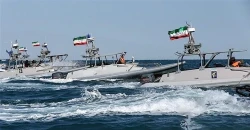
Iran’s Islamic Revolutionary Guard Corps (IRGC) Navy on Friday threatened sanctions against shipping companies “misled” by the United States, saying vessels using unauthorized routes could be pursued across the region.
In a statement carried by Iranian state media, the IRGC said punitive measures would apply to all vessels belonging to companies that violate its rules, and action against vessels using unauthorized routes would no longer be limited to the Strait of Hormuz.
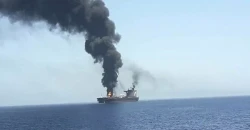
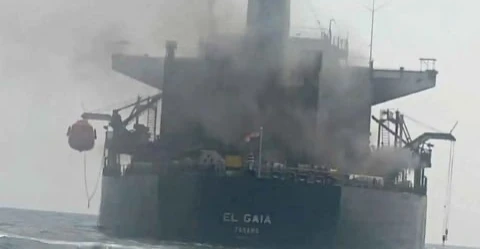
The Navy also said it struck the NV Sunshine, a liquefied petroleum gas (LPG) carrier, after the vessel attempted to use an “illegal southern route” through Hormuz, causing a major fire in the ship’s engine room and propulsion system. Maritime databases list the NV Sunshine as a Vietnam-flagged, 54,975-dwt LPG carrier owned and managed by Nhat Viet Transportation Corp.
UKMTO WARNING 160-26 Click here to view the full warning⤵️ https://t.co/3BX7miErnT #MaritimeSecurity #MarSec https://t.co/dP0CizTB9V
— UKMTO Operations Centre (@UK_MTO) October 9, 2026
The IRGC blamed the US military for escalating tensions in regional maritime transport, accusing it of interfering with shipping and insurance companies, misleading their management, and paying substantial bribes. The number of serious incidents will rise if the interference continues, it cautioned.
On October 7, Mohammadreza Naqdi, an adviser to the IRGC commander, said routes through Hormuz that Tehran considers illegal would soon be closed and claimed Iran’s armed forces had full control of the waterway. Reuters reported at least 12 attacks, attempted attacks, or harassment incidents involving tankers around Hormuz between September 28 and October 5, citing three maritime security sources –the highest weekly total since the war began on February 28.
Kpler data cited by Reuters showed only seven commodity vessels crossed Hormuz on October 6, the lowest level since July 23. Crude oil flows through the waterway also fell to at least 10.1 million barrels per day, about 74% of pre-war levels.