FIFA under fire over World Cup water breaks


Shafaq News
FIFA’s mandatory hydration breaks have become one of the first major controversies of the 2026 World Cup, with a player-welfare measure now drawing criticism over broadcast advertising, match rhythm, and tactical interference.
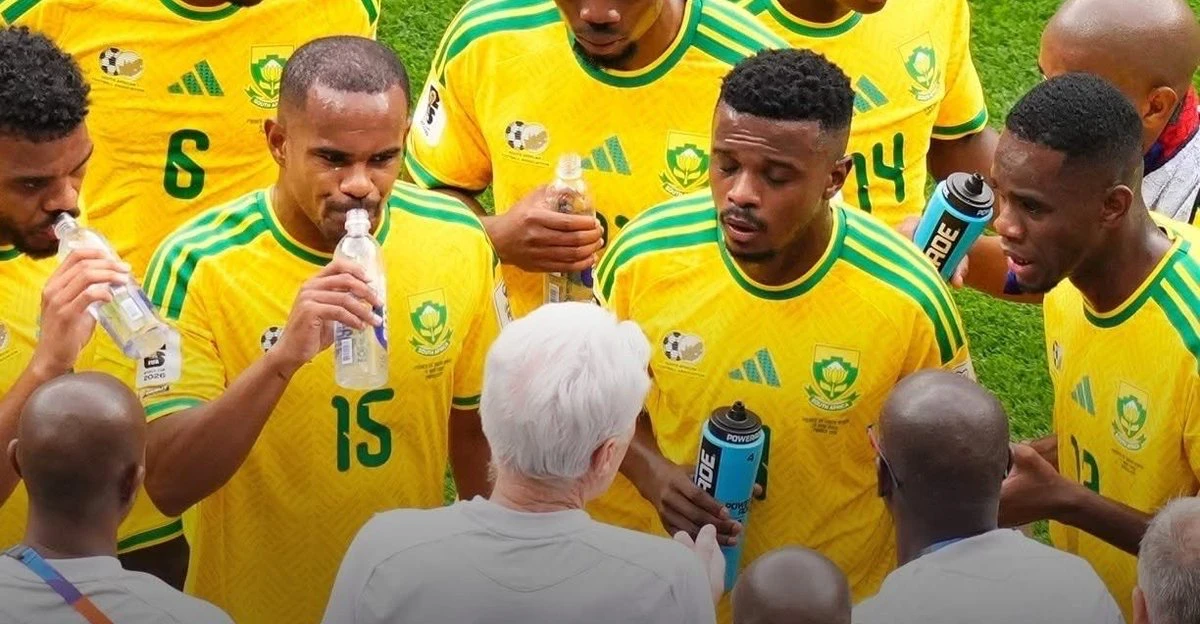
The rule requires referees to stop every match for three minutes after 22 minutes of each half, regardless of weather conditions, stadium roof status, or indoor cooling systems. FIFA says the measure is designed to protect players during a tournament held across the United States, Canada, and Mexico, where high temperatures and humidity are expected to affect several venues.
Manolo Zubiria, Chief Tournament Officer, USA, for the 2026 World Cup, explained that the rule applies to every match “no matter where the games are played,” including stadiums with roofs or controlled temperatures. FIFA has also linked the decision to lessons from previous competitions, including the 2025 Club World Cup in the United States, presenting the breaks as a uniform safety measure rather than a case-by-case intervention.
But the blanket rule has opened a wider debate because the stoppages are also being used by some broadcasters for advertising. The Guardian reported that FOX returned late from commercials during the opening match between Mexico and South Africa, while FIFA rules require broadcasters to return to live coverage 30 seconds before play resumes.
Telemundo, the Spanish-language World Cup broadcaster in the United States, chose not to cut away to full-screen advertisements during the breaks.
That contrast has fueled criticism that the World Cup is being pushed toward a more American broadcast model, with matches effectively divided into four segments instead of two uninterrupted halves.
US coach Mauricio Pochettino questioned the need for the stoppages in normal conditions, saying he supports them only when the weather is extreme. “When the conditions are good, it is unnecessary.”
Former Spain midfielder Juan Mata also criticized the measure from a player’s perspective, saying the breaks damage rhythm. “When you are losing you want to score, and when you are winning you want to keep the ball.” Ex-England and Arsenal forward Ian Wright went further, arguing that the hydration argument looks like a way to introduce more advertisements into matches from an American broadcast perspective.
The criticism has not been limited to commercial concerns. Coaches and analysts have also raised questions over the tactical impact of the stoppages, because managers can use them to issue instructions, adjust pressing structures, or slow an opponent’s momentum. In Brazil’s match against Morocco, Vinicius Junior equalized after the first hydration break, while coach Carlo Ancelotti acknowledged that the stoppage gave him an opportunity to give new instructions and adjust the team’s approach.
Similar concerns were raised after Germany’s 7-1 win over Curacao, when Julian Nagelsmann claimed that the water break helped his team reinforce tactical adjustments after conceding an equalizer.
The player-welfare argument, however, remains difficult to dismiss. A World Weather Attribution analysis found that about a quarter of the tournament’s 104 matches could be played in conditions above recommended thermal safety limits, with several US and Mexican venues facing high heat risk.
For now, the breaks remain mandatory –FIFA sees them as a consistent safety measure. Critics see a disruption that gives broadcasters more space, coaches more intervention points, and football less flow.