Traders struggle with Iraq's dinar devaluation


Shafaq News- Al-Anbar
Some traders in Ramadi, the capital of Al-Anbar Province in western Iraq, have lost up to 16% of their funds following the dinar's devaluation, while falling sales and mounting operating costs have forced shop owners to lay off workers or close their businesses, local businessman Mohammed Al-Kubaisi told Shafaq News.
The Central Bank of Iraq raised the official US dollar-selling rate for the public from 1,320 to 1,520 dinars on October 7, increasing the cost of dollar-denominated payments. Earlier today, exchange shops in Baghdad sold each dollar for 1,695 dinars, according to a Shafaq News market survey.
Traders and commercial agents who imported goods on deferred dollar payments had sold their stock at prices based on the previous exchange rate, only to face higher costs when settling debts with foreign suppliers, Al-Kubaisi explained. Retailers, meanwhile, have struggled to raise prices because most goods have established market prices, leaving their profit margins under pressure.
Read more: Baghdad markets remain deserted after dollar rate hike
The financial strain is evident in the cost of running a shop. Hamza Ahmed, a local shop owner, cited one business paying 700,000 IQD (460)inmonthlyrent,150,000IQD(99) for generator electricity, and 500,000 IQD ($329) in wages for one worker. With sales no longer covering these expenses, some owners are considering giving up their premises, he told Shafaq News.
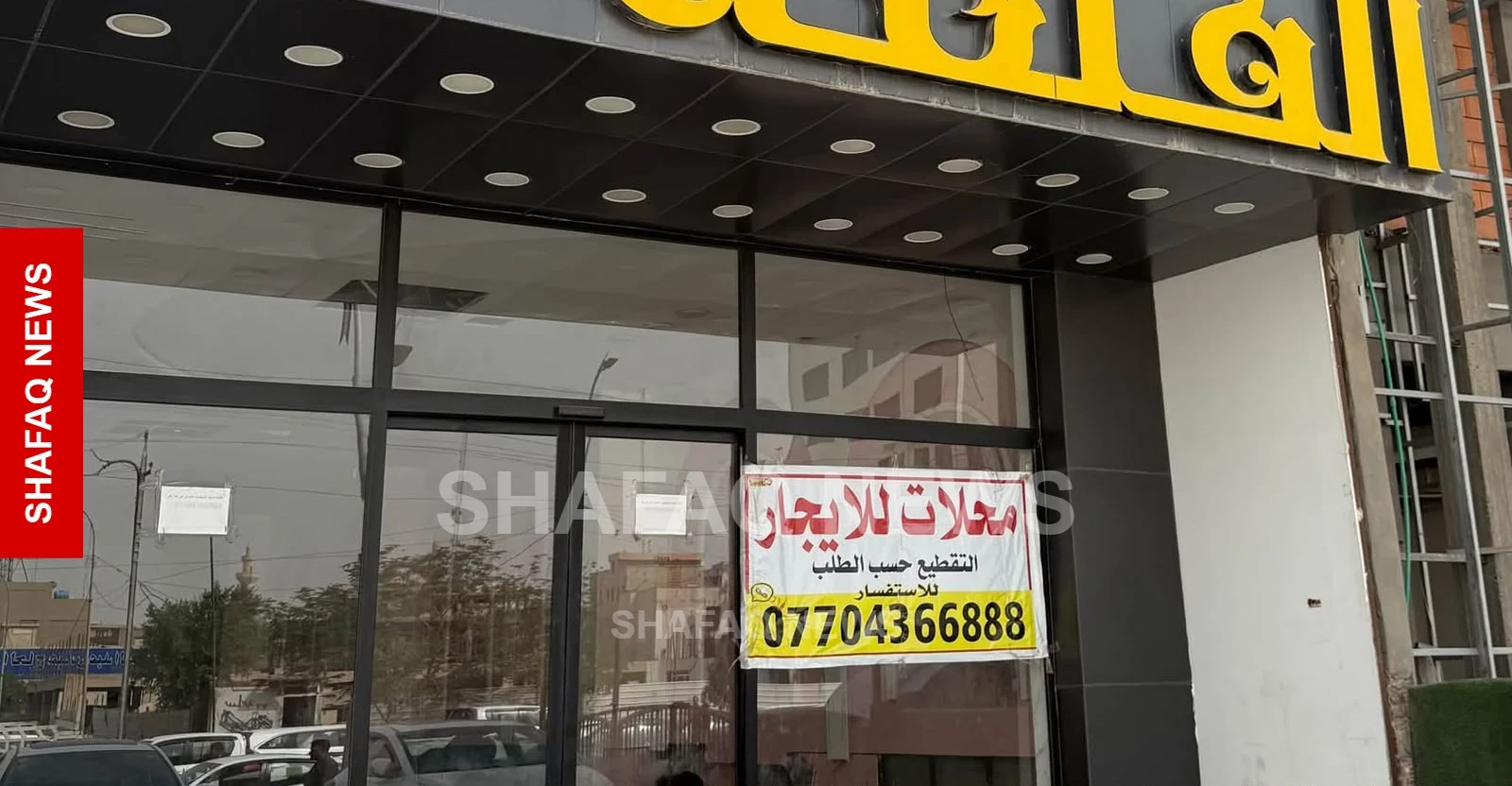
Beyond rent and wages, Al-Kubaisi cited taxes, electricity and water bills, municipal fees, health and professional licenses, civil defense permits, and workers' pension contributions. The mounting expenses have pushed some businesses to reduce their workforce or shut down, while others have advertised their shops for rent.
The slowdown is also affecting consumer spending. Al-Kubaisi said higher prices for some goods and the declining real value of wages and other income have weakened purchasing power, while, according to Ahmed, employees have less money to spend in local markets after covering household rent, electricity and generator bills, school and university tuition, and medical expenses.
Economist Ahmed Al-Karbouli cautioned that these pressures could reinforce each other. Higher import costs leave traders with less cash to settle foreign obligations and replenish inventories, while weaker consumer demand makes it harder to raise prices without losing customers. He told Shafaq News that the resulting slowdown in the circulation of money could lead to further layoffs and business closures, with wider economic and social consequences.
To ease the burden, Ahmed proposed reducing monthly shop rents to around 500,000 IQD (329)andgeneratorchargesto5,000IQD(3.30) per ampere. He also called for approving the federal budget and ensuring timely payments to contractors and farmers, along with public-sector allowances, promotion-related entitlements, and payments for official assignments, arguing that these measures would inject liquidity into local markets and stimulate commercial activity.
Al-Karbouli similarly called for lower operating costs and government fees, as well as more stable monetary and trade policies, arguing that these measures could support employment, purchasing power and business confidence in Al-Anbar.
1 US dollar = 1520 Iraqi dinars
Read more: Iraqi traders count losses after dinar devaluation