Najaf’s last wall: A fading witness to centuries of history


Shafaq News- Najaf
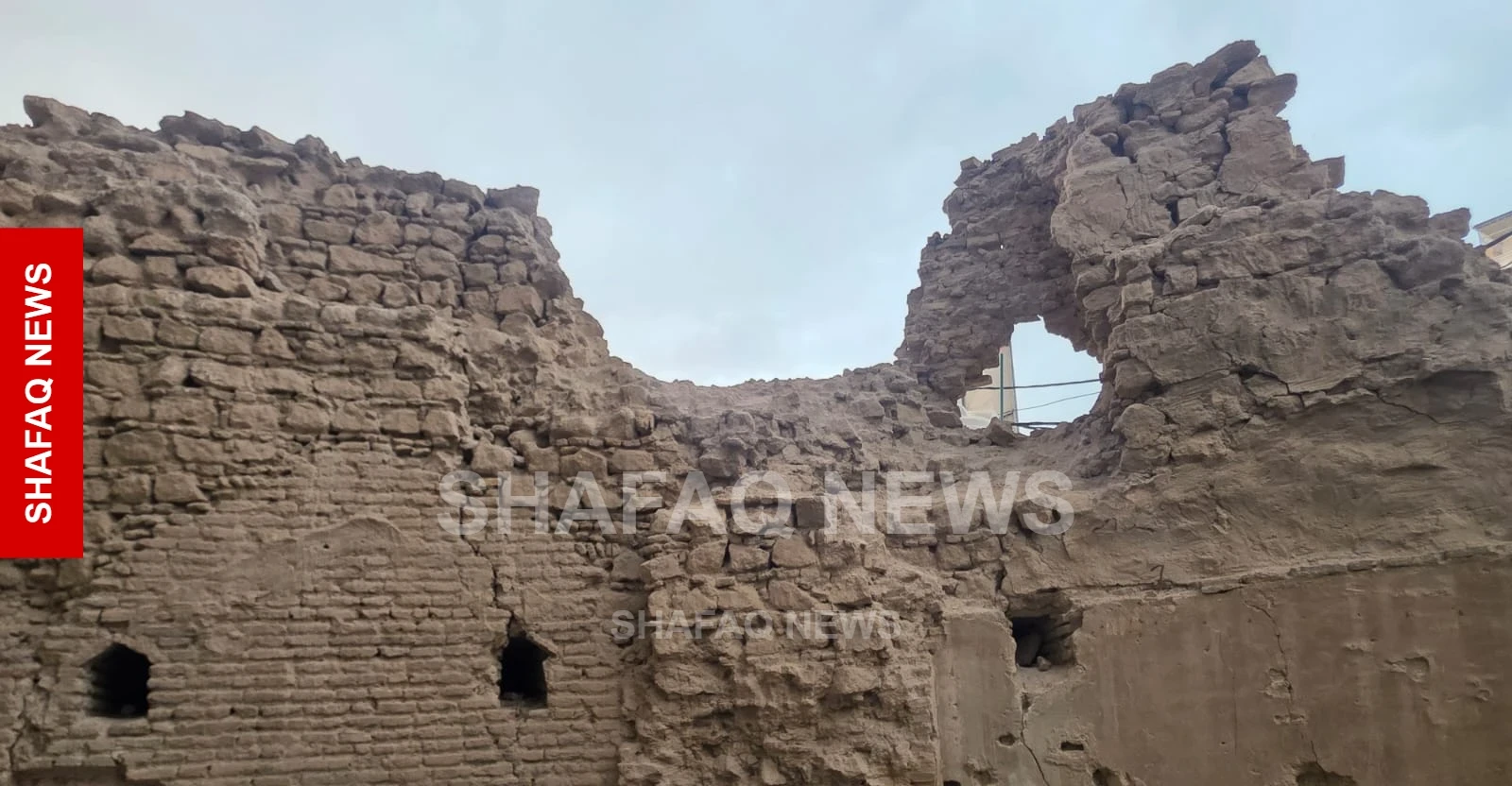
A wall that once guarded Najaf against raids and attacks now survives in fragments, squeezed between shops and hotels in the heart of the old city.
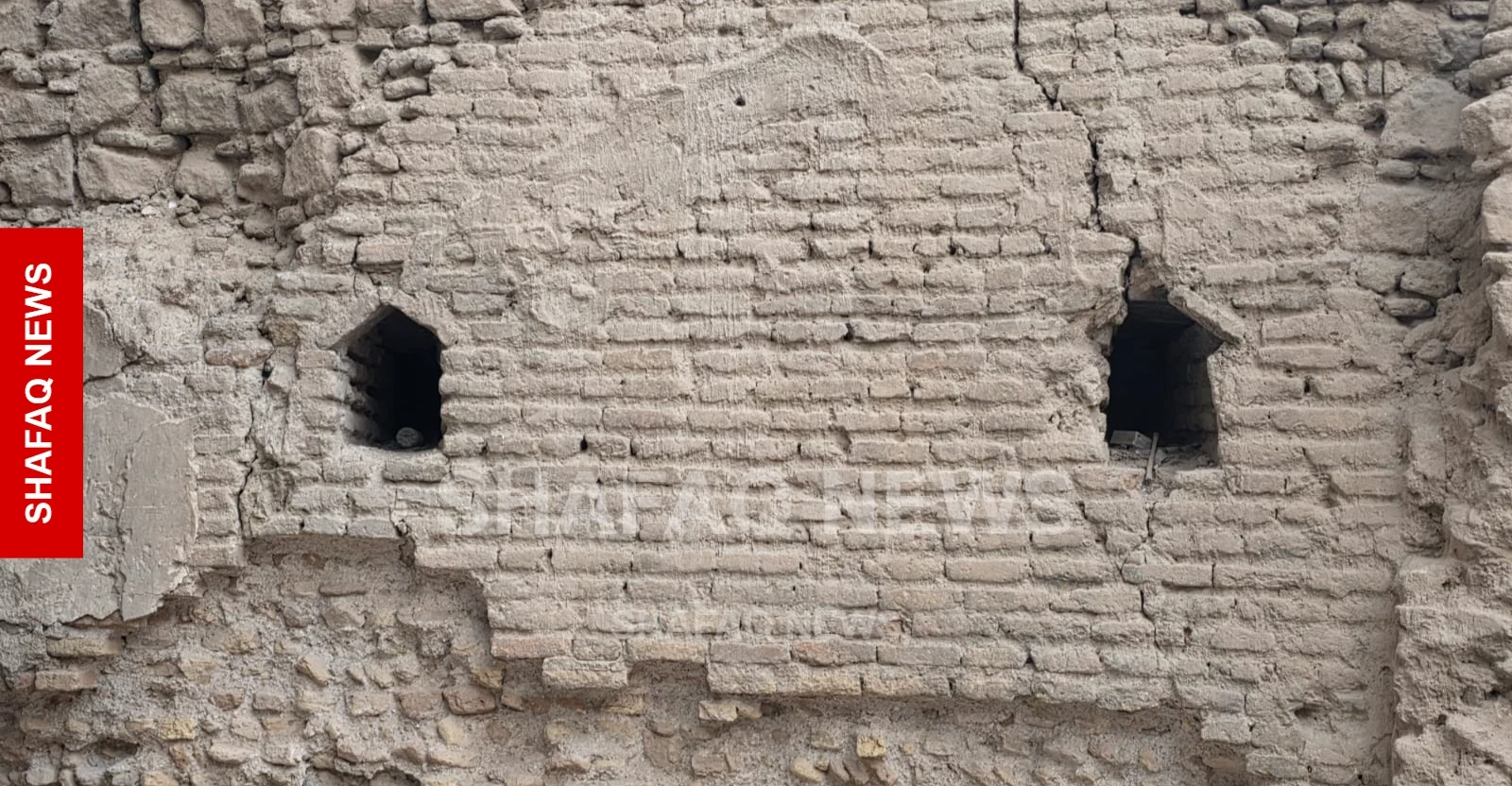
More than 100 meters of Najaf’s last wall remain along Al-Sudair Street, much of it hidden behind commercial storefronts, with only a few sections rising high enough to reveal traces of the fortification.
Historical researcher and consulting engineer Tahseen Ammara told Shafaq News on Monday that Najaf’s old walls provide important evidence of the city’s development over the centuries.
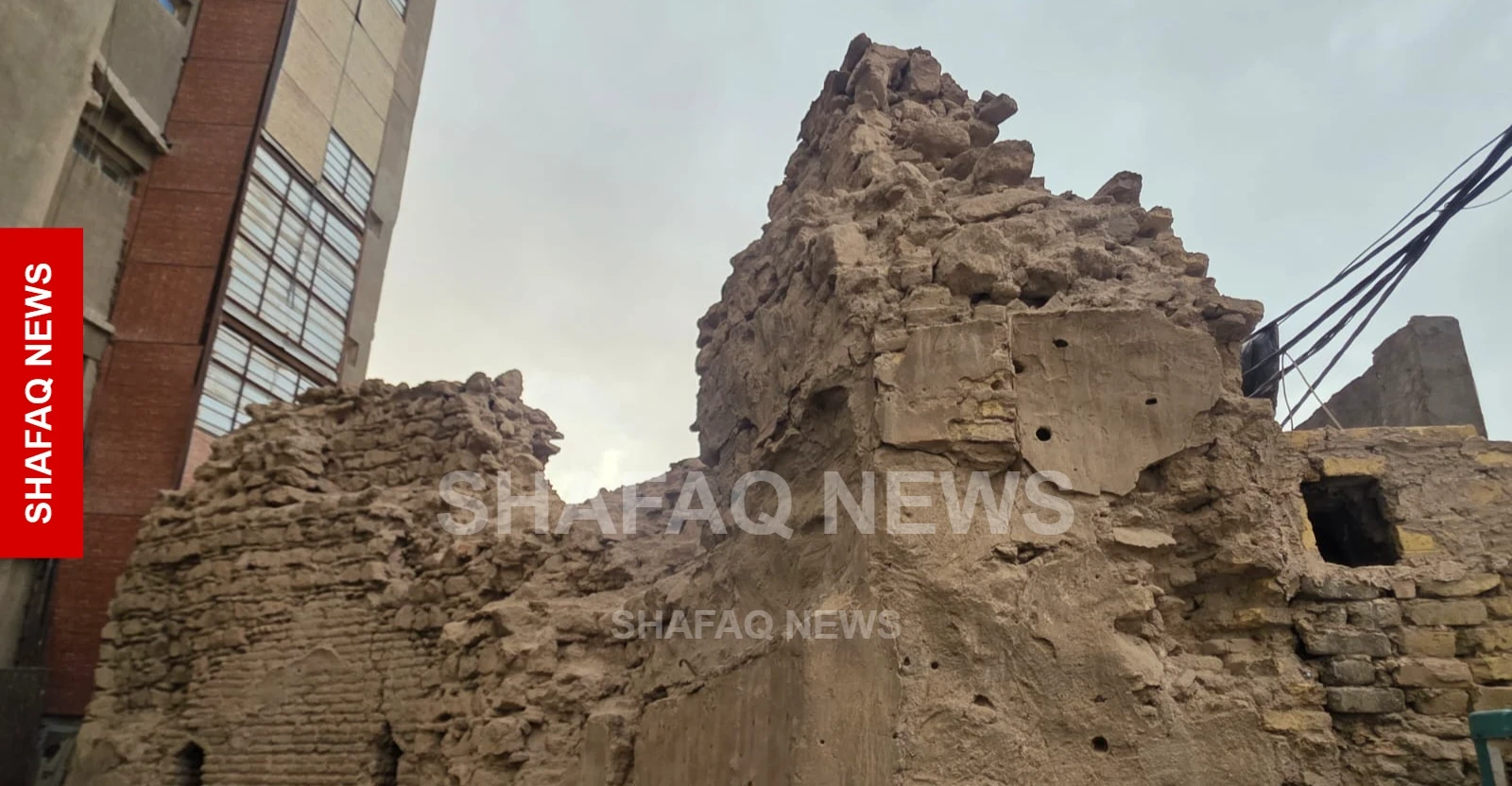
Reconstructing the history of the walls requires comparing historical sources, old maps and photographs with the surviving urban fabric of the old city, Ammara explained, particularly because accounts differ over the locations and construction dates of some fortifications.
He noted that walls in traditional Islamic cities were not simply barriers but defensive systems comprising thick fortifications, towers and main gates, sometimes reinforced by surrounding trenches.
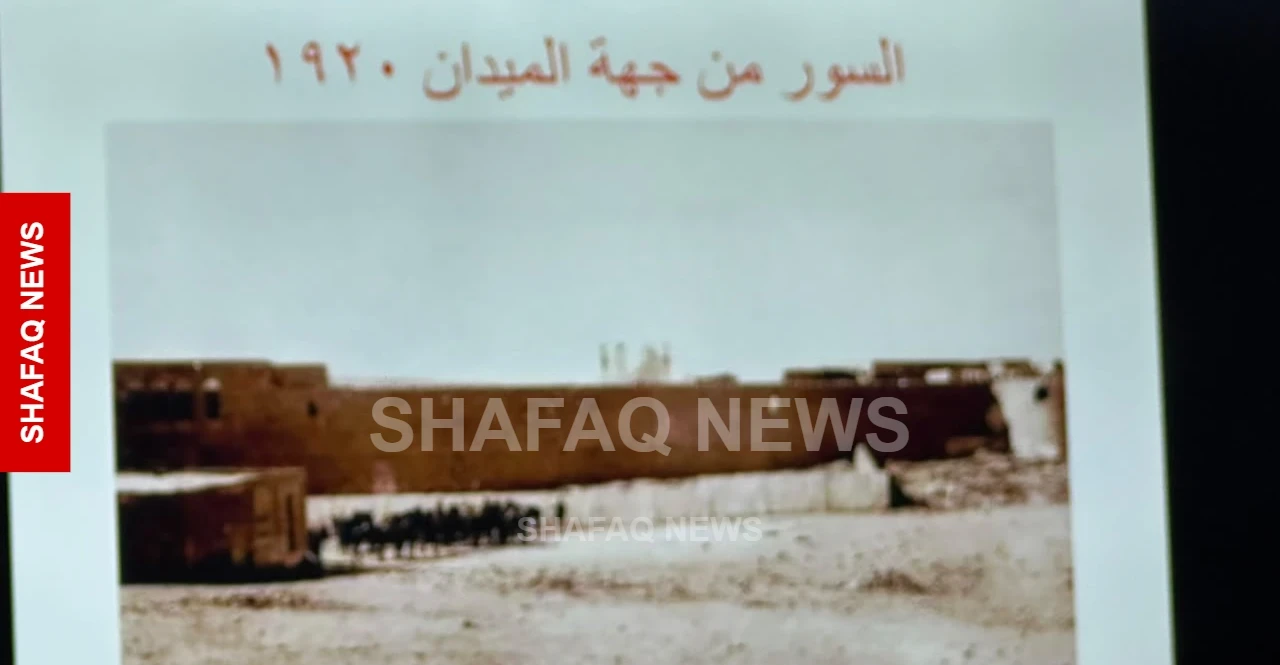
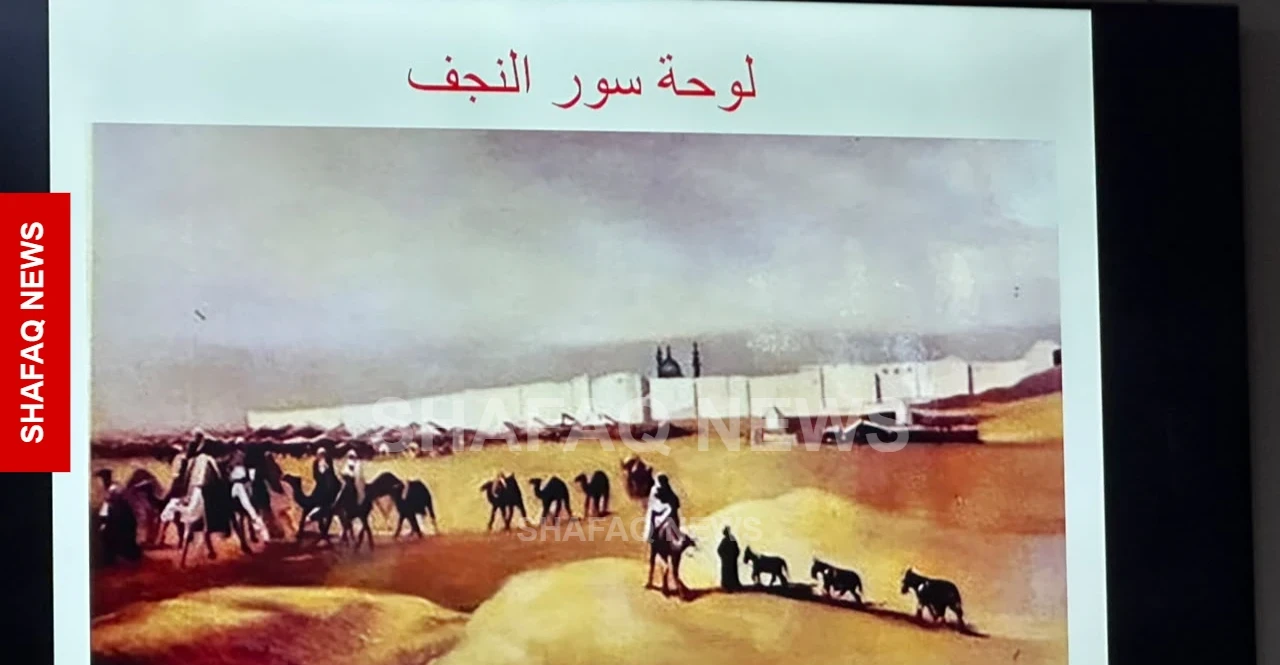
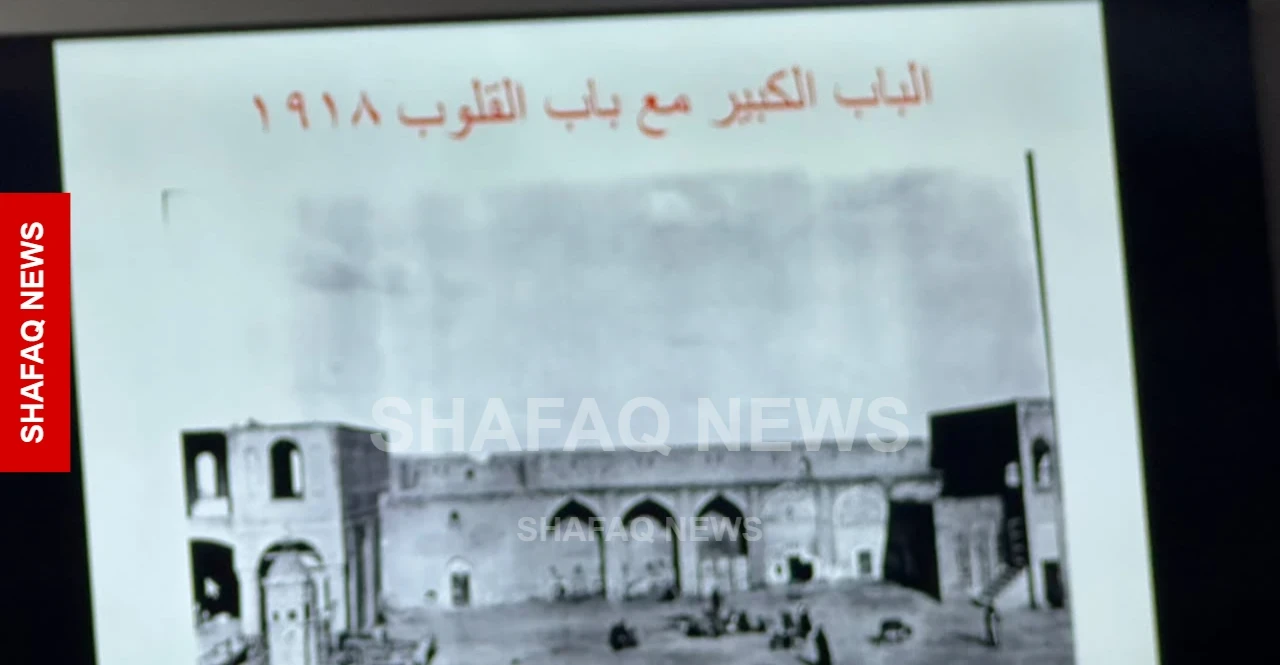
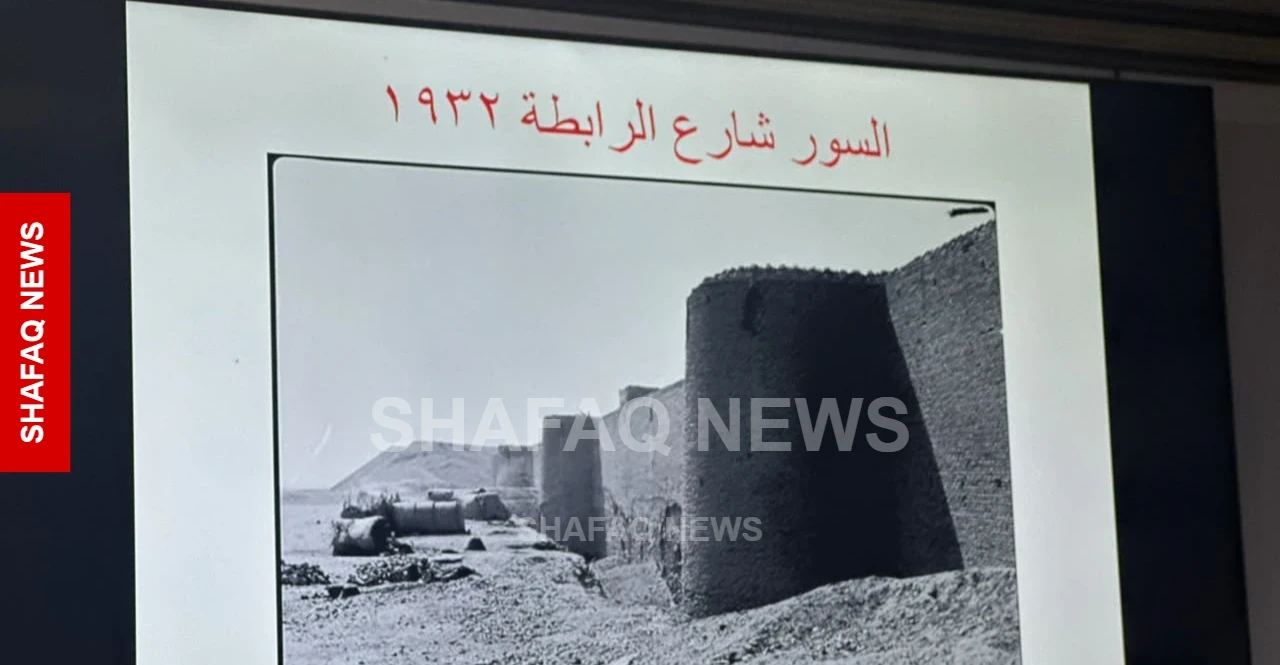
Najaf’s final wall began to take shape around 1802 and was completed around 1811. It featured defensive towers, a surrounding trench, and gates, while its height added to its defensive strength. Historical photographs —including one dating to 1918— document parts of the wall and architectural details that have since disappeared.
Six Walls
Historical accounts identify six principal walls associated with different stages of Najaf’s history, although researchers differ over some dates and details and distinguish between walls surrounding the city and fortifications built to protect the Imam Ali shrine or specific areas.
The first wall is attributed to Muhammad ibn Zayd Al-Da'i Al-Alawi, ruler of Tabaristan, and is generally dated to around 900–901. A second is linked to Abu Al-Hayja Abdullah ibn Hamdan Al-Hamdani around 924–925.
A third wall dates to the Buyid era and is attributed to Adud Al-Dawla Fana-Khusraw ibn Buya, generally between 977 and 983. The fourth is attributed to Abu Muhammad Al-Hassan ibn Sahlan, a Buyid minister, around 1009–1010. The fifth is linked to Sultan Uways Al-Jalayiri in the 14th century, though its precise construction date remains uncertain.
The sixth and final wall is attributed to Hajj Muhammad Hussein Al-Allaf Al-Isfahani, known as Nizam Al-Dawla. Historical accounts place the beginning of construction in 1802–1803 and its completion in 1811–1812.
Ammara called for documenting the surviving sections through field surveys and comparing the findings with historical maps, photographs, and written sources, while drawing on the experience of Arab and Islamic cities that have restored historic walls and integrated them into modern urban life. “Preserving historical walls does not conflict with the development and expansion of cities,” he said, adding that proper planning can protect heritage while allowing residents to continue their daily lives and helping preserve Najaf’s history for future generations.
Mohammed Hadi Al-Mayali, director of the Najaf Antiquities and Heritage Inspectorate, told Shafaq News that the wall warrants protection and further study, pointing out that “its characteristics could be assessed against UNESCO criteria, which could strengthen efforts to preserve Najaf’s architectural heritage.”
Read more: Discover Iraq: Najaf, a city of dust and divinity