Mosquito invasion in Iraq sparks health fears amid blame game between agencies


Shafaq News- Baghdad
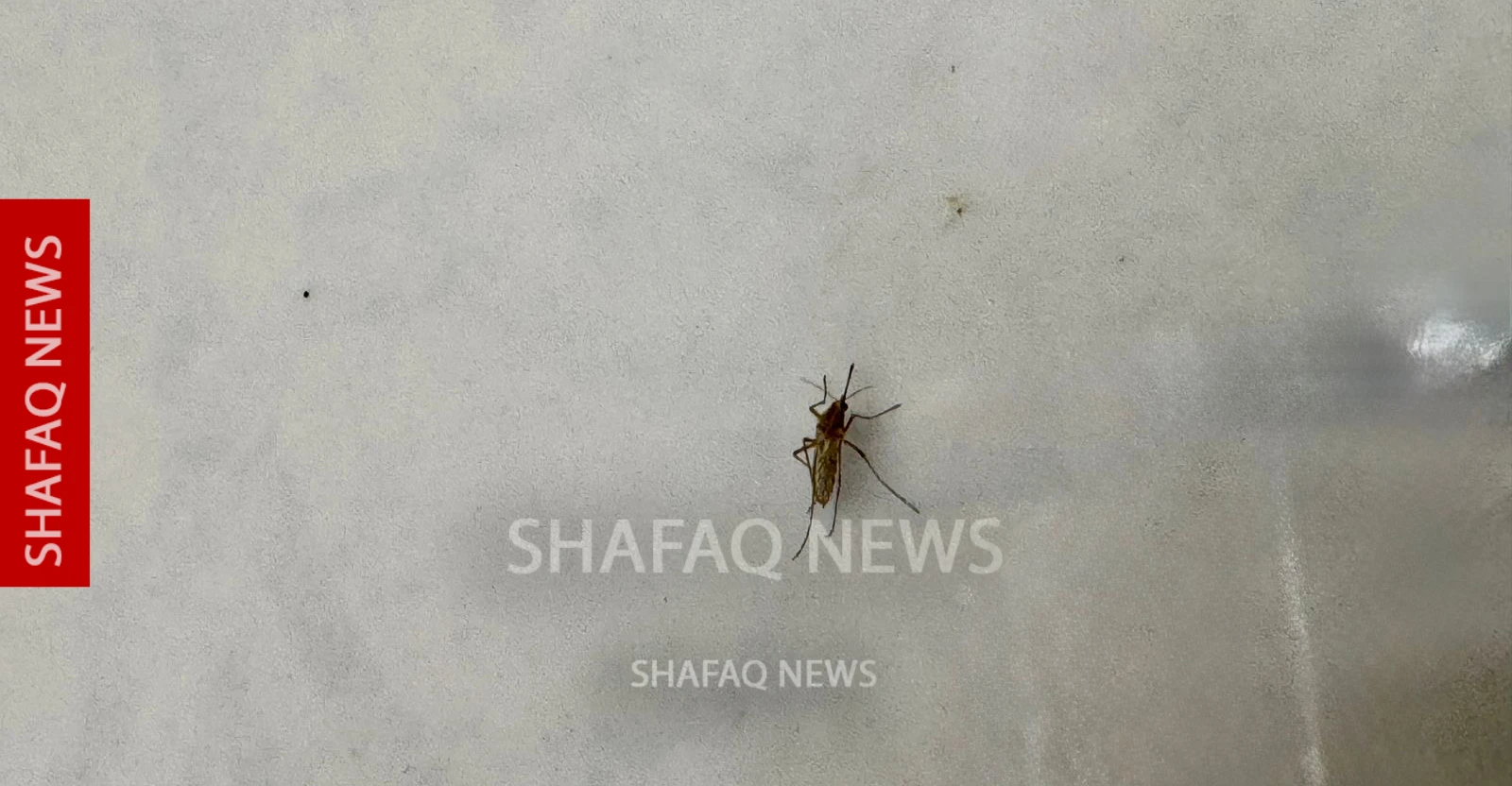
Huge swarms of mosquitoes and rodents are spreading across Baghdad and other Iraqi provinces as rising temperatures and stagnant water create ideal breeding conditions, sparking growing public concern over disease outbreaks and weak government response.
Residents say the insects have increasingly invaded homes since April, disrupting daily life and raising fears of infections linked to poor sanitation, untreated sewage, and mounting waste accumulation.
The outbreak has also exposed confusion among Iraqi authorities, with government agencies shifting responsibility for pest control onto one another while residents complain of limited field campaigns and unsafe pesticides sold on black markets.
Baghdad municipality spokesperson Uday al-Jandil told Shafaq News that mosquito control falls under the Health Ministry’s authority, saying the ministry had previously stopped municipal spraying initiatives over health concerns.
Environment Ministry spokesperson Luay al-Mukhtar also said responsibility lies with the Health Ministry, adding that the ministry only intervenes when informed about harmful pesticides requiring environmental action.
Residents described worsening conditions and the near disappearance of regular insect-control campaigns. Abdul Hassan Nima told Shafaq News that mosquitoes had spread widely through residential neighborhoods and were causing health problems for families. “There are no health teams combating insects like before,” he said, adding that pesticides purchased from public markets caused harmful side effects inside his home.
Another resident, Noor Ali, said insect-control teams had not visited her neighborhood in three years, forcing families to rely on unregulated pesticides bought from black markets every summer.
Health concerns are growing alongside the spread of stagnant and polluted water, which experts say provides ideal conditions for mosquito reproduction. A health source, speaking on condition of anonymity, told Shafaq News that 58 cases of leishmaniasis —commonly known in Iraq as “Baghdad boil”— had been recorded in one province alone since September 2025. The source said health authorities conduct spraying campaigns in infected homes and surrounding neighborhoods to limit transmission.
Suha al-Asadi, head of the Public Health Division in Babylon province, said local health authorities run seasonal campaigns targeting insects and rodents despite staff shortages and the wide spread of water marshes linked to disease transmission. Al-Asadi noted that sand flies, which transmit cutaneous leishmaniasis, differ from mosquitoes but belong to the same insect order and similarly feed on blood.
She said the Health Ministry uses environmentally friendly pesticides and urged residents to maintain hygiene standards and install window screens to reduce mosquito exposure.
Recent rainfall has worsened the problem by creating temporary and permanent pools of stagnant water across Baghdad, prompting intensified disease-control campaigns by Baghdad’s Karkh Health Directorate.
Hamid al-Ghazzi, a biology professor at the University of Baghdad, warned that certain mosquito species can transmit dangerous diseases after feeding on infected individuals. He identified dengue fever, malaria, and West Nile virus among the major mosquito-borne illnesses threatening Iraq, warning that the risk increases with higher temperatures, stagnant water, and weak control measures. Al-Ghazzi called for expanded spraying campaigns, improved public sanitation, and greater use of personal protective measures to prevent further spread.