Her Car, Her Income: Baghdad women reshape the road


Shafaq News- Baghdad
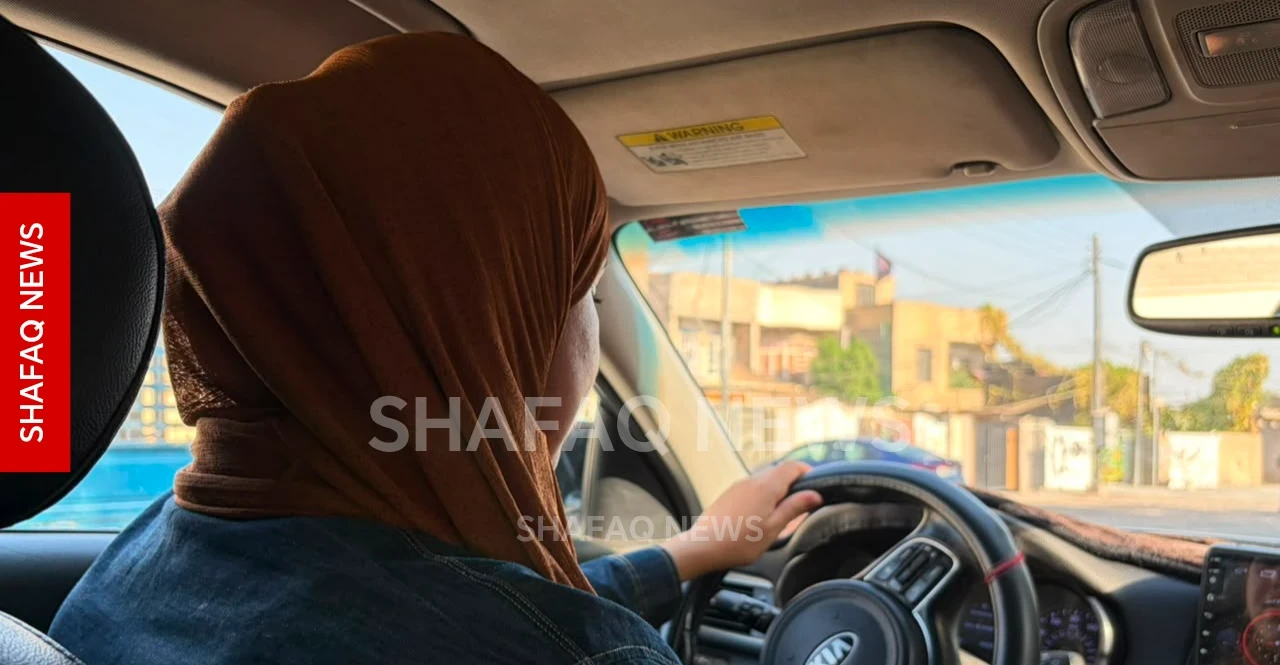
For a growing number of women in Baghdad, a car has become a workplace, a source of daily income, and a path toward financial independence, putting women behind the wheel as taxi drivers, couriers, and dedicated drivers for students and employees.
Rising living costs and expanding transport opportunities have encouraged some to put their cars to work through ride-hailing apps, while others operate regular routes or deliver clothes and cosmetics. The flexibility, however, comes with long hours on Baghdad’s congested streets, difficult passengers, social skepticism, and occasional harassment in a profession traditionally dominated by men.
Read more: The new blackmail in Iraq: AI and the exploitation of women
Freedom Behind The Wheel
For Ola Farid, a driver for a Baghdad ride-hailing app, control over her working day is one of the job’s biggest advantages. “The working hours are very flexible because I choose when to work and which trip suits me,” she told Shafaq News.
Farid credited the company with supporting and encouraging her but described passengers as sometimes less accepting. Some hesitate to enter her car because they distrust women’s driving, while others refuse for what she characterized as social or psychological reasons.
She has also encountered harassment and unwanted advances from some customers, a concern compounded by the app displaying her name and phone number once she accepts a trip. Persistent questions about the nature of her work and why she chose it are another source of frustration.
Still, those difficulties have not diminished her enthusiasm for being behind the wheel. “I love driving because it is an art and a matter of skill and taste, and it is never without adventure and difficulties,” she remarked.
Her work extends beyond carrying passengers. Farid delivers cosmetics and clothing from shops to customers’ homes, bringing her overall monthly income to as much as 1.5 million Iraqi dinars (about $1,140). The earnings, she explained, cover her basic needs while allowing her to avoid “false promises” of government employment and the drain of other private-sector jobs.
Driven by More Than Money
The reasons drawing women to the profession are equally varied. Driver Samar al-Dulaimi cited helping families meet daily expenses, proving themselves, challenging gender discrimination, and simply enjoying being behind the wheel.
“There is no longer anything preventing girls and women from working as taxi drivers,” al-Dulaimi told Shafaq News, arguing that some women can drive better than some male drivers.
While acknowledging the obstacles women encounter across different professions, she maintained that accumulated life experience has demonstrated Iraqi women’s ability to overcome difficulties and establish themselves professionally.
For Aseel Fadel, the opportunity fits naturally around her existing work at a kindergarten. “I chose to transport the children because I work at the kindergarten itself, so I can increase my income without it conflicting with my job.”
The arrangement is demanding, particularly in the capital, where driving requires sustained concentration amid heavy traffic, poor behavior by some motorists, and unwanted attention toward women at the wheel. Transporting children carries an added burden, which Fadel described as “a heavy responsibility.”
Supporting her family financially ultimately drove her decision to establish the regular transport route, a motivation she noted is shared by many women working in the field.
Read more: $1.2B traffic fix fails: Iraq seeks radical solution
Companies Make Room For Women
Many transport companies in Baghdad have increasingly welcomed female drivers, viewing their participation as a distinctive addition to their services.
Jamil Karim, a technical support official at one company, confirmed that women are encouraged to join its app to carry passengers and deliver orders as long as they meet the required conditions: applicants must be over 18, hold a valid driving license, own a modern vehicle registered in their name, and provide heating and air conditioning.
The company sometimes directs requests from female passengers to women drivers, an arrangement Karim indicated can ease pressure on them because women and girls generally feel comfortable riding with other women. Customer feedback has also been largely positive, with female drivers frequently receiving full ratings, while technical support teams handle complaints from those who encounter problems during trips and work to resolve them quickly.
Around 1,500 women have joined the company over roughly the past two years, he estimated, with the number continuing to rise.
Read more: Classroom to street corner: Degree holders stranded in Iraq's job drought
A Profession That Divides Opinion
As women become more visible behind the wheel professionally, their presence continues to draw contrasting reactions.
Mustafa Jamal, 45, described female taxi driving as relatively new to Iraqi society and questioned its benefits for women given the pressures they encounter on Baghdad’s roads. He warned that women can sometimes face abusive behavior or harm, and recounted witnessing a male motorist deliberately collide with a vehicle driven by a woman.
Read more: Constitutional quotas offer Iraqi women no shield against domestic abuse
For some female passengers, by contrast, a woman behind the wheel offers precisely the sense of comfort they seek.
Wasan al-Khafaji, a resident of Baghdad Al-Jadida, prefers female taxi drivers because, in her experience, they spare her the curiosity, intrusive behavior, and personal questions she has encountered with some male drivers.
One app-booked journey eventually developed into a lasting connection. After riding with a woman she found calm and learning that she worked through a ride-hailing platform, al-Khafaji asked whether she could contact her directly whenever she needed transportation. The driver welcomed the arrangement and went on to take her on numerous trips.
“Eventually, we became friends,” al-Khafaji recalled.