Decades-old trees felled on Baghdad's Saadoun Street


Shafaq News- Baghdad
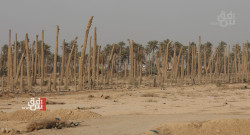
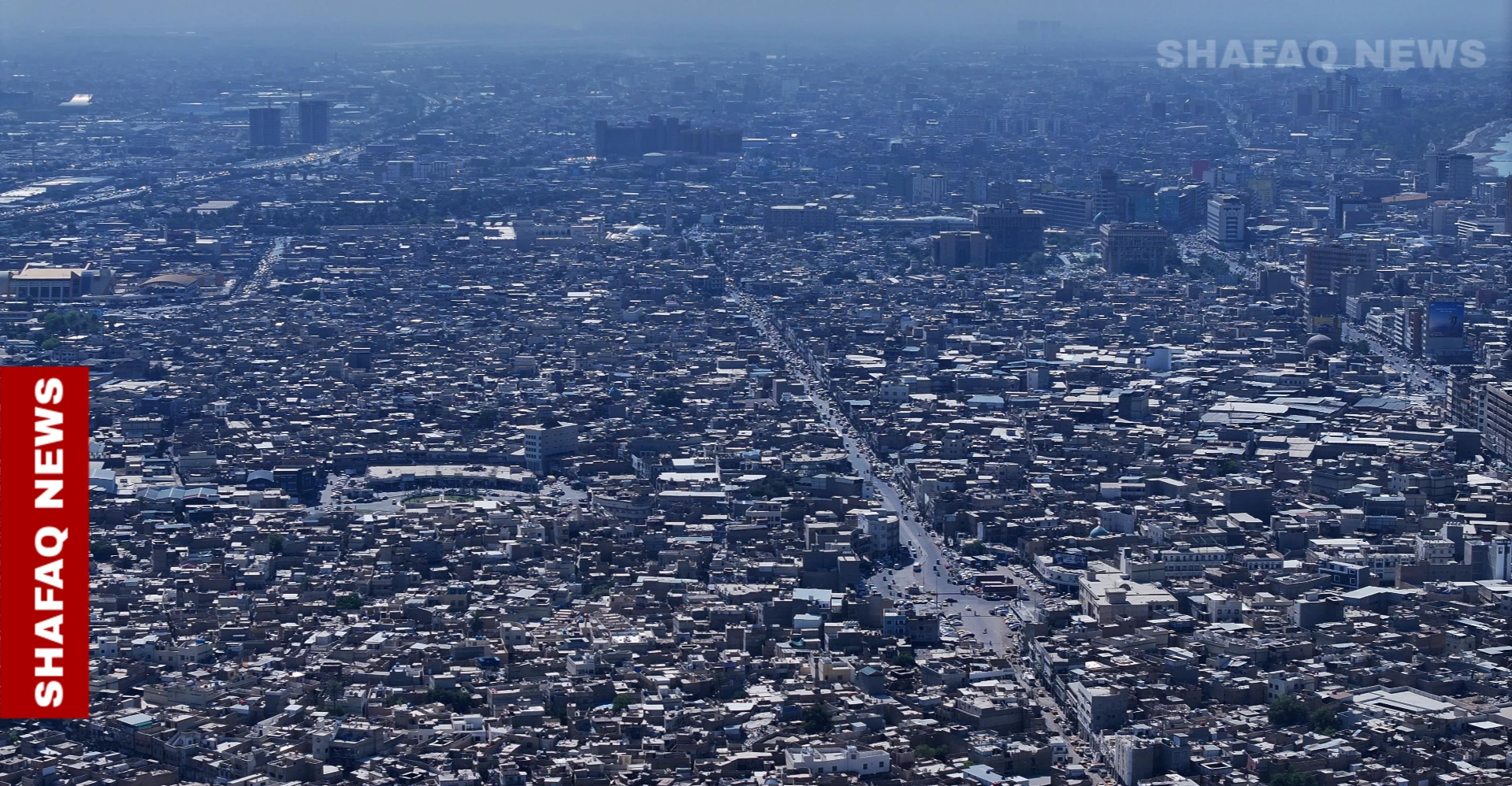
For more than 30 years, a row of trees outside the Palestine Hotel shaded pedestrians on Saadoun Street, one of the main commercial streets in central Baghdad. Several of those trees have now been cut down, leaving part of the pavement exposed to the sun.
The Palestine Hotel is a 16-story landmark on Firdos Square, best known internationally as the base for foreign journalists during the 2003 US-led invasion. A shop owner across the street told Shafaq News the trees appeared to have been removed at the direction of the hotel’s management, to make building more visible after a renovation he said was close to finished. Shafaq News was unable to reach the hotel’s management for comment.
A Tree Left Standing
The shop owner, who asked not to be named, said the trees that came down were "green and in good condition." A few meters from his shop stands a large tree that termites have hollowed out and split in two. He fears it could fall on passersby or neighboring stores.
“I asked the Ministry of Agriculture to remove that tree, but it turned me down, because such trees are part of Baghdad's identity and landscape,” he said.
Central Baghdad has seen this dispute before. In September 2025, the Karrada municipality ordered protection for the decades-old trees lining Abu Nuwas Street, a promenade along the Tigris River. It acted after Shafaq News reported that the trees could be removed during road works.
Over the past two decades, unregulated development has erased more than half of Baghdad's parks and green spaces, according to a 2023 Ministry of Environment report. Across Iraq, vegetation now covers less than a fifth of the land, down from nearly half in earlier decades. Forests account for under 2 percent, according to the UN Food and Agriculture Organization.
Read more: Safe play spaces disappear for Baghdad children
What the Law Says
On paper, Iraq's protections are extensive. Ministry of Agriculture spokesperson Qusay al-Hattab told Shafaq News that Iraqi law strictly prohibits bulldozing productive farmland or converting it to housing. The legal framework includes Forests and Orchards Law No. 30 of 2009, Environmental Protection and Improvement Law No. 27 of 2009, and Cabinet Decision No. 50 of 2016, according to earlier statements from the ministry.
Reclassifying land for other uses is generally limited to non-productive plots near cities, al-Hattab said. The power to approve such changes sits with a central committee at the General Secretariat of the Council of Ministers. He added that the ministry tracks violations and has cancelled a number of investment contracts for breaching the rules, but he did not say how many.
The Baghdad Municipality says it has closed off one route for development. Since 2022, it has applied a government decision barring land designated as parks, gardens, or green zones from being converted to any other use, spokesperson Uday al-Jundil told Shafaq News. “Projects with official approval are also not permitted to encroach on green areas,” he said.
The municipality has launched a campaign to plant 190,000 trees this autumn, following 180,000 planted in the spring, according to al-Jundil. He said the plantings come with drip and sprinkler irrigation systems so the saplings do not die of drought.
Read more: Iraq’s green decline: Can new laws and trees reverse it?
An Enforcement Gap
Omar Abdul Latif, a member of the Iraq Green Observatory, an independent Iraqi environmental monitoring group, said the problem is not a lack of legislation. In his view, weak enforcement of existing rules and limited inspection on the ground are what allow the losses to continue.
He pointed to three main drivers. The first is urban growth and a rising population, which, together with a housing shortage and climbing property prices, increase demand for land on city outskirts. The second is that replacement plots investors are required to plant are often left without water or care, so the trees die and the land becomes barren. The third is that encroachments and informal housing, once built, are very difficult to reverse.
Abdul Latif also described a newer practice: buying up orchards and bulldozing them to serve fish-grilling restaurants, a trade he said is spreading in Baghdad and other provinces. The Observatory has previously reported that farmers in Diyala, Nineveh, and Wasit withhold water from citrus groves so the dried wood can be sold to these restaurants.
Responsibility, he said, also lies with state bodies whose own projects have uprooted trees, including in the agriculture, municipal, and transport sectors. Fewer trees mean more frequent dust storms, less carbon absorbed, and higher temperatures in a capital that already suffers from heavy air pollution.
Many newly planted trees in Iraq do not survive their first summer because of water shortages and poor follow-up care. Abdul Latif argued that planting must be a sustained effort rather than "seasonal campaigns or announced numbers."
On Saadoun Street, the termite-damaged tree that the shop owner asked to have removed was still standing, he said.