US sanctions Iran digital asset network


Shafaq News- Washington
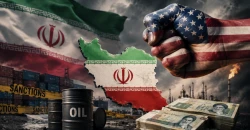
The US Treasury Department on Thursday sanctioned Iranian digital asset exchange BitBank, its software developer, and three associates of sanctioned financier Babak Zanjani, accusing the network of helping transfer hundreds of millions of dollars in Bitcoin to Iran's Islamic Revolutionary Guard Corps (IRGC).
The Treasury Department's Office of Foreign Assets Control (OFAC) claimed that Zanjani used BitBank between June and July to facilitate the transfers through a broader digital asset network that Washington says has been used to evade sanctions and launder funds for the IRGC.
“Today’s designations of Iranian digital asset infrastructure make perfectly clear that efforts to finance the Iranian regime using cryptocurrencies are not beyond OFAC’s reach,” Treasury Secretary Scott Bessent said. “If you support the Iranian regime, the Department of the Treasury will sanction you.”
The measures also target Pishtaz Simorgh Electronic Trade Company, which developed BitBank's digital asset software, along with Hossein Ali Zaker Hossein, Mohammad Mahdi Zaker Hossein, and Seyed Adel Heidari. Treasury described the three men as executives of Zanjani's Dot One Value Creation Group and key members of his sanctions-evasion network. Mohammad Mahdi Zaker Hossein is chief executive of Pishtaz Simorgh, while Heidari is vice chairman of Dot One's board. The department further accused Hossein Ali Zaker Hossein of involvement in Iranian oil exports and digital asset transfers, including transactions it said ultimately went to the IRGC.
Treasury separately said the already-sanctioned Hormuz Safe Marine Services Authority has used BitBank since June to transfer payments it received to the Iranian government. OFAC sanctioned Hormuz Safe in July, accusing the company of accepting Bitcoin and other digital assets through a maritime payment system that Treasury said was used to bypass US sanctions and generate revenue for the IRGC.
BitBank is controlled by Zanjani, according to Treasury, which said he has promoted the exchange on social media since at least 2024. Pishtaz Simorgh is a subsidiary of OFAC-designated Dot One.
Zanjani was sentenced to death in Iran in 2016 over the embezzlement of funds from the National Iranian Oil Company before his sentence was commuted in 2024. Treasury said he publicly re-emerged in 2025 as a backer of government-linked economic projects and built a network of digital asset companies used in part to launder money for the IRGC. OFAC designated Zanjani and two digital asset exchanges linked to him on January 30, marking what Treasury described as its first designation of a digital asset exchange for operating in Iran's financial sector. On July 24, OFAC sanctioned four individuals and nine entities it described as key components of Zanjani's broader sanctions-evasion network.
Thursday's designations were imposed under Executive Order 13902 for activity in Iran's digital asset sector and are part of Operation Economic Outcast, an economic campaign announced by Treasury Secretary Scott Bessent on August 24, targeting networks, intermediaries, and financial channels used by Iran to “smuggle oil, evade sanctions, and generate revenue.”