US, Iran trade strikes after Tehran recloses Strait of Hormuz


Shafaq News- Tehran/ Washington
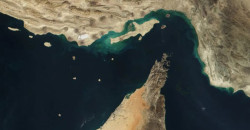
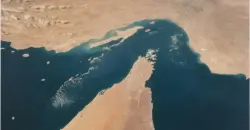
The United States and Iran exchanged fresh attacks on Sunday after Tehran decided to reclose the Strait of Hormuz, which carries around 20% of global oil supplies, until further notice.
US forces launched a third round of air and naval strikes against about 140 Iranian military targets, including missile and drone facilities, naval assets, ammunition depots, communications networks, and coastal surveillance positions, US Central Command (CENTCOM) reported, stating that the operation followed an attack by Iran’s Islamic Revolutionary Guard Corps (IRGC) on the Cyprus-flagged container ship M/V GFS Galaxy while it was transiting the waterway. One civilian crew member remains missing, and the vessel sustained an onboard fire and severe engine room damage that left it unable to continue its voyage.
— U.S. Central Command (@CENTCOM) July 12, 2026
CENTCOM indicated that more than 300 Iranian military targets have been struck this week as part of a campaign to reduce Tehran’s ability to threaten maritime traffic. Since early May, US forces have also helped secure the passage of more than 800 commercial vessels carrying over 400 million barrels of crude oil through the strait.
At 7:15 p.m. ET today, U.S. Central Command forces began launching the third round of strikes this week against Iran after Islamic Revolutionary Guard Corps forces blatantly attacked M/V GFS Galaxy, a Cyprus-flagged container ship transiting the Strait of Hormuz. A civilian crew…
— U.S. Central Command (@CENTCOM) July 11, 2026
US Defense Secretary Pete Hegseth argued that Iran had “made a poor choice” and was paying the price now, referring to the attack on the cargo ship and Tehran’s decision to close the strategic passage.
Iran made a poor choice. Now they pay. https://t.co/8m4fEfgrXv
— Pete Hegseth (@PeteHegseth) July 11, 2026
Iranian state media reported US airstrikes across southern and western Iran, with explosions in Qeshm Island, Bandar Abbas, Sirik, Jask, Chabahar, Konarak, and several locations in Bushehr province, including Kangan, Dayyer, and Asaluyeh. Additional strikes also hit Lorestan and Khuzestan provinces, where local officials confirmed projectiles landing near Hendijan, Mahshahr, and Abadan.
لحظه شلیک موشکهای آمریکایی هیمارس از خاک بحرینکاربران بحرینی با انتشار این ویدئو نوشتهاند که دولت بحرین به طور آشکارا خاک خود را برای حمله به ایران در اختیار آمریکا قرار داده و نباید نسبت به حملات ایران معترض باشد. https://t.co/UHfInRnem6 pic.twitter.com/5km1MXs9wu
— خبرگزاری فارس (@FarsNews_Agency) July 12, 2026
No casualties had been reported at the time of writing.
The Iranian response
Iran's Islamic Revolutionary Guard Corps (IRGC) responded, according to its statement, by destroying the command-and-control center and MQ-9 drone hangars at Prince Hassan Air Base, a US-used facility in Jordan, using ballistic missiles. The Iranian Army separately said it launched drone strikes on US military positions in Kuwait, the UAE, Qatar and Bahrain.
Continued US action, the IRGC and the army said, would be met with harsher retaliation.
The UAE Ministry of Defense said Emirati air defenses were engaging incoming missiles and drones launched from Iran, and the Ministry of Interior said air defense systems were responding to a missile threat. Explosions heard in several parts of the country were the result of air defense interceptions.
Kuwait's military said its armed forces were engaging hostile aerial targets inside Kuwaiti airspace. Qatar's Ministry of Defense said its armed forces were continuing to intercept ballistic missiles directed at the country. Bahraini state television reported that air defense systems intercepted and destroyed Iranian aerial attacks over the country, and Bahrain's Ministry of Interior activated warning sirens and instructed citizens and residents to move to the nearest safe location.
— وزارة الدفاع - دولة قطر (@MOD_Qatar) July 12, 2026
None of the four governments confirmed casualties or damage so far.
Mohammad Bagher Ghalibaf, speaker of the Iranian parliament, said the era of one-sided deals had ended. A spokesman for the Iranian Army said US intervention to open what he described as an illegal corridor in the Strait of Hormuz was the cause of the current insecurity.
The era of one-sided deals is OVER. We told you: keep your word or pay the price. Reality is knocking. pic.twitter.com/B97ogCYGaj
— محمدباقر قالیباف | MB Ghalibaf (@mb_ghalibaf) July 12, 2026