US-Iran talks yield Hormuz channel, Lebanon de-confliction cell


Shafaq News- Geneva
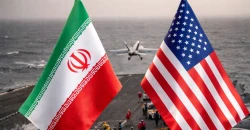
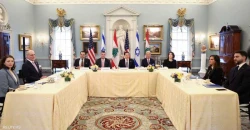
The first round of US-Iran negotiations concluded constructively in Switzerland overnight, with both sides agreeing to continue technical talks this week and establish new mechanisms to oversee implementation of their recent agreement, mediators announced on Monday.
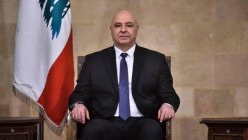
Pakistan and Qatar said in a joint statement that Washington and Tehran agreed to establish a High-Level Committee to provide “political oversight on the mediation,” supported by working groups handling nuclear issues, sanctions, and other aspects of the deal. The two sides also set up a direct communication channel for the Strait of Hormuz, which carries around 20% of global oil supplies, to ensure the safe passage of commercial vessels during the 60-day implementation period, as well as a “de-confliction cell” involving Lebanon aimed at ending military activity there.
Joint Statement by the State of Qatar and the Islamic Republic of Pakistan Regarding The Conclusion of Lake Lucerne Summit, First High-Level Committee Meeting with Participation of the United States of America and the Islamic Republic of IranLucerne | June 22, 2026The first… pic.twitter.com/bLVpaR2uua
— Ministry of Foreign Affairs - Qatar (@MofaQatar_EN) June 22, 2026
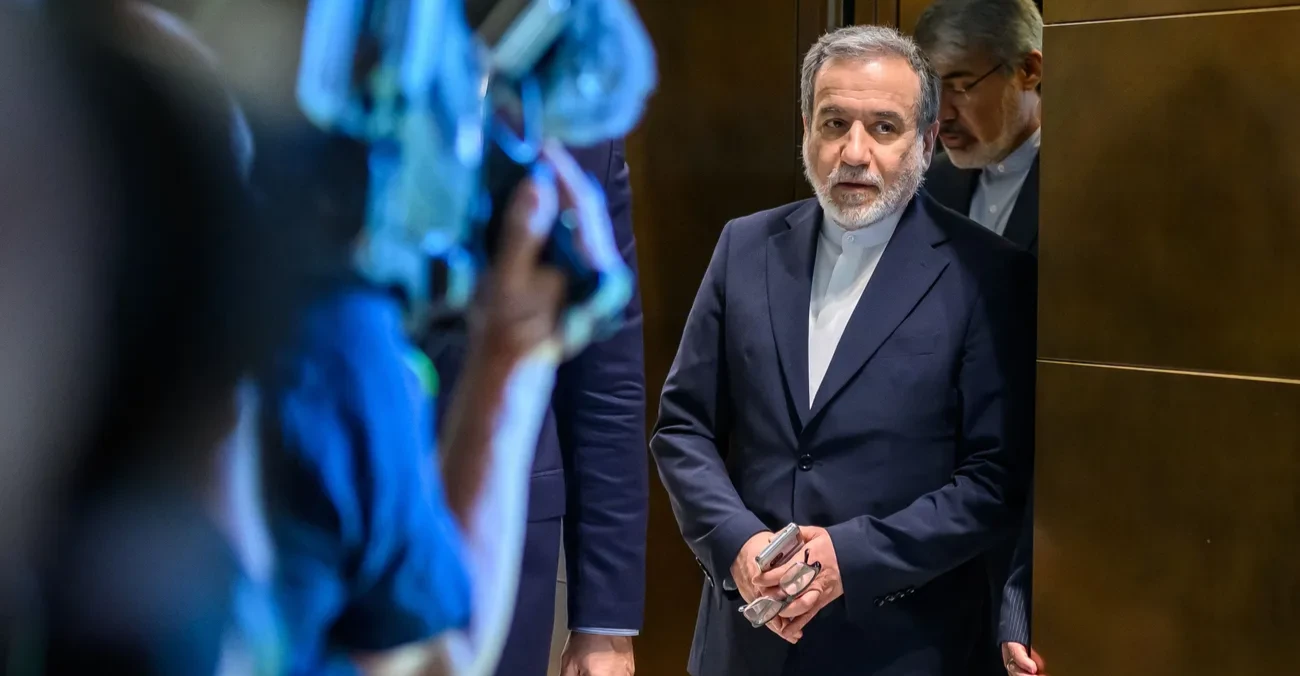
Iranian Foreign Minister Abbas Araghchi welcomed the outcome, citing waivers on Iranian oil and petrochemical exports, the release of some frozen assets abroad, and the launch of a “major reconstruction & development plan” for Iran. Lebanon's de-confliction mechanism, he added, would serve as the “first real test” of the agreement.
Tireless Pakistani and Qatari mediation has delivered major progress to end Lebanon War. Oil and petrochem exports are waived, blockade lifted, some frozen assets released, and major reconstruction & development plan launched for Iran. 1st real test: Lebanon deconfliction cell https://t.co/q0okD2qwSO
— Seyed Abbas Araghchi (@araghchi) June 22, 2026
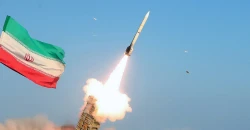
The talks, however, nearly collapsed after US President Donald Trump threatened to resume strikes on Iran and take control of the Strait of Hormuz if negotiations failed. Iran's semi-official Tasnim News Agency reported that Tehran initially refused to return to the negotiating room, though Pakistani and Qatari mediators continued relaying messages between the two sides. Meanwhile, US-based Axios, quoting a diplomat involved in the talks, denied reports of a walkout and said the Iranian delegation remained at the Burgenstock resort.
Read more: Trump’s balancing act with Iran tests diplomacy and deterrence
The agreement, reached last week, extends a ceasefire for at least 60 days and includes reopening the Strait of Hormuz and ending military operations across the region, including in Lebanon. Iran, however, accused Washington over the weekend of failing to uphold its commitments regarding Lebanon and announced a renewed suspension of maritime traffic through the strategic waterway.