Trump: US-Iran deal to be signed Sunday, Tehran disputes timeline


Shafaq News- Washington
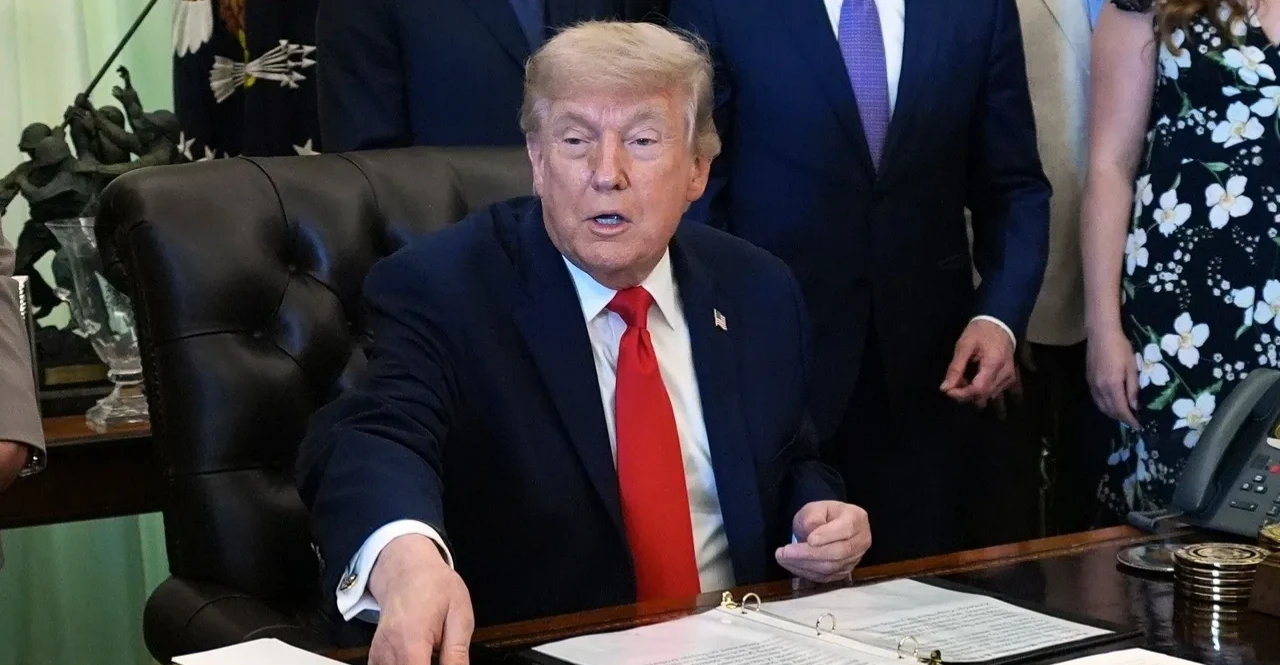
US President Donald Trump announced Saturday that a nuclear and peace agreement with Iran will be signed Sunday, pledging that the Strait of Hormuz will reopen immediately upon signing, a timeline Iran's foreign ministry disputed hours earlier.
In a post on Truth Social, Trump declared the agreement his administration's deal to be "the exact opposite" of the 2015 Joint Comprehensive Plan of Action (JCPOA), the nuclear accord negotiated under former President Barack Obama, which Trump described as "an easy, beautiful, smooth road to a Nuclear Weapon." He asserted the new agreement constitutes "A WALL TO NO NUCLEAR WEAPON," adding that Iran "no longer want a Nuclear Weapon, nor will they have one, either through purchase, development, or any other form of procurement."
Trump stated that no financial transfers would accompany the deal, contrasting it with the Obama-era payments to Tehran, which he put at "hundreds of billions of dollars, including 1.7 billion dollars in green, cold cash." He added that "immediately after it is signed, the Hormuz Strait is open to all."
The US president also addressed the disposition of Iran's remaining nuclear material, stating that Washington will "go in and get the nuclear dust, buried deep under the powerful sunken granite mountains" —a reference to underground facilities struck by US B-2 bombers— and "downblend and destroy it, whether in Iran, or the United States," at an unspecified future point when "all is calm."
Iran's Foreign Ministry spokesman Esmaeil Baqaei directly contradicted the Sunday timeline, stating Saturday that the precise date for signing the memorandum of understanding between the two sides "has not yet been determined" and that it "will not be tomorrow, Sunday." Pakistani Prime Minister Shehbaz Sharif separately said Islamabad was preparing to electronically sign the US-Iran peace agreement within 24 hours, without specifying a date.
Trump also warned that the United States retains "the ultimate alternative, hopefully never to be used again," if the diplomatic process fails.