When maps lie: Digital manipulation of civilian sites exposes Iraq’s governance gap in conflict



Shafaq News (Updated on Apr. 14, at 16:50)
On a morning approximately ten days ago, parents in the Shoraw neighborhood of Kirkuk, a disputed oil-rich province in northern Iraq claimed by both the federal government in Baghdad and the Kurdistan Regional Government, began receiving alarming messages: a local education institution —Othman Faraj School— had been renamed on Google Maps to "Iranian Consulate."
By the time administrators confirmed the label was false, the damage was done. Parents rushed to collect their children, phones flooded the school's front desk, and a neighborhood was gripped by fear it could not immediately explain or disprove.
In a separate case, locals told Shafaq News that a student renamed his own school on the same platform to "American Military Base" —an act described as a prank that nonetheless generated identical anxiety.
Together, the two cases have exposed what digital safety specialists, security analysts, and technology experts describe as a critical and unaddressed vulnerability: the open-editing architecture of major mapping platforms creates conditions for rapid, low-effort misinformation with immediate physical consequences in conflict-affected environments.
Fear on the Ground
"As a parent, it was very unsettling," said Umm Ahmad, a mother of a Grade 6 student at Othman Faraj School, whose account was posted publicly on social media. "We suddenly started hearing that our children's school was labeled on Google Maps as the Iranian Consulate, and everything changed almost immediately. People in the neighborhood became anxious, and there were safety concerns, especially given the tensions in the region."
She described a school administration overwhelmed by a crisis not of its making. Some parents rushed to collect their children early, while others kept calling the administration to understand what was happening. The staff tried to reassure families, but were also visibly distressed. Her account was consistent with the broader pattern of panic documented by Shafaq News in the days following the incident.
The fear, she said, was specific: that a false digital label could attract real-world attention to a building full of children. "When something like that appears publicly, especially in a sensitive place like Kirkuk, it creates real fear for families."
Mohammad Musa, a Kirkuk resident, told Shafaq News the phenomenon had moved beyond any single incident. The appearance of military labels near homes and schools generates panic regardless of whether the underlying claim is verifiable. "Just seeing the name of an armed group on a map near your house can cause real fear, especially under current circumstances," he said.
Militarily Irrelevant, Socially Damaging
Security and technical experts consulted by Shafaq News were consistent on one point: the manipulated labels carry no meaningful military intelligence value. Saif Ra'ad, a security analyst, said the edits appeared to serve comedic rather than operational purposes. "The information is false and cannot be used as targets," he told Shafaq News, explaining that military institutions operate from verified intelligence supported by aerial and satellite reconnaissance —not open internet data.
Ra'ad added that content published on mapping applications is passed through a comprehensive intelligence filter before any operational consideration, making direct reliance on such data “functionally impossible for serious actors.”
Technology specialist Ihab Annan reached a similar conclusion from a different angle. State-level security institutions, he told Shafaq News, do not rely on public mapping applications because they possess proprietary systems of considerably greater precision, typically satellite-linked. He noted that some open-source data may be cross-referenced against verified intelligence, but the primary infrastructure is entirely separate from consumer platforms.
Annan observed, however, that complete avoidance of digital tracking is nearly impossible given the degree to which modern devices are integrated with platforms such as Google, whose algorithms continuously collect and process location data.
Read more: Fake war, real impact: How AI-generated content is reshaping public perception in Iraq
A Failure of Digital Infrastructure
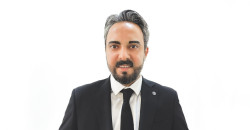
Dr. Mohammad Awada, founder and CEO of AwadaTech, a Lebanon-based technology firm specializing in AI solutions, smart systems, and school management platforms, told Shafaq News that the open-editing model used by platforms such as Google Maps introduces elevated risks in conflict-affected environments that do not exist to the same degree in stable contexts.
"In conflict zones, digital information is not neutral —it can shape behavior on the ground," Dr. Awada said. In stable settings, user-generated edits can improve platform accuracy. In politically volatile areas, the same openness becomes a vector for misinformation.
The risks he identified include low verification thresholds that allow false labels to propagate rapidly, the deliberate misidentification of locations— what he termed the weaponization of digital geography— and a moderation time lag that is particularly consequential in fast-moving security situations.
The educational consequences, Dr. Awada said, are immediate and multi-layered. When a school is falsely labeled as a military or diplomatic installation, even briefly, students experience fear and confusion, parents withdraw their children, attendance drops, and administrative staff are forced to manage a crisis they did not create. “This is a failure of the digital ecosystem to protect physical learning spaces.”
On the question of accountability, Dr. Awada said responsibility is shared but asymmetrical. Platforms such as Google bear primary responsibility because they control data verification systems, moderation speed, and escalation mechanisms. In high-risk regions, he argued, platforms should apply stricter validation layers for sensitive sites, including schools, hospitals, and government facilities.
National regulators carry secondary responsibility and can define legal thresholds and establish reporting channels, but their influence depends on enforcement capacity and meaningful cooperation from global technology companies. Educational institutions themselves are reactive actors with no ability to control platform infrastructure.
"Digital infrastructure is now deeply embedded in physical safety, but governance has not kept pace."
Read more: AI reshapes Iran-Israel-US conflict as cyber warfare expands
A Legal Gray Zone —With Exceptions
According to Shafaq News's review of Iraqi legislation, falsely labeling a civilian location as a military or security installation on a public digital platform may constitute a punishable offense under existing Iraqi law. In the absence of a comprehensive cybercrime statute —a draft Information Crimes Law remains pending— Iraqi authorities have applied Iraqi Penal Code No. 111 of 1969, specifically provisions in Article 433 and related sections against spreading false information and threatening public order, to cases involving digital misinformation.
Misleading information that links a civilian area to military or security targets may additionally be deemed an offense affecting internal or external state security under the same code. Shafaq News's review further identified Anti-Terrorism Law No. 13 of 2005 as a potential legal avenue if false labeling is deemed to have caused public panic or facilitated a criminal act —though application at that threshold would require prosecutorial determination.
The legal exposure is more clearly defined in the Kurdistan Region of Iraq, where the Kirkuk incident occurred. Kurdistan Region Law No. 6 of 2008 explicitly criminalizes the use of the internet to spread false information, with penalties ranging from six months to five years in imprisonment —providing a more specific legal framework than exists at the federal level.
An Institutional Response — Partial but on Record
Raoof Mohyiddin, head of the Supervision Unit at the Kirkuk Education Directorate, confirmed in a press brief that educational authorities notified both the provincial police command and the Iraqi National Intelligence Service of the incident to track down those responsible. "Strict legal measures will be taken against those involved in this act, which endangered the lives of hundreds of students and spread terror among families," Mohyiddin said.
The Kirkuk Education Directorate followed the security referral with a formal directive to all school principals across the province, instructing them to monitor their institutions' names on search engines and digital mapping platforms “on a continuous and periodic basis,” and to report any manipulation immediately to prevent recurrence.
The response, while meaningful at the provincial level, exposed the boundaries of institutional reach. The Communications and Media Commission, Iraq's principal federal body for overseeing digital and media communications, issued no public statement, no regulatory guidance, and received no documented complaints in connection with the incidents, according to a review of its official website and social media accounts. The gap between a provincial education authority acting and a national digital regulator remaining silent defined the limits of Iraq's institutional response.
Shafaq News put three questions to Google in writing: whether the platform operates a dedicated moderation mechanism for location edits that falsely designate civilian sites as military or security installations in conflict zones; what its standard response time is for reversing such edits once reported; and whether it applies heightened oversight to user-submitted changes in regions experiencing active armed conflict. Google's response addressed none of the three directly. The company said it relies on automated systems, expert analysts, and community reporting to identify and remove content that violates its policies. It confirmed that the edits in question had been taken down —without disclosing when, by whom, or why the removal was triggered, or whether any of the specific safeguards Shafaq News asked about exist.
There is no comprehensive global framework specifically addressing geospatial misinformation in conflict zones. General platform content moderation policies exist, but are not tailored to geographic sensitivity. Existing digital safety frameworks, including UNESCO guidelines on risk environments, do not address mapping systems at the operational level required. Crisis-response mechanisms, where they exist, remain ad hoc rather than institutionalized, according to Shafaq News's review.
A Temporary Label, a Permanent Question
The labels at Othman Faraj School and the unnamed school have since been corrected on the platform. No arrests have been publicly announced in connection with either incident, despite the referral to police and intelligence services, and no federal regulatory action has been announced. The national authorities did not even issue public guidance to citizens on how to report or respond to similar manipulations.
A temporary mislabel in a conflict setting is not a minor technical glitch. It is, as Dr. Awada framed it, “a potential security incident with educational, social, and institutional consequences,” and as the Kirkuk case demonstrates, the systems designed to prevent or correct it have yet to catch up.
Written and edited by Shafaq News staff.