Toxic sewage flows overwhelm Iraq’s declining waterways


Shafaq News
Nearly 6 million cubic meters of wastewater flow directly into Iraq’s Tigris and Euphrates rivers every day, according to lawmaker Ghaith Shabaa. The discharge is intensifying a water crisis already sharpened by drought and climate change: as river flows decline, less water remains to dilute sewage and industrial contaminants.
The consequences are becoming harder to contain. Field inspections and laboratory tests have uncovered serious pollution in rivers, while samples from some treatment plants have failed to meet requirements for human use. Across the country, sewage, medical waste, and industrial effluent are entering waterways that remain essential to drinking-water supplies, agriculture and the wider ecosystem.
For Iraq, the danger lies not only in the volume of waste being released, but also in what the water carries and where it ends up. Contamination can move downstream, pass through inadequate treatment systems, and reach irrigation networks, extending the consequences far beyond the original discharge points.
Read more: Legacy of the ‘Two Rivers’: Iraq races to save the remains of Mesopotamia
Toxifying the Flow
Speaking to Shafaq News, Shabaa of the Al-Asas Alliance cited official data from government departments, including test results showing “exceptionally high pollution levels” in water supplied through treatment plants intended to meet drinking-water standards.
The latest findings reviewed by the parliamentary Health Committee showed failure rates of 100% in Maysan, 99% in Al-Muthanna and 97% in Basra. The results prompted the committee to call for urgent government intervention.
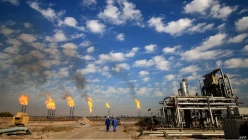
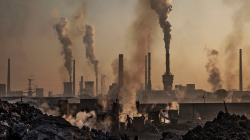
A substantial share of the wastewater enters rivers before treatment. Ordinary sewage is only one part of the problem: medical and industrial waste, together with discharges from power stations and oil refineries, introduce chemical and microbial contaminants that existing drinking-water treatment plants are not equipped to remove adequately.
The Health Committee submitted a comprehensive file to Parliament documenting pollution sites, their causes, possible treatment methods and proposed remedies. Parliament subsequently approved a special session to hear from the ministers of Health, Water Resources, Oil, Construction, Housing, Municipalities and Public Works, and Environment. At the time of the original report, the session was expected to take place early the following week.
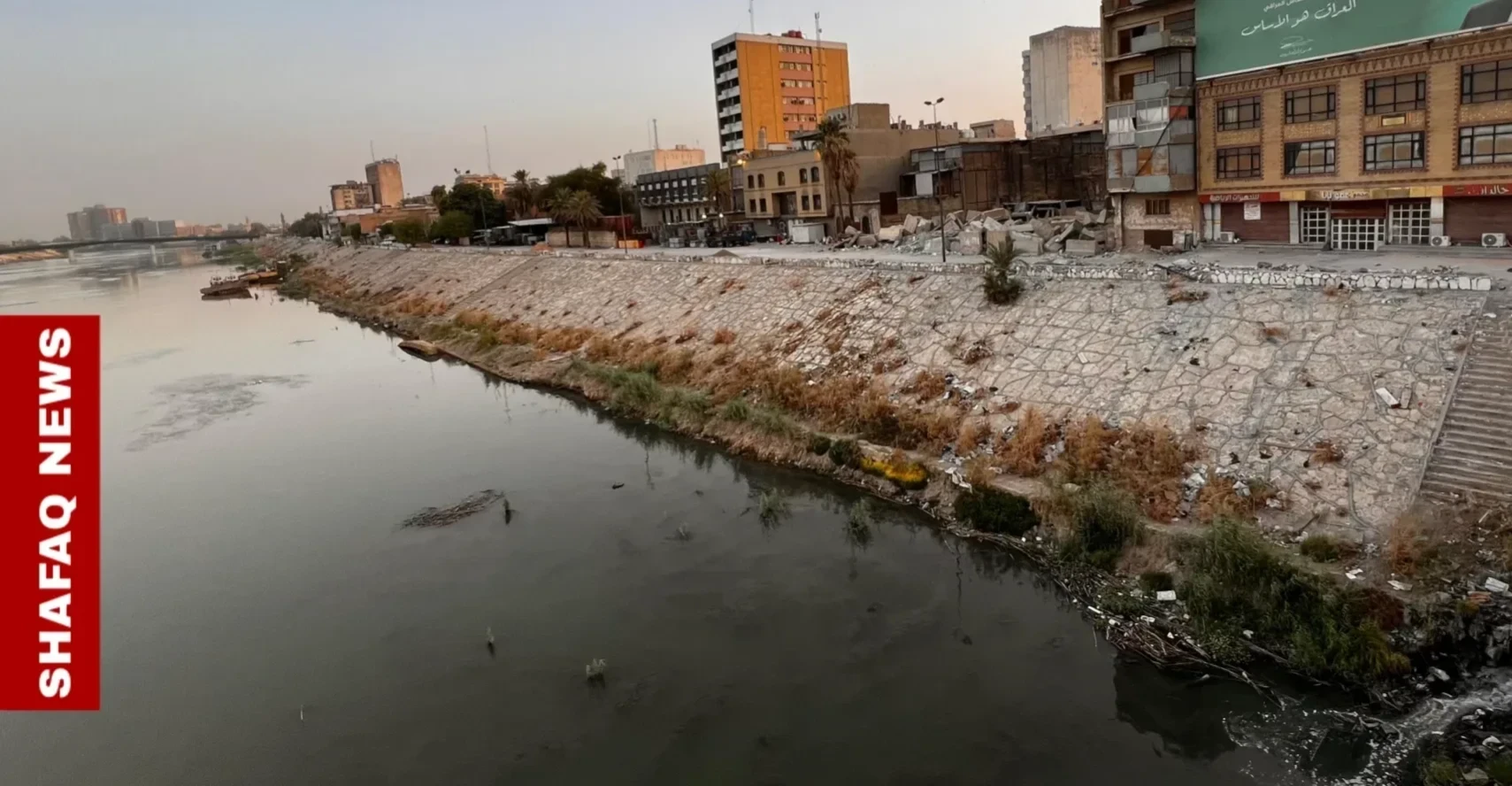
Baghdad illustrates how these failures become visible along the waterways themselves. On April 29, 2026, a parliamentary committee established under Parliamentary Order No. 63 to investigate pollution in the Tigris identified 24 contaminated outlets and discharge points across the capital. They included sites associated with the sewerage directorate, hospitals, refineries, and power stations, as well as pollution linked to residential activity.
Read more: Death in the current: Pollution decimates Iraq’s river ecosystems
One of the main routes carrying contaminants into the Tigris is the Diyala River. Committee chairman Yusuf Al-Kilabi identified it as a major pollution hotspot, linking the problem partly to the failure of the Al-Atariyah project* after 2003. He said the theft of its pumps left liquid and solid pollutants flowing into the Diyala, from where they can reach the Tigris when water levels rise.
The pollution does not originate solely upstream. The Green Iraq Observatory reported that large quantities of chemical and organic sewage from wastewater discharge stations in Al-Rusafa flow through the river before reaching the Tigris.
Shafaq News documented sewage pipes discharging directly into the Tigris near Al-Ahrar Bridge in central Baghdad in June 2026. Field observations identified more than 10 similar outlets elsewhere along the capital’s riverbanks, particularly between Bab Al-Muadham and Al-Karrada.
By August, the Green Iraq Observatory had identified about 500 permanent pollution sources along the Tigris, including 23 acute pollution hotspots in Baghdad involving sewage outlets and medical waste. The findings, reported by Shafaq News, pointed to a problem spread across the river system rather than confined to a handful of visible pipes.
Nor is the material entering the water limited to conventional sewage. The Observatory warned of compounds including polychlorinated biphenyls (PCBs) and phthalates such as diethylhexyl phthalate (DEHP), which can be difficult to remove through conventional treatment. According to the environmental watchdog, exposure to these substances can increase risks associated with chronic diseases and endocrine disorders.
Read more: The cost of filth: Iraq among the world’s most polluted nations
Widespread Poison
The evidence gathered outside Baghdad suggests that contamination takes different forms across Iraq’s rivers. Pollution expert Iqbal Latif Jaber reported chemical, microbial, and radioactive contamination at several locations, based on samples collected from different waterways and surrounding areas.
In Diyala, samples from the Wand River and soil collected in Hassan Qolay village, in Khanaqin district, contained mercury, iron, lead, zinc, copper, nickel, cadmium and chromium at levels above internationally permitted limits. Jaber singled out mercury as a particular concern. A radiation-detection device also indicated radioactive contamination in the Baladruz River.
Tests from the Khurasan River revealed another combination of hazards. Samples collected opposite Al-Batool Hospital and a COVID-19 isolation hospital contained several heavy metals at concentrations exceeding international limits and Iraqi standards for river water. Elevated nitrate levels, alongside low phosphate levels, pointed to human biological activity and organic matter associated with sewage from the health facilities. Copper, cadmium, lead, and mercury were also detected.
These findings matter beyond the immediate condition of the rivers. Heavy metals can enter irrigation supplies, be absorbed by plant roots and move through the food chain, potentially carrying the consequences of contaminated water into agricultural production and public health.
Pollutants also cross provincial boundaries. Water entering Baghdad through the Tigris and Diyala brings contamination from other areas, while pollution has been reported at Saadiyat Al-Shatt in Saladin and at the Sumer outlet in Diyala, where polluted water enters the river system.
Farther south, the contaminants encounter already difficult water conditions. The Green Iraq Observatory said Basra receives polluted water from upstream provinces while facing rising salinity and the advance of the saltwater tongue. In Wasit and Maysan, contaminated sediments carried from Baghdad and the Diyala River create further pressure, with pollutant concentrations able to increase as water levels fall. Deteriorating water quality and accumulated pollutants also affect the lower basin, marshes and tributary networks in Dhi Qar.
Following contamination from one location to another exposes a central difficulty: authorities must address not only the pollution already present in the rivers, but also the activities that continue to introduce it. That requires reliable monitoring, functioning treatment facilities, and enforcement capable of preventing further discharges.
Action Over Audits
Jawad Al-Jubouri, the ministry’s technical undersecretary, said field teams and monitoring stations track pollution sources in Baghdad and other provinces, including industrial activity, health-care waste, sewage discharges and other environmental violations affecting the Tigris and Euphrates.
The ministry has called for a strategic plan to establish and develop sewage treatment plants and reduce the discharge of untreated water into rivers. Its monitoring network includes 67 water-monitoring stations: 34 on the Tigris, 22 on the Euphrates and five on the Shatt Al-Arab, alongside other monitoring points.
Al-Jubouri has also called for the integration of monitoring data and closer coordination with the Ministry of Water Resources and other institutions to identify faults and address them. Field operations extend across Baghdad and the provinces, while an electronic air-pollution monitoring network operates in the capital, with expansion plans.
The ministry’s work further covers pollution beyond the water system. Monitoring has recorded elevated air-pollution indicators in areas affected by traffic congestion, while fuel quality and dust storms contribute to poor air quality. Findings are referred to the relevant authorities under existing laws.
Water pollution is therefore part of a broader environmental challenge involving air, soil, biodiversity and ozone. Addressing these pressures calls for coordination across government, not a response confined to any single ministry.
Broader meetings involving local governments, ministries, the Federal Board of Supreme Audit, the Supreme Judicial Council and the Prime Minister’s Advisory Office have produced recommendations ranging from the formation of a national emergency team and the removal of environmental violations to river dredging, sewage treatment and improvements to plant efficiency.
Parliamentary action has since advanced beyond the special session initially planned. On September 24, the Council of Representatives voted on recommendations from the committee established under Parliamentary Order No. 63 to investigate Tigris River pollution. The ministers of Environment and Water Resources attended the session, and the parliamentary leadership urged both ministries to accelerate projects and establish a joint government task force. The Iraqi Parliament published the update.
Illusion of Safety
The condition of the rivers is only one part of Iraq’s water problem. Equally important is whether the systems designed to treat and deliver that water can reliably make it safe for consumption.
In Basra, a Federal Board of Supreme Audit report cited by the Green Iraq Observatory found that drinking water between 2021 and 2024 failed to meet Iraqi drinking-water standard No. 417 because of high levels of total dissolved solids (TDS). Some household samples also showed microbial contamination.
The audit found that most water-treatment projects and plants in the province lacked fully equipped laboratories capable of conducting physical, chemical, and bacteriological tests. Without these facilities, operators face limitations in monitoring water quality continuously and identifying contamination before supplies reach consumers.
Similar weaknesses affect other provinces. According to the Green Iraq Observatory, most water-treatment projects across Iraq had reached the end of their design life, with many operating for more than 25 years. The situation was particularly evident in Babil, Wasit, Al-Anbar and Saladin.
Read more: Al-Anbar: An unfinished chapter in Iraq’s water story
Citing Federal Board of Supreme Audit data, the Observatory reported treatment-related failure rates of 49% in Al-Muthanna and 41% in Maysan, the highest among the provinces it examined. These figures come from a separate assessment of treatment infrastructure and should not be conflated with the much higher sample-testing failure rates reported earlier by the parliamentary Health Committee.
The weaknesses help explain why access to a water supply does not necessarily mean access to water that is consistently safe to drink. UN-Water data cited by Our World in Data in July 2026 showed that about 60% of Iraq’s population had access to safely managed drinking-water services. Under Sustainable Development Goal 6, that designation applies to an improved water source that is available when needed and free from contamination.
Meanwhile, the volume of wastewater being discharged continues to place pressure on the same system. The Green Iraq Observatory estimated that about 5 million cubic meters of sewage enter Iraqi water sources every day without adequate treatment, warning of heavy metals and highly toxic substances and their potential effects on public health.
That estimate differs from the nearly 6 million cubic meters cited by Shabaa. The two figures come from different sources and cover different scopes; they are not measurements of precisely the same volume. Both, however, indicate the scale of untreated or inadequately treated wastewater entering Iraq’s water system.
Securing the Source
For water strategy and climate-change expert Ramadan Hamza, pollution cannot be separated from the broader question of water security.
Read more: Iraq’s water crisis deepens: Reserves collapse, mismanagement continues
Hamza believes Iraq has the technical capacity to address the problem, but that capacity must be matched by implementation, oversight and sustained action. His proposed approach begins before pollutants enter the rivers: protecting waterways, expanding sewage treatment, rehabilitating drinking-water networks and continuously testing water from its source to the consumer.
That would mean intercepting wastewater before it reaches a river, ensuring that treatment plants can handle the waste they receive and safeguarding distribution networks against further contamination. Reliable testing is also essential, allowing authorities to identify failures and intervene before pollutants travel farther downstream.
“The pollution problem does not begin with the smell or color of contaminated water, and it does not end when a sample is taken,” Hamza said.
He urged authorities to apply the “polluter pays” principle and impose deterrent fines and penalties on individuals, institutions, and industrial or agricultural activities responsible for polluting water sources. “Greater environmental awareness and closer coordination among the ministries of Water Resources, Environment and Health, as well as local administrations, are also needed,’’ he added.
Read more: Drop by drop: Can Iraq avert a thirsty future?
*The Al-Atariyah project is a wastewater treatment initiative located in the Al-Atariyah region, aimed at refining and treating sewage water away from the Diyala River.
Written and edited by Shafaq News staff.