Iraq weighs new ministries two days after dinar devaluation


Shafaq News- Baghdad
Two days after Iraq devalued the dinar amid mounting pressure to keep public salaries flowing, former lawmaker Amir al-Maamouri revealed that political blocs had reached understandings to add new ministries to Prime Minister Ali al-Zaidi's unfinished cabinet.
According to al-Maamouri, the plans include a ministry for artificial intelligence or digital investment, and splitting the Ministry of Culture, Tourism and Antiquities into separate culture and tourism portfolios. “The new posts would be shared out under the quota system to satisfy the parties.” Al-Zaidi was considering merging ministries to cut costs.
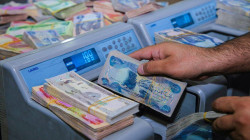
The talks come at a moment of acute fiscal strain. On October 6, the Council of Ministers raised the official end-user rate from 1,320 to 1,520 dinars per dollar. Iraq earns nearly all its revenue in dollars from oil, so a weaker dinar gives the treasury more local currency for every barrel sold. The same change raises the cost of imports for a population whose salaries, pensions and savings are held in dinars.
The Cost Of Keeping Salaries Paid
Finance Ministry data on budget execution through the end of July put total revenue at 39.1 trillion dinars. Oil supplied 30.4 trillion of that, or 78%. Spending reached 65.4 trillion dinars over the same period, leaving a deficit of 26.3 trillion, about $17 billion at the new official rate. Central bank reserves fell from $97.4 billion at the end of 2025 to $80.6 billion by the end of July. Over the same months, the US war with Iran disrupted the Strait of Hormuz, the main route for Iraqi crude.
Al-Zaidi defended the devaluation before parliament on October 8. He said his government faced three alternatives: compulsory savings that would leave employees waiting on promises of future payment, paying salaries every 45 days, or borrowing on top of a public debt already above 208 trillion dinars. The state needs about 10 trillion dinars a month to function.
Read more: Iraqi dinar devaluation sparks backlash from blocs inside the cabinet
The 2027 draft budget, due in parliament by October 15, sets spending at 217 trillion dinars against a projected 50 trillion deficit. It assumes oil at $58 a barrel and fixes the exchange rate at 1,500.
A government source told Shafaq News that party leaders had endorsed the rate change in meetings with al-Zaidi before it was announced. Many of the political blocs are now negotiating the size of his cabinet.
How Ministries Become Currency
Iraq allocates cabinet posts through muhasasa, an informal power-sharing system that divides the state among sectarian and ethnic parties. Each bloc earns points according to its parliamentary seats and spends them on portfolios. Legal researcher Saif al-Saadi said that a "sovereign" ministry such as Interior or Defense can cost 15 to 20 points, and a service ministry 10 to 12. Every new portfolio adds supply to that market, giving negotiators more posts to trade.
Al-Zaidi, a businessman with no party of his own, took office on May 14 as the nominee of the Coordination Framework, the alliance of Shiite parties that won the most seats in the November 2025 election. Parliament confirmed 14 of his 23 ministers. Nine portfolios, including Defense, Interior and Planning, are still run by acting officials five months later.
The vacancies have drawn in other demands. Several parties back four new deputy prime minister posts, and a broad agreement provided the deputies hold no ministry. The candidates include Laith al-Khazali, brother of Asaib Ahl al-Haq leader Qais al-Khazali, whose nomination drew US objections.
The disarmament talks have also fed into the bargaining. A source told Shafaq News on October 1 that one armed faction, negotiating with the four-member committee charged with bringing weapons under state control, had asked for a new ministry to support the security ministries.
The Cost Beyond The Minister
Nouri al-Dulaimi, a former planning minister, told Shafaq News that Iraq needs to restructure the institutions it already has. A new ministry, he said, brings deputy ministers, advisers, directorates, offices, buildings, security details and operating budgets, far more than one ministerial salary. “New bodies without clear mandates and measurable targets deepen disguised unemployment.”
Read more: $45B deficit looms over Iraq’s draft 2027 budget
He also pointed to 2015, when Prime Minister Haider al-Abadi abolished the posts of vice president and deputy prime minister and cut protection details after protests against waste and corruption.
Political analyst Mujasha al-Tamimi also said that additional ministries “mean new positions, allowances, guards and buildings with no guarantee of results, at a time when Iraq should prioritize austerity and the efficiency of existing institutions.”
Former lawmaker Hussein Arab said a ministry for e-governance or artificial intelligence could serve a real administrative purpose, because “Iraq still lacks an integrated electronic system linking its ministries, and most current connections are partial.” He proposed staffing it with existing government employees rather than building a new apparatus.
Former lawmaker Mahma Khalil added a different consideration. He doubted any new ministry was urgent and warned that disputes over the vacant posts could open the door to extra portfolios created to placate rival parties. He has, however, called for a ministry for Iraq's minority communities, including Yazidis, Christians, Sabean-Mandaeans and Feyli Kurds, “as a statement of respect for the country's historical diversity.”
What comes next
A source told Shafaq News that parliament is expected to hold a session next week to complete the cabinet. Disputes persist over the Labor, Youth and Sports, Planning, and Construction and Housing portfolios. Nouri al-Maliki's State of Law Coalition has formally nominated Yasser Sukhail for Interior. For Higher Education, it has put forward Haider Bahaa, dean of the College of Pharmacy at Al-Nahrain University.
In parallel, the Hoqooq bloc, affiliated with the armed faction Kataib Hezbollah, has asked the Federal Supreme Court to overturn the devaluation.
Iraq has adjusted its currency repeatedly in recent years. It devalued in 2020, partially reversed course in 2023, and has now devalued again, each time citing fiscal necessity. The last time Baghdad trimmed the top tier of government, in 2015, it acted under pressure from protesters. This time, the expansion is being negotiated while the cost of a weaker dinar is only beginning to reach Iraqi households.
Written and edited by Shafaq News staff.