Iraq's new political equation: Armed groups' gains put pressure on US


Shafaq News
On the morning after Iraq announced the results of its 2025 parliamentary elections, the political landscape felt familiar yet fundamentally transformed. The Patriotic Shiite Movement (PSM), led by Muqtada Al-Sadr, once dominant in the Shiite street, was notably absent. Its boycott left a void in a constituency long considered its stronghold.
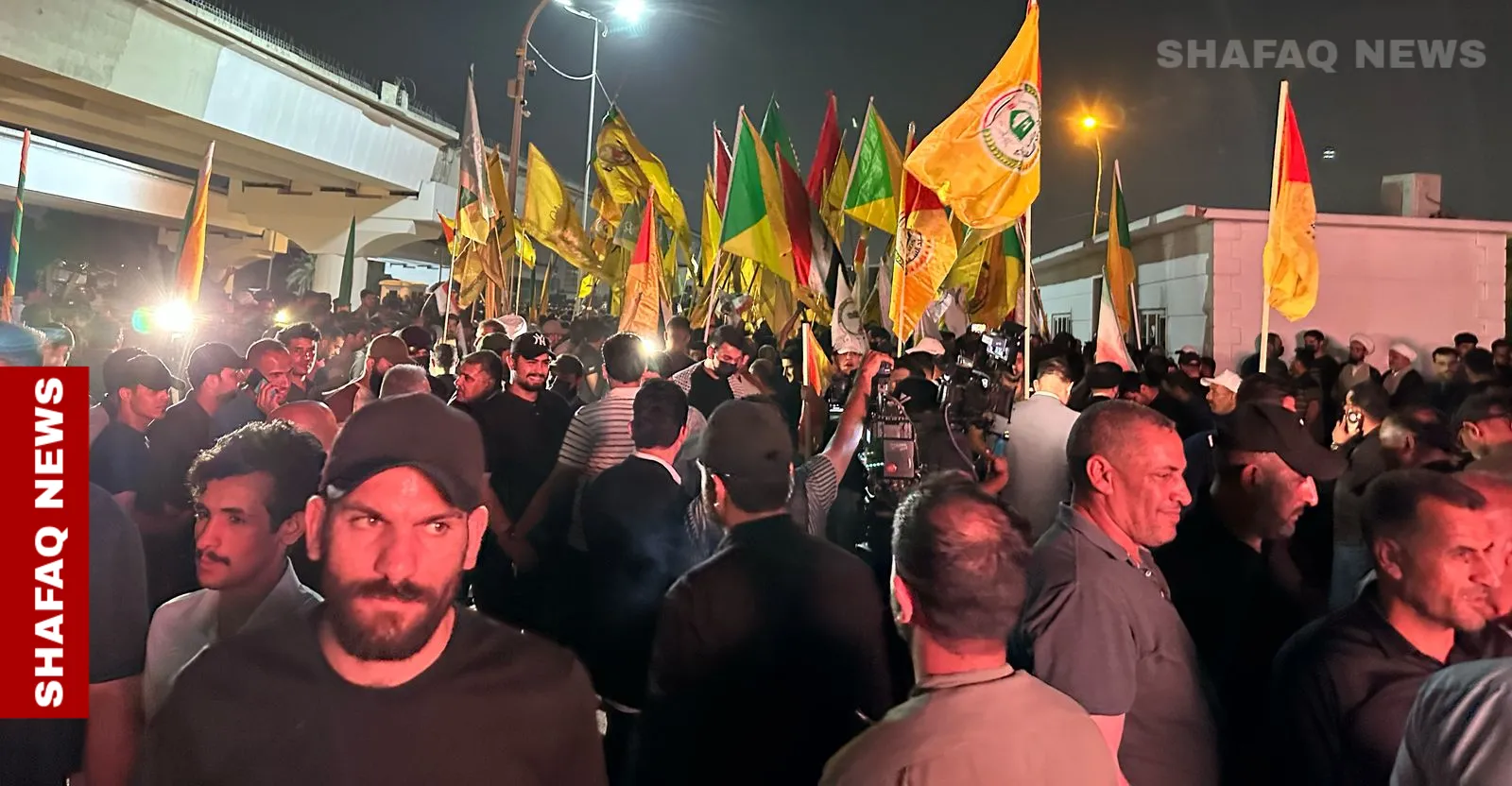
Civil groups emerging from the 2019 Tishreen protests struggled to reclaim that ground — weakened by internal divisions, repression, and widespread disillusionment. In their absence, momentum shifted decisively toward armed factions, which appear to be riding their most significant wave of parliamentary influence since 2003.
The Independent High Electoral Commission (IHEC) final tally showed that these factions captured between 60 and 70 seats in the new 329-member legislature — a surge that will test Iraq’s political system: can it fully integrate actors who are both weaponized and deeply embedded in political life?
From Arms to Power
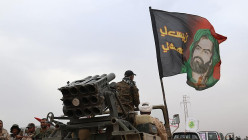
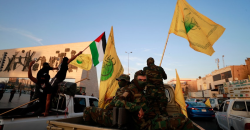
To gauge the scale and significance of this shift, one must trace the origins of these armed factions. In 2014, the Popular Mobilization Forces (PMF) emerged following a religious edict from Grand Ayatollah Ali al-Sistani after Mosul’s fall to ISIS. Thousands of volunteers joined the ranks under a government-sanctioned structure. Over time, this umbrella evolved into a powerful political network, not just a military force.
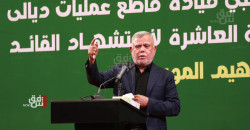
Today, many of the most influential MPs in the parliament represent political wings of these Iran-backed, PMF-linked groups. Key among them are Sadiqoon Movement, led by Qais al-Khazali; Hadi al-Amiri’s Badr Organization; the Ataa Movement, led by Falih al-Fayyadh; the National State Forces Alliance (Quwa al-Dawla al-Wataniyah) of Ammar al-Hakim; and Huqooq (Rights), led by Hossein Moanes. These parties blend social, religious, and territorial influence with organizational coherence often tracing back to the PMF’s command structure.
This recent electoral success is not unprecedented. In 2018, the pro-PMF electoral vehicle known as the Fatah Alliance won 48 seats, according to Iraqi officials. Within that bloc, the Badr Organization maintained a strong presence, while Asaib Ahl al-Haq, the armed wing of al-Khazali’s Sadiqoon, increased its parliamentary footprint. Ammar al-Hakim’s Wisdom Movement (Tayyar al-Hikma) held roughly 19 seats at the time.
By the 2021 election, however, the landscape had shifted. The Fatah Alliance collapsed to around 17 seats, losing more than 30 from 2018. According to the US Office of Inspector General for Operation Inherent Resolve, the Badr Organization suffered steep losses, shrinking to just four seats. These declines were linked to voter backlash, shifting electoral moods, and the rise of nationalist, anti-establishment forces.
Yet, the 2025 elections reversed that decline, and the PMF-aligned parties rebounded strongly. Sadiqoon captured 27 seats, the Badr Organization 21, and smaller lists affiliated with the so-called “resistance factions,” including Huqooq (Rights), gained six seats.
Political analyst Issam Hussein highlighted to Shafaq News that the outcome reflects a long-term trend rather than a passing shock. He emphasized the media’s role in “amplifying the symbolic presence” of the factions through narratives of resistance and steadfastness, while the volatile regional environment surrounding Iraq made these results “remarkable.”
Hussein pointed to psychological and political shocks affecting the Shiite and Arab street, including the Iran-Israel Twelve-Day War, the assassination of former Hezbollah Secretary-General Hassan Nasrallah, the October 7 Israeli war in Gaza, and the rise of Hayat Tahrir al-Sham (HTS) consolidating power in Syria.
According to Hussein, Iraqi voters shifted from prioritizing “services” to seeking “protection.” Those who once rallied behind calls for a civil state and anti-corruption measures now favored candidates with arms, combat experience, and organizational capacity to address perceived existential threats.
“Voting for the factions reflected a reaction to regional instability rather than an open endorsement of the groups themselves,” he observed.
Hussein also highlighted a paradox: prior US opposition to the factions had not previously boosted their electoral support, though it appears to have influenced voters this year. He recalled the 2020 assassinations of Abu Mahdi al-Muhandis, then deputy head of the PMF, and Qassem Soleimani, commander of Iran’s Quds Force, as events that might have generated sympathy for the factions, but public attention then focused on Tishreen demands and political reform.
Today, the US’s hard-line rhetoric seems to have reinforced the factions’ legitimacy among parts of the electorate as actors confronting external influence.
Read more: Iraq’s 2025 Elections: Old lines, new margins
Power Tested
Political analyst Majash Mohammed identified the election’s broader implications. Highlighting the results to Shafaq News, he described the outcome as a “notable political shift” in Iraq’s post-2003 trajectory.
He further noted that armed actors once considered fringe have become entrenched, with social reach, “translating military capacity into real leverage over democratic institutions.’’
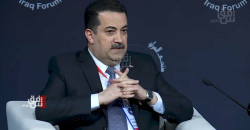
At the center of these changes, he added, is Prime Minister Mohammed Shia Al-Sudani. Appointed in 2022 with tacit approval from both Iran and the United States and in coordination with the armed factions, he now faces a parliament “shaped by both opportunities and risks.’’
Those who previously supported him are stronger yet increasingly wary of his intentions. During his tenure, Al-Sudani distanced himself from the factions, aligning closer to regional positions connected to Turkiye, Qatar, and networks linked to the Muslim Brotherhood.
He also signaled openness to Washington for potential disarmament talks, while further surrounding himself with advisors skeptical of the factions’ influence.
This skepticism is pronounced. Several parties within the Coordination Framework (CF), the predominantly Shiite alliance steering Baghdad’s government, oppose Al-Sudani’s continuation, favoring an alternative candidate.
Alaa al-Hadadi of the State of Law Coalition (E’tilaf Dawlat al-Qanoun) indicated to Shafaq News that Asaib Ahl al-Haq, Huqooq, Khadamat, and Sadiqoon reject renewing Al-Sudani’s mandate. He added that the Coalition, the second-largest CF bloc with 29 seats, maintains “only one nominee for prime minister: [its leader,] Nouri al-Maliki.”
Washington has closely monitored these developments. Ahead of the elections, US officials warned that any significant expansion of “militia influence’’ in government would constitute a serious source of concern. The message was clear: the United States supports centralizing weapons under state control, not allowing autonomous armed groups to dominate.
Following the elections, US Presidential Envoy to Iraq Mark Savaya reaffirmed a familiar stance: political participation by these groups is permitted, but red lines exist regarding sovereign decisions on security, energy, and foreign affairs.
“Trump’s administration will not accept armed factions taking a leading role in the next government,” he emphasized.
Former US State Department adviser David Phillips suggested to Shafaq News that Washington intends to allow the government-formation process to unfold, provided parties negotiate in good faith. However, he warns that the Trump-era playbook — sanctions — remains very much on the table if red lines are crossed.
Meanwhile, Safwan Al-Amin, senior fellow at the Atlantic Council, noted that upcoming negotiations are likely to be “difficult, prolonged,” pitting parliamentary leverage against economic and diplomatic pressure.
Thus, the 2025 election marks more than a numerical reshuffling. The rise of armed factions in parliament is not merely a seat gain but a test of the political system’s ability to accommodate armed groups at the heart of legislation and governance, a test of Baghdad’s relations with both Washington and Tehran, and perhaps a test of what remains of the civil state dream that Tishreen protesters once raised.
In a country where elections often mark the beginning of a new crisis rather than its conclusion, the stakes have rarely been higher.
Read more: Unsettled victory: Al-Sudani between a second term and Shiite power balances
Read more: Failure or feat? A bold assessment of PM Al-Sudani's tenure
Written and edited by Shafaq News staff.