Iraq's Dawn Crackdown moves from raids to rulings


Shafaq News- Baghdad
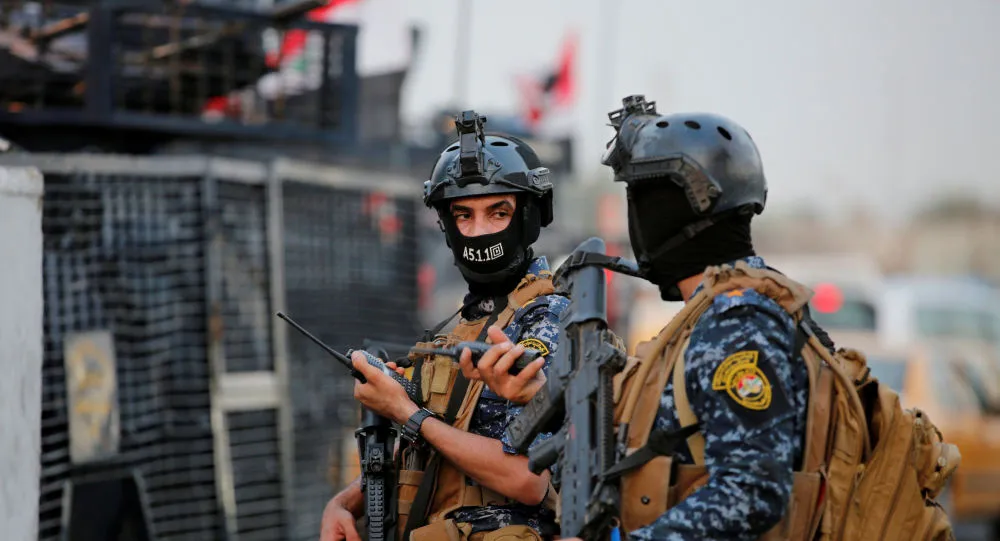
In the early hours of June 28, Iraqi security forces fanned out across Baghdad and several provinces, detaining politicians, officials, public employees, and business figures in an anti-corruption operation the government called Dawn Crackdown. Three months later, the campaign's defining image is no longer the pre-dawn raid but the courtroom.
The opening phase was measured in arrests. Based on sources at the Federal Integrity Commission, Iraq's main anti-corruption body, Shafaq News documented 67 detentions in the first sweep. By August 9, it had recorded at least 210 people detained during the campaign's first six weeks. The government has not kept a continuously updated, consolidated count.
Read more: Iraq’s Dawn Crackdown spreads through state institutions
By September, the pattern had shifted. Arrests continued, corruption networks were still being exposed, and state institutions remained under investigation. But the large, concentrated arrest announcements of the early weeks faded from the cases reviewed by Shafaq News. In their place came court judgments, illicit-enrichment rulings, asset recovery and financial tracing, and investigations reaching deeper into individual institutions. That shift may prove more consequential than the raids themselves.
The change coincided with a crowded national agenda. On September 30, the US-led Global Coalition formally ended its military mission in Iraq, while the government continued the politically sensitive process of bringing armed factions' weapons under state control. Baghdad and Washington have shifted toward bilateral security cooperation.
Nothing in the record shows that the Coalition transition diverted attention from corruption. Dawn Crackdown now enters its fourth month, however, as security and sovereignty issues command much of the political agenda. That raises a broader issue: can a campaign launched under extraordinary public scrutiny keep producing results once the spotlight moves on?
From Mass Sweeps to Institution-Level Cases
September's record does not suggest that enforcement has stalled.
On September 2, the Integrity Commission said it had dismantled an 11-member network accused of forging loan files at the Real Estate Bank in Babil. Investigators identified manipulation in 56 files and put the damage to public funds at more than 543 million dinars (about $414,000). Investigators arrested five bank employees and two intermediaries, and warrants remained outstanding for other suspects.
Days later, Commission investigators announced arrests over alleged manipulation of land allocation in Nasiriyah, in Dhi Qar province. One case involved 104 valuable properties whose allocation and ownership procedures were suspected of forgery and other violations.
On September 21, authorities in Maysan reported finding 120 allegedly falsified land-allocation files in municipal and real-estate registration offices, detaining eight employees, and issuing further arrest warrants. The following day, a separate investigation targeted a nine-member network suspected of buying more than 170 properties in Babil and Baghdad and registering them in the names of relatives and associates to hide ownership and the origin of the money.
On September 29, the Commission announced the arrest of ten employees at a hospital in Samawah, in Al-Muthanna province, over suspected manipulation of payment receipts and misappropriation of collected fees. Investigators examined more than 1,000 patient records from 2024 through 2026.
Taken together, the cases point to enforcement that has dispersed rather than disappeared. Instead of a single national sweep producing dozens of arrests at once, September's cases unfolded institution by institution and province by province.
The Courtroom Takes Center Stage
The more significant change came once investigations reached the courts.
The courts have also ruled the other way. On September 12, a man detained in the investigation into Adnan al-Jumaili, the former deputy oil minister for refining affairs and former director-general of the North Refineries Company, who remains in custody, was released after investigators found no evidence that he knowingly participated in the transfer of two commercial properties into his name. Rulings in both directions change how the campaign should be judged: its credibility now rests on verdicts, not detentions.
On September 14, a court sentenced Alaa Samir Rashid, director general of the Electricity Ministry's Central Electricity Distribution Company, to seven years in prison for illicit enrichment. The Integrity Commission said he was also ordered to repay the illicit gains and pay an equivalent fine, bringing his total financial obligation to about 25.7 billion dinars.
Two days later, lawmaker Bahaa al-Din Noor Mohammed Hussein al-Nouri received a seven-year sentence for illicit enrichment. According to the Commission, the case involved illicit gains of more than 5.8 billion dinars and nearly $11 million, and repayment plus an equivalent fine pushed the total above 40 billion dinars.
September 23 brought seven-year sentences against two more lawmakers. Alia Nassif was sentenced to seven years for illicit enrichment. Hours later, Ashwaq Salem Hassan received a separate seven-year sentence for illicit enrichment and was ordered to repay illicit gains and pay an equal fine totaling nearly 11.95 billion dinars.
On September 29, the Central Anti-Corruption Criminal Court sentenced MP Mohammed Farman Shaher Salman al-Jubouri to seven years for illicit enrichment. It ordered him to repay the illicit gains and imposed an equivalent fine, together totaling more than 28.1 billion dinars. He was the fourth sitting MP convicted of illicit enrichment in September.
The same case shows how far that process still has to run. On September 29, a security force accompanied by an Integrity Commission team arrested a businessman at his home in Tikrit, in Saladin province, in connection with the al-Jumaili case, a security source told Shafaq News. The businessman was detained hours after returning to Iraq from abroad. Investigators have begun legal proceedings and questioning but have not disclosed the allegations.
Following The Money
On September 21, the Supreme Judicial Council, which oversees Iraq's courts, announced that a Baghdad court had recovered 51 billion dinars for the state-owned Rafidain Bank in a financial and administrative corruption case. Proceedings against those involved are continuing.
The government, for its part, has begun measuring its anti-corruption performance through broader indicators. On September 8, government spokesman Haidar al-Aboudi said more than 26,000 corruption reports had been submitted to the Integrity Commission and that recovered funds, properties and other assets had exceeded 1.359 trillion dinars. The government credited much of that activity to Dawn Crackdown, alongside contract audits, preventive oversight and rewards for reporting corruption.
Quieter, Not Necessarily Weaker
The September record points more strongly in one direction than the other. The operation's first weeks were defined by raids and rapidly climbing detention figures. September was defined by institution-level investigations and judicial outcomes. Four lawmakers received seven-year sentences for illicit enrichment, and a senior state official was jailed. Investigators continued to pursue land allocation, municipalities, banks and hospitals, and courts went after money and assets as well as defendants.
This new phase extends a trend visible by late August. Shafaq News reported on September 2 that Dawn Crackdown had moved beyond its dramatic opening raids and was spreading through land registries, municipalities, electricity institutions, banks, and provincial administrations. September's cases reinforce that reading. The campaign appears to be moving from a stage in which success was shown by the number of people detained to one in which success must be shown by what happens to their cases.
Beyond September 30
September 30 had become a focal point of Iraq's security debate because the Coalition's departure was closely tied to weapons outside state control. That process has now moved beyond the withdrawal date: Prime Minister Ali Al-Zaidi has set June 30, 2027, as the deadline for completing the weapons-control roadmap, a timetable the Coordination Framework formally backed on October 2.
Security, sovereignty and the armed factions are therefore competing for political attention just as Dawn Crackdown enters its fourth month.
If Dawn Crackdown's early momentum depended primarily on high-profile arrests, its visibility may fade as other issues take over. If it is developing into a sustained institutional effort, the evidence will surface elsewhere: in final judgments, recovered funds and confiscated assets, successful prosecutions and acquittals where evidence falls short, changes to procurement and administrative procedures, and fewer repeat cases inside the same institutions.
* Methodology note: The figures and cases reviewed in this story are limited to official announcements by Iraq's Federal Integrity Commission and corruption-related cases documented by Shafaq News during the review period. They should be treated as documented minimums, not a comprehensive count of corruption activity across Iraq. The review excludes cases pursued or announced solely by other government bodies, security agencies, courts or oversight institutions unless they were also reported through the Integrity Commission or documented by Shafaq News. Cumulative figures, updates to previously reported cases and later judicial developments were not counted as new arrests when assessing the pattern of enforcement.
Written and edited by Shafaq News staff.