YBŞ deal secures Sinjar’s mountain, leaves its administration unresolved


Shafaq News (Updated at 21:03)
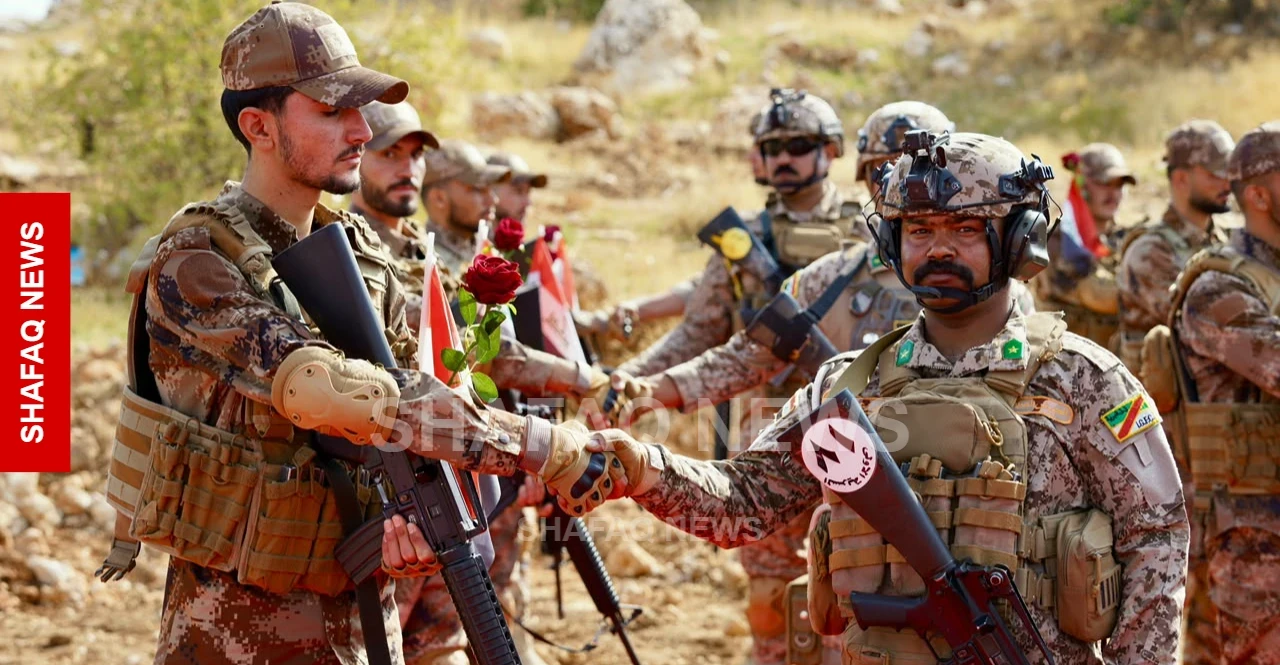
Iraq began integrating the Sinjar Resistance Units (YBŞ), a Yazidi armed group linked to the Kurdistan Workers' Party (PKK), into federal security forces on Monday, taking control of the highest point on Mount Sinjar. The handover delivers the security half of the 2020 Sinjar Agreement, the half Turkiye demanded, while the accord’s administrative terms remain stalled and Erbil, its co-signatory, has neither joined the process nor endorsed it.
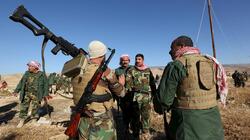
The mountain holds a particular place in Yazidi memory. In August 2014, tens of thousands of Yazidis, followers of an ancient monotheistic faith whose heartland is Sinjar, fled up its slopes as ISIS overran the district. The group killed and enslaved thousands in a campaign the United Nations has recognized as genocide. The YBŞ emerged from that siege as Yazidi volunteers defended civilians trapped on the mountain, trained and supported by the PKK and by Syria's People's Protection Units (YPG). It remained there for a decade outside the state's chain of command, in a border district that links PKK strongholds in Iraq's northern mountains to northeast Syria. That location drew repeated Turkish strikes on its commanders.
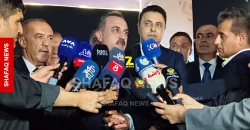
Haji Terash, the group's representative, told the ceremony that more than 4,000 men and women had joined federal forces. Giving up the YBŞ's status as an armed faction, he said, "honors the victims of the Yazidi genocide and strengthens Iraq's sovereignty and stability."
Lt. Gen. Saad Harbiya, representing Prime Minister Ali Al-Zaidi, said taking up arms had been a temporary necessity, and that "weapons must now be held within the bounds of the law and the constitution."
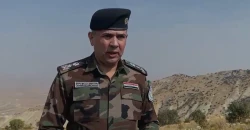
Lt. Gen. Saad Maan, head of Iraq's Security Media Cell, said the process had moved "from negotiation to actual implementation." Committees will assign fighters to the Interior and Defense ministries, and federal forces are set to take over further positions, including the Qal'a area.
The deal follows a shift that began outside Iraq. In 2025, the PKK announced its dissolution in response to an appeal by its jailed leader, Abdullah Ocalan. The YBŞ welcomed the call and denied any affiliation with the group, yet it still refused to surrender its weapons in September 2025, according to Qasim Shesho, then a Peshmerga commander in Sinjar. In February, Yazidi lawmaker Murad Ismael of the Yazidi Cause Alliance proposed folding the force into state institutions. Al-Zaidi announced the handover after receiving Ismael and YBŞ leaders on September 11.
The Syrian Precedent
The YPG connection places Sinjar inside a wider regional pattern. In Syria, the YPG-led Syrian Democratic Forces (SDF), which controlled the country's northeast, completed their integration into the Syrian army on August 25, according to commander Mazloum Abdi. That deal absorbed SDF brigades as whole units and required non-Syrian fighters to leave. Even so, Kurdish politician Ilham Ahmed told a forum in Erbil this month that the process remains in a testing phase.
The published terms in Sinjar are thinner. Baghdad has pledged to integrate “qualified” fighters without saying whether they will serve together in Sinjar or be dispersed, who will command them, what happens to those found ineligible, how heavy weapons will be handled, or whether the salaries they have long drawn through the Popular Mobilization Forces (PMF), the state-funded umbrella of mostly Shiite armed groups, will follow them.
The Yazidi Cause Alliance has already staked out its reading. In a statement on Monday, it said integration does not mean dissolving the units or ending their members’ role, and insisted that Sinjar’s residents continue to share in securing their own areas, with respect for the district’s particular character. The alliance credited mediation by the Norwegian Centre for Conflict Resolution (NOREF) in reaching the deal. Baghdad has yet to say if its terms will meet that expectation.
Security expert Mukhalad Al-Darb told Shafaq News that the fighters' knowledge of the terrain could strengthen state control and help federal forces coordinate with the Peshmerga, the Kurdistan Region (KRI)'s armed forces, in the areas between their zones of responsibility.
Ankara's Conditions
Turkiye's stake is written into the record. On September 23 in New York, Al-Zaidi and Turkish President Recep Tayyip Erdogan agreed to restore full state authority in Sinjar and end the presence of "proscribed foreign armed elements." The agreement paired the gradual handover of Turkiye's Bashiqa-Zilkan camp near Mosul to that progress. Ankara has since said any broader reduction of its troops in Iraq depends on dismantling the PKK and affiliated structures, particularly in Sinjar.
The YBŞ's fighters are Iraqi Yazidis, while the joint statement targets foreign cadres, so Monday's handover does not by itself settle Ankara's conditions. With the US-led coalition gone since September 30, Turkiye now maintains the main foreign military presence left in Iraq.
For Al-Zaidi, Sinjar is the cleanest result of a disarmament drive that has moved slowly elsewhere. He has set June 30, 2027, as the deadline for armed factions, most of them Iran-aligned groups within the PMF, to place their weapons under state control, and talks with them center on handing arms to the PMF Commission. The YBŞ is heading the opposite way, out of the PMF's orbit and into the regular ministries. A small minority force, isolated by the PKK's dissolution and under sustained Turkish pressure, settled first. The powerful factions are still negotiating terms.
Erbil Outside The Room
Erbil's absence cuts against the Sinjar Agreement itself. Signed by Baghdad and the Kurdistan Regional Government (KRG) with UN backing, the accord required unofficial armed groups to leave the district. It handed security to federal and local police and the National Security Service, and called for an independent mayor acceptable to both sides.
Sinjar lies at the western end of an arc of disputed territories, running through Kirkuk to Khanaqin, that Baghdad and Erbil both claim. Article 140 of the constitution set out normalization, a census and referendums to settle their status, and none has taken place. Peshmerga forces held Sinjar until October 2017, when federal troops backed by the PMF took control after the Kurdistan Region's independence referendum.
Security across those areas has since rested on overlapping forces. In 2021, Baghdad and Erbil agreed on a joint plan for four coordination centers in Kirkuk, Diyala, Makhmur and Mosul, to close the gaps between federal troops and the Peshmerga. The plan is now suspended; each side blames the other, and ISIS has continued to exploit those gaps. The YBŞ itself called state control of weapons essential to preventing ISIS's return, while the mechanism designed to secure the ground between the two forces sits idle.
KRG Interior Minister Reber Ahmed said on Tuesday that Baghdad’s deal with Ankara over Bashiqa is unlikely to succeed without Erbil, noting that the camp “lies behind Peshmerga lines.” “Experience has shown that such arrangements will not succeed without consulting and coordinating with the Kurdistan Regional Government,” he said.
His objection concerns process rather than substance: Ahmed called the PKK’s presence in the Kurdistan Region “unlawful from the outset” and backed its disarmament. On the YBŞ handover itself, Erbil has stayed silent. As of Tuesday evening, the KRG had issued no statement welcoming the deal, and no KRG representative took part in Monday’s ceremony on the mountain.
Erbil’s distance extends to the forces on the ground. Haidar Shesho, commander of Peshmerga forces in Sinjar, told Shafaq News that his units were not party to the agreement. “Our forces took no part in the negotiations, and we do not know to what extent the Peshmerga Ministry was involved,” he said. With Peshmerga and army positions overlapping in several areas, securing the border and the district’s troubled pockets depends on coordination between the two forces. Haidar Shesho said the deal could benefit Sinjar if it brings stability and Baghdad takes responsibility for protecting residents, and that no security or administrative arrangement should be imposed on them without their participation. He also urged Baghdad and the KRG to let the Sinjar Peshmerga operate officially in coordination with federal forces, leaving the YBŞ as only one of the district’s armed forces whose status has yet to be resolved.
Lt. Gen. (ret.) Jabbar Yawar, former secretary-general of the KRG’s Peshmerga Ministry, argued that only police should operate inside Sinjar town. Brig. Gen. (ret.) Adnan Al-Kinani proposed a joint committee of commanders from both governments, so that the new arrangement does not remain a set of temporary field measures.
Brig. Gen. (ret.) Adnan Al-Kinani proposed a joint committee of commanders from both governments, so that the new arrangement does not remain a set of temporary field measures.
A District Without A Settled Administration
Within Nineveh, the fight over who runs Sinjar has frozen the administrative track. On the provincial council, the Babylon Movement, a Christian party linked to a PMF brigade, has faced off against the Unified Nineveh Alliance and the Kurdistan Democratic Party (KDP), the dominant party in Erbil, over the district's top posts.
On October 22, KDP council bloc head Ahmed Al-Kiki pushed for fresh nominations and rejected any single figure's claim to speak for all Yazidis. A day later, a parliamentary committee ordered the council to stop. It said neither post was vacant because courts had upheld the election of the incumbents, Sido Khairi and Dawood Jundi, and it opened a fact-finding inquiry. Haidar Shesho called for a competent administrator for Sinjar and its Sinuni subdistrict, chosen on merit rather than party quotas.
Return Remains The Measure
For displaced Yazidis, the test is return. About 110,000 Sinjar residents still live in camps in the Kurdistan Region's Duhok province, according to Duhok's displacement department, and another 170,000 live displaced outside them. Fewer than 30 percent of Sinjar's pre-2014 population had returned by last year.
Violence has reversed past returns: after clashes between the army and the YBŞ in March 2025, families who had gone home moved back into the camps. The current return program, run with the International Organization for Migration, gives each family 1.5 million dinars (about $1,144) and transport for its belongings, with no money for home repairs.
"Even with reduced aid, camp life here is still more stable than returning to a place with no security, no schools, and no services," Dian Jafar, head of the Duhok department, told Shafaq News last year.
Nineveh Governor Abdul Qader Al-Dakhil told the ceremony that the province is preparing a comprehensive plan to rebuild Sinjar, warning that security will remain incomplete without reconstruction and basic services. Yawar listed the minimum: rebuilt roads, water and electricity networks, and restored hospitals, schools and homes.
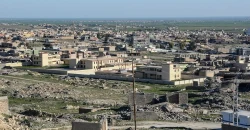
Baghdad now holds the summit where Yazidis sought refuge in 2014. Governing the town below requires a mayor residents accept, police they trust and homes worth returning to. All three depend on a settlement with Erbil and within Nineveh that Monday's ceremony left untouched.
Read more: Yazidis struggle to return home a decade after ISIS atrocities: report
Written and edited by Shafaq News staff.