Iran between revolution and state: The future of Tehran’s support for armed groups


Shafaq News
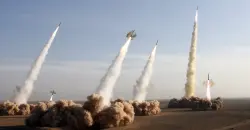
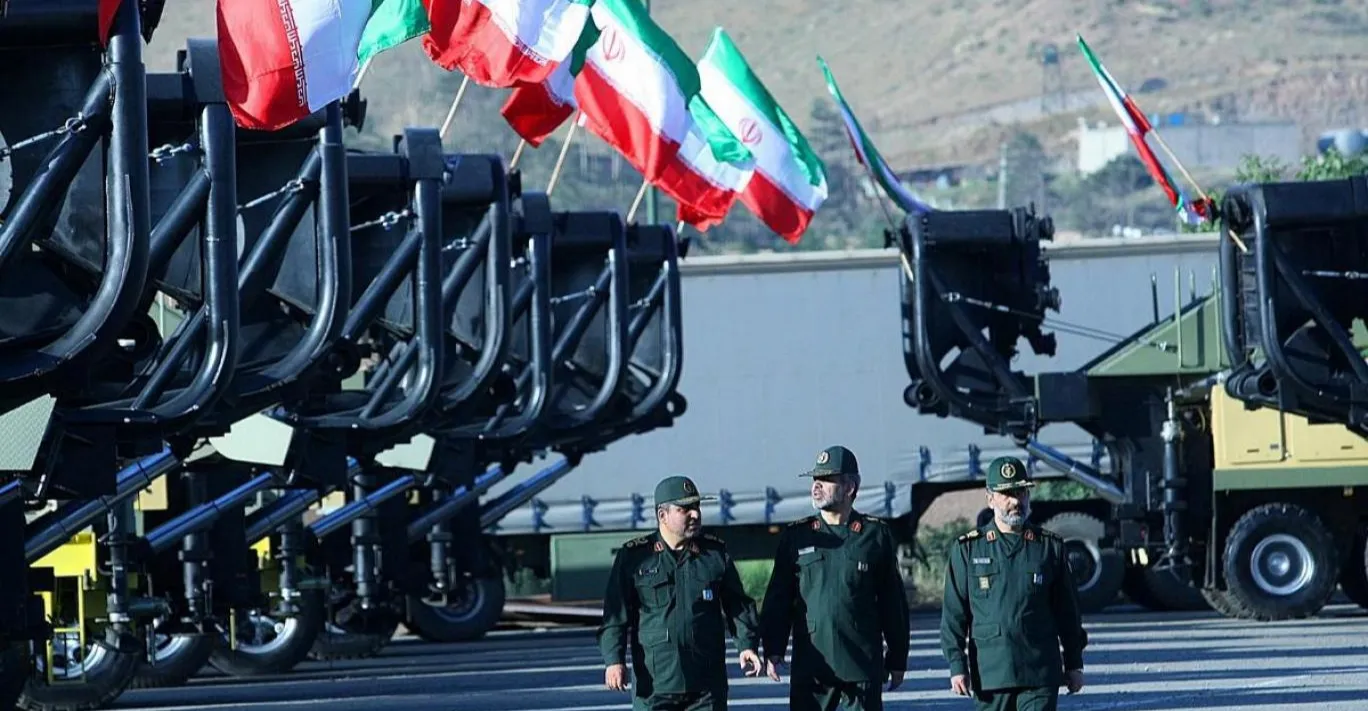
US pressure on Iran has intensified in recent months, with Washington seeking to compel Tehran to meet a set of conditions that include abandoning its ballistic missile program and halting support for armed factions across the Arab region, two pillars Iran considers central to its defensive and offensive strategy.
Since the 1979 Islamic Revolution, Iran has steadily expanded its regional influence by backing allied movements, initially in Iraq and Lebanon, and later in Yemen. It has also maintained a long-standing alliance with Syria under the late President Hafez Al-Assad and his successor Bashar al-Assad, while supporting Palestinian factions despite ideological differences. Many of these groups have evolved into well-armed actors that have engaged in prolonged confrontations with the United States and Israel.
Today, curbing Iran’s support for these factions, particularly in Iraq and Lebanon, has become a key condition in any prospective international agreement with Tehran. Iranian officials have publicly rejected these demands, arguing they undermine national sovereignty and regional security interests.
According to Iranian affairs expert Mehdi Azizi, this stance reflects a deeper internal dynamic within Iran often described as the tension between “the revolution and the state.” Power, he explained, is divided between state institutions, including the Ministry of Intelligence, and the Islamic Revolutionary Guard Corps (IRGC), each with distinct roles. “International negotiations, especially with the United States, are conducted by the state, not by the Revolutionary Guard as an institution,” Azizi told Shafaq News.
Despite political shifts, economic challenges, and internal pressures, Azizi said Iran has not scaled back its regional role. “Support for the Axis of Resistance has become part of Iran’s identity and strategic doctrine, which explains the repeated US demands for Tehran to abandon its regional influence,” he noted.
On the concept of “exporting the revolution,” Azizi argued that Iran’s relationship with armed factions is primarily rooted in ideological influence and resistance discourse. Iranian backing, he noted, has helped transform these groups into “integrated forces with independent decision-making, political partnerships, and popular bases.”
US Conditions
Washington, for its part, has outlined four conditions for easing tensions and reaching an agreement with Tehran: halting Iran’s nuclear program, surrendering enriched uranium, dismantling ballistic missiles capable of reaching Israel, and ending regional threats posed by Iran-aligned forces.
Iran has firmly denied US accusations linking it to attacks on American personnel and facilities in Iraq. Iran’s ambassador to the United Nations, Majid Takht Ravanchi, previously stated that any claim attributed to Iran regarding attacks against US individuals or facilities in Iraq is “factually incorrect and lacks the minimum standards of accuracy.” He also dismissed US justifications for retaliatory strikes as “baseless and legally unfounded,” describing them as built on “fabrication.”
While Iranian officials deny direct involvement, the IRGC has openly acknowledged its support for armed factions in Iraq through sustained communication, participation in their activities, and logistical backing.
Former Iranian diplomat Hadi Afghahi told Shafaq News that Tehran continues to support Iraqi factions despite mounting economic pressures. “Support is not necessarily financial or economic,” he said. “It has its own methods and channels that vary depending on the geography of each component of the resistance.”
Afghahi described Iran and its allied factions as having become “one body,” adding that “this explains Tehran’s persistence in this approach despite US escalation and military threats.”
Read more: US pressure on Iran intensifies; analysts assess strike scenarios and regional risks
Revolution and State
Political analyst Imad Al-Musafer highlighted how Iran’s internal structure has evolved since 1979. While revolutionary ideology remains influential, he said Iran today functions as a state of entrenched institutions that cannot be easily bypassed, from the Supreme Leader’s office down to the smallest official body.
Al-Musafer noted a shift in Iran’s methods of supporting armed groups, moving from manufacturing and smuggling weapons to transferring military and technical expertise. This transition has enabled factions in Lebanon, Yemen, and Iraq to produce weapons domestically, strengthening their self-sufficiency.
“This change has allowed these groups to develop their military capabilities independently, using their own tools and within their national geographies.”
Internal Repositioning
Ahmed Al-Yasseri, head of the Arab-Australian Center for Strategic Studies, linked recent regional developments to a reassessment of Iran’s strategy. The targeting of Hezbollah and Hamas, alongside broader regional shifts, he stated, has pushed Tehran to reconsider its long-standing “forward defense” or “rings of fire” doctrine aimed at deterring Israel and the United States from attacking Iran directly.
“Iran is increasingly relying on deterrence from within its own territory rather than through external fronts,” Al-Yasseri told Shafaq News, stressing that “the weakening of the rings of fire strategy does not mean the end of Iran-linked factions, but rather the end of their strategic regional role.”
As these factions become more localized political and military actors in their respective countries, Al-Yasseri said Iran is placing greater emphasis on partnerships with major powers such as China and Russia. Tehran, he argued, has recognized that the capabilities of allied factions are limited in non-conventional wars that require advanced technology and international allies.
Read more: US military presence signals strategic pressure over direct conflict
Written and edited by Shafaq News staff.