High-altitude contraband: Iraq’s desert smugglers take to the skies


Shafaq News
The last stars were still visible when Imad Al-Khafaji noticed something moving across the sky.
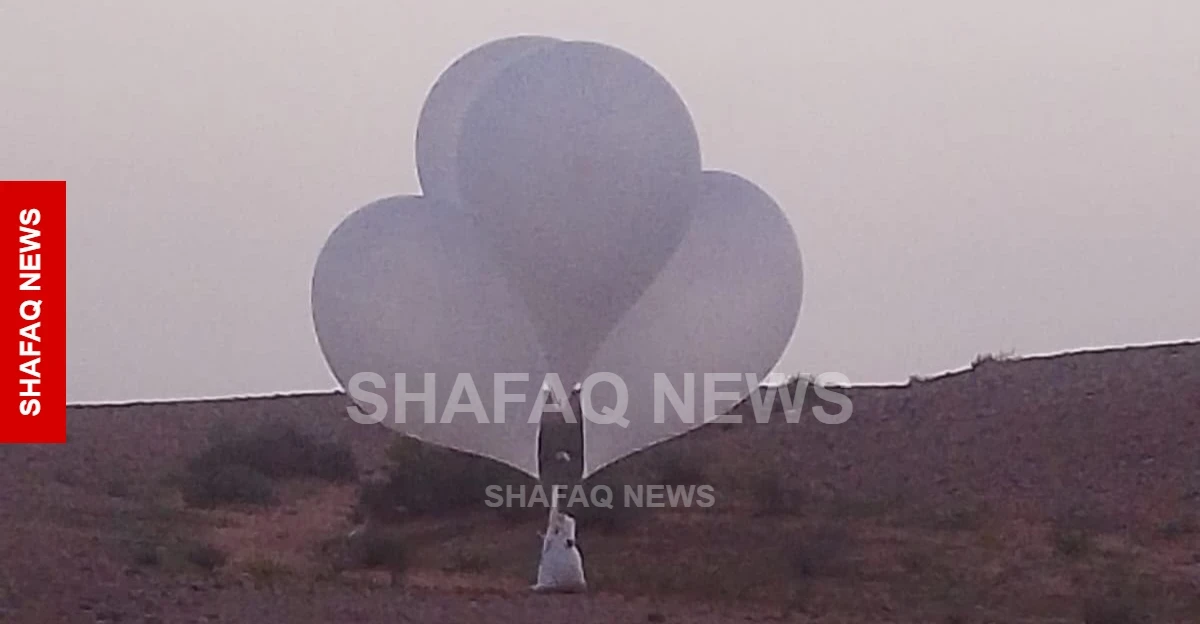
It was just before dawn. The 41-year-old had set out with a group of nomadic Bedouin friends on a hunting trip in the Iraqi desert. They had stopped their vehicle on higher ground to watch the sunrise and were preparing breakfast when the object appeared, drifting about 300 meters away.
Al-Khafaji asked his companions what they were looking at. They recognized the balloons immediately. Similar ones had been used to move drugs across the desert, often around dawn, when shipments could be collected with people waiting on the ground.
There was little time to think. The group decided to bring the balloons down. One of Al-Khafaji's companions retrieved a licensed firearm and aimed. Several shots struck the balloons carrying the load, and the craft began to lose altitude. It eventually came down at about 6:00 a.m. The men climbed into a four-wheel-drive vehicle and followed it across the desert.
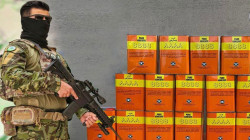
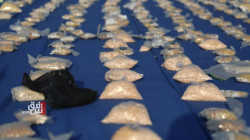
At the landing site, they found 126 bags containing about 126,000 Captagon pills, Al-Khafaji recounted to Shafaq News. Each bag held 1,000 pills. “A security official told me the shipment was worth about 3.4 billion Iraqi dinars [roughly $2.6 million].”
Then they realized they were not alone. The shipment had not simply been left in the desert. People were waiting for it.
Read more: From cell to center: Iraq tests a new answer to addiction
Al-Khafaji recounted that the group of would-be collectors was initially less than five kilometers from the landing site. Across open desert, that was not a great distance. At one point, he put the gap at about 1.5 kilometers.
The hunting trip had become a race: secure a multimillion-dollar drug shipment before the people who had come to collect it reached the site. “Our determination, together with my nomadic Bedouin brothers and livestock owners, prevented them from forcing us to hand over the drugs. We delivered the shipment to the security authorities instead,” Al-Khafaji explained.
The episode also highlighted the unusual position of people who live and move through Iraq’s desert. Nomadic communities know remote tracks, open stretches and isolated areas that can remain difficult for regular patrols to monitor.
Al-Khafaji said the presence of the Bedouins and livestock owners helped protect the group until security forces arrived. “That is why we were not attacked or assaulted while carrying out the task,” he said.
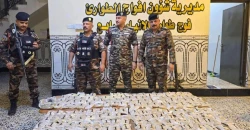
Security forces eventually arrived. They opened the bags, counted the packages, and identified the substances before completing the legal report and transferring the shipment to the relevant authorities.
Skyfall to Handcuffs
As security forces have tightened controls along traditional trafficking routes, drug networks have looked for ways to move narcotics beyond roads, checkpoints and conventional surveillance. The sky offers one such route, and the balloon confiscated in the desert was part of a wider pattern.
Iraqi security forces have intercepted other balloons carrying narcotics from Syria into Iraq. One intercepted in September 2025 contained 245,000 Captagon pills, while another in November 2025 carried 22,000.
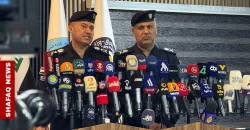
Brigadier General Akram Al-Rashid, director of Al-Anbar’s Anti-Narcotics Directorate, reported that security forces had intercepted every balloon detected so far.
The border has also seen attempts attributed to what Major General Rahim Younis Rahim, commander of Iraq’s 5th Border Guard Division, described as “terrorist organizations.” Previous efforts involved balloons launched from Syrian territory toward Iraq.
“Those attempts were completely thwarted through field monitoring and thermal cameras deployed along the border,” he recounted to Shafaq News.
But balloons are only one adaptation in a trade built around concealment.
Traffickers have increasingly used ordinary objects to conceal drugs. In March 2024, security forces dismantled a network moving crystal methamphetamine inside hollowed walnut shells. The operation involved 11 traffickers across four provinces.
Months later, methamphetamine was discovered baked into flatbread in Baghdad. Elsewhere, narcotics have been concealed in children’s toys and among livestock. In Babil, authorities found drugs hidden inside a shoe hanging from a motorcycle.
At the Baghuz crossing along the Euphrates, Captagon and hashish were found floating downriver in sealed plastic containers. Some had been wrapped in reeds to blend with debris carried by the water.
Hussein Al-Tamimi, a spokesperson for Iraq’s General Directorate for Narcotics and Psychotropic Substances Affairs, characterized the trafficking networks’ methods as constantly changing alongside the authorities’ response.
“The methods may look increasingly unusual, but the logic behind them is conventional: find a route that is harder to watch,” he said, pointing to Iraq’s deployment of radar systems and thermal drones with ranges of up to 80 kilometers.
A Growing Drug Market
The ingenuity of individual shipments can obscure the size of the market behind them. The United Nations Office on Drugs and Crime recorded a 3,380% increase in Iraqi Captagon seizures between 2019 and 2025.
In 2026 alone, the Directorate has seized about 2.18 tonnes of narcotic substances, according to Iraqi authorities. Crystal methamphetamine, Captagon, and Lyrica pills were among the substances most frequently seized.
The response has extended from the desert to the courts. More than 350 trafficking networks have been dismantled this year, while 59 defendants have been sentenced to death and another 254 to life imprisonment, according to the Interior Ministry.
Yet seizures and convictions reveal only part of the trade. Behind every intercepted shipment is a market: people who buy drugs, people who use them and, in some cases, people who begin selling them themselves.
Dr. Doaa Al-Basri, a researcher specializing in drug-related issues, has encountered that market from the other end. During visits to prisons, she has met users from a wide range of educational and social backgrounds, including young people and women whose paths into drug use were often very different.
For some, it began with friends or the influence of their surroundings. In other cases, there was no obvious economic hardship or psychological disorder to explain why drug use began.
One case remains particularly striking to Al-Basri.
A young man had tattooed the name of his drug supplier on his forearm. The same person had helped him commit thefts and played a central role in drawing him into a life that eventually led to prison. Yet the young man remained deeply attached to him.
For Al-Basri, the affection and attention he received from the supplier were things he had not found within his own family. What began as a relationship built around drugs had also filled an emotional void.
The case pointed to vulnerabilities that can exist long before drug use begins: gaps in family support, awareness and emotional care. It also illustrated why drug use cannot easily be tied to a particular social class or level of education.
Among the users Al-Basri has encountered were doctors, university academics, pharmacists and religious reciters. Some turned to drugs while experiencing psychological distress.
For others, seeking help can be difficult. Stigma and fear of social judgment can discourage people from seeking psychiatric care or treatment, Al-Basri noted. “By the time they seek help, if they do at all, occasional use may already have developed into dependence.”
That has pushed authorities to place greater emphasis on reaching people before drug use reaches that point. The Directorate has expanded its awareness campaigns through videos, television appearances, printed materials, seminars in schools and universities, community and neighborhood meetings, and specialist workshops.
The Directorate is also seeking to bring social media influencers and civil society organizations into those efforts. At public events, it has used mobile museums to warn about the dangers of drugs, extending the campaign beyond police stations and courtrooms and into the communities where prevention begins.
The shift reflects a broader reality of the trade. Seizures can remove shipments from the streets, and arrests can dismantle trafficking networks, but neither addresses the demand that keeps the market moving. The fight against drugs therefore stretches well beyond the desert routes where shipments are intercepted: it reaches into families, schools, prisons and communities, where preventing the next user can matter as much as stopping the next shipment.
Read more: Iraq fights back against synthetic drug flood engulfing the Middle East
Written and edited by Shafaq News staff.