Syria, Jordan sign 11 deals as trade nearly triples


Shafaq News- Damascus
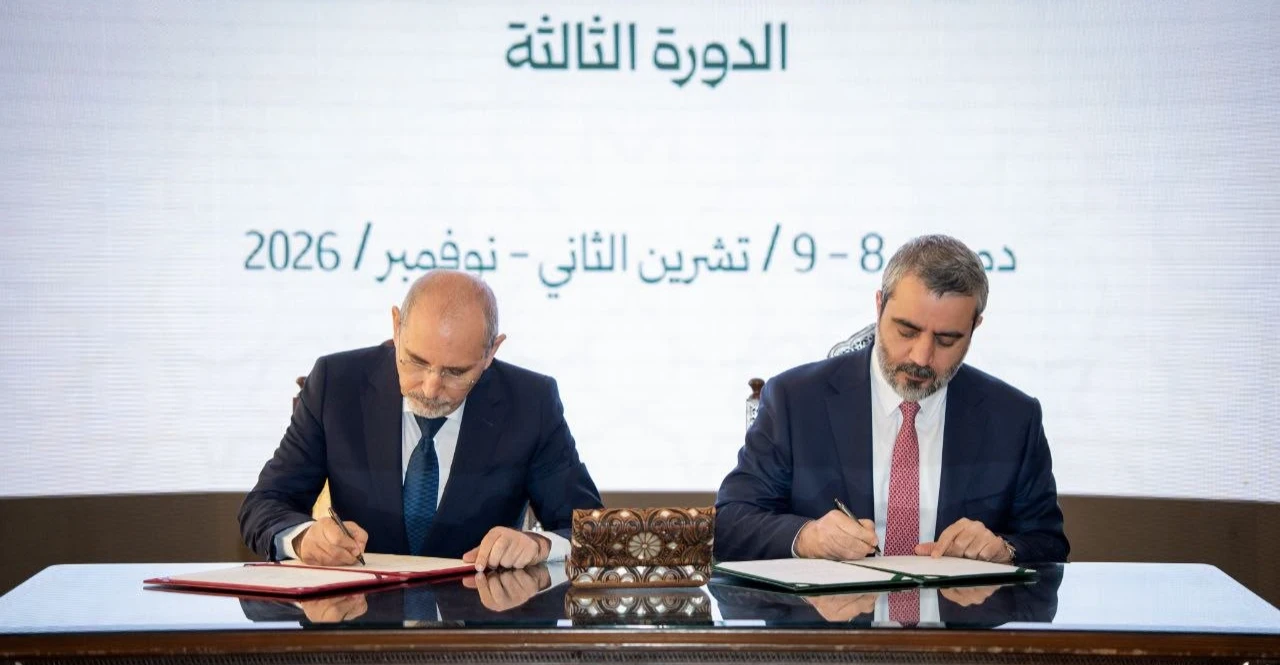
Syria and Jordan signed 11 cooperation agreements in Damascus on Monday, including a memorandum on a rail link that would open a regional corridor from Saudi Arabia through Jordan and Syria to Turkiye, as trade between the two neighbors nearly tripled in a year to $330 million.
The agreements were signed at the close of the third session of the Syrian-Jordanian Higher Coordination Council, Syrian Foreign Minister Asaad al-Shaibani told a joint news conference with Jordanian Deputy Prime Minister and Foreign Minister Ayman Safadi. They followed parallel meetings covering 19 sectors.
Besides the rail link, the deals include memorandums on cloud seeding in the Yarmouk River basin, investment and civil aviation, a protocol on food security and supply, and a program for grants and scientific exchange.
The two sides also agreed to upgrade the Jaber-Nassib border crossing, the main gateway between them, into a round-the-clock facility with separate lanes for trucks and travelers and electronic customs links. They also reviewed the roughly $47 million rehabilitation of the Nasib-Damascus international highway, alongside plans for a joint economic city on the border, modernization of the shared free zone and revival of the joint business council.
Syria and Jordan have now signed 35 agreements and memorandums in all, al-Shaibani said, describing Jordan as Syria's leading partner in terms of actual returns. Gas has flowed to Syrian power plants through Jordanian territory since January, and the two countries share a water data platform and have signed a new air services agreement, he added.
Other projects discussed include supplying Jordan with surplus Syrian wheat and barley, launching the Darb al-Safa telecommunications project, and training a second group of 1,450 Syrian civil servants. Syria is also ready to pass gas on to Lebanon, al-Shaibani said, an issue discussed in detail at a three-way meeting with Lebanese officials.
The two countries set up the Higher Coordination Council in 2025 to oversee cooperation in areas including energy, water, transport, trade and health. Its second session, held in Amman in April, brought together more than 30 ministers from both sides.