Over 60 Israeli violations reported in Syria since November 1


Shafaq News- Damascus
Israeli forces carried out at least 66 violations across Syria between November 1 and 5, including ground incursions, air activity, raids, temporary checkpoints, detentions, and artillery shelling, according to monitoring by the Sijil Center.
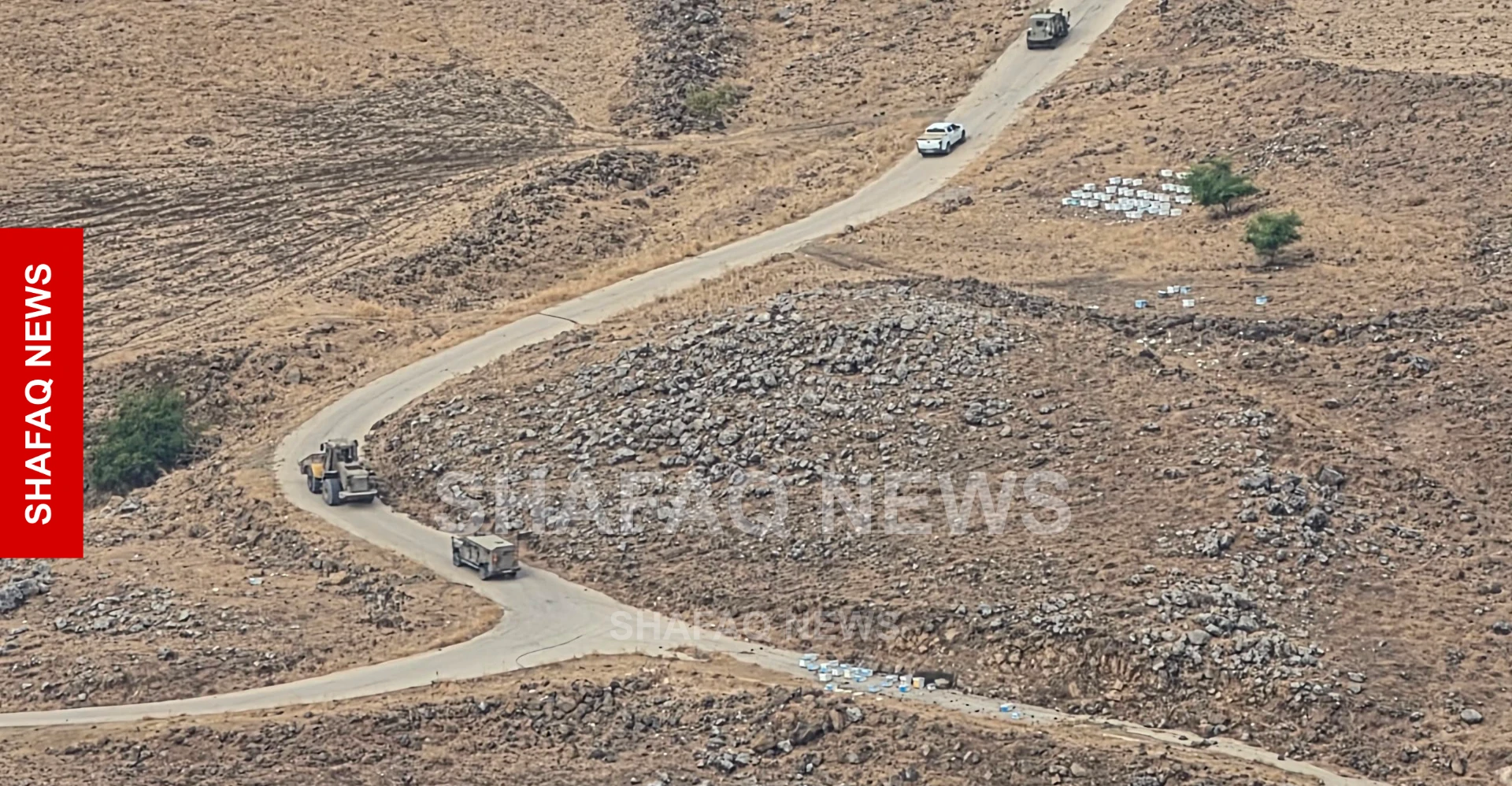
The incidents were reported across Daraa, Quneitra, and the western countryside of Damascus, as Israeli military movements continued along several routes in southern Syria.
According to Shafaq News monitoring, repeated incursions took place in western Daraa and Quneitra, with Israeli forces moving from the Abu Ghaithar gate and Al-Jazeera barracks toward the villages of Abdeen, Jamla, Mreiyeh, Saida al-Hanout, and Wadi al-Raqad.
66 Violations in Five Days
The Sijil Center documented 66 violations during the first five days of November, comprising 24 ground incursions, 21 aerial activity incidents, five raids, five temporary checkpoints, five detentions, three artillery shelling incidents, and three other violations.
The daily breakdown recorded 21 incidents on November 1, seven on November 2, 14 on November 3, 15 on November 4, and nine on November 5.
The cumulative number of Israeli violations documented by the center since the beginning of 2026 reached at least 2,493 by November 5, up from 2,427 at the end of October.
October recorded the highest monthly total of the year, with 395 violations, compared with 280 in September, an increase of 41.1%.
Raids and Movement Restrictions
According to Shafaq News correspondents, Israeli forces placed warning signs on November 1 in western Samadaniyah, Hamidiyah, Rasem al-Rawadi, and the destroyed Quneitra area, instructing residents not to travel in convoys of more than three vehicles and threatening to target those who violated the restrictions.
Residents of western Samadaniyah subsequently tore down several of the signs hours after they were installed.
An Israeli patrol also entered the village of Taranja in northern Quneitra, searched a commercial shop, and established a checkpoint on the Ain al-Baida–Jabatha al-Khashab road.
The same day, civilians picking olives in the Wadi Kuya area of Daraa were detained, while others were held at temporary checkpoints in Quneitra.
On November 2, Israeli military movements continued in western Daraa, with three military vehicles entering Mreiyeh toward Abdeen and reaching Al-Jazeera barracks. Other movements were reported around Wadi al-Raqad.
On November 3, military vehicles moved from the Abu Ghaithar gate toward Wadi al-Raqad, while others headed toward Saida al-Hanout in Quneitra. A five-vehicle force also moved from Western Tel Ahmar toward Al-Asbah. Detentions, raids, and aerial activity were reported during the same period.
On November 4, four Israeli military vehicles entered Jabatha al-Khashab in northern Quneitra. Another patrol entered Ofaniya and stopped several residents for questioning.
Artillery shelling also targeted areas around eastern Samadaniyah and al-Mantara Dam, with Shafaq News correspondents reporting shells landing near the dam.
A five-vehicle military convoy traveled through Mreiyeh, Abdeen, Jamla, Saisoun, and al-Masritiya toward Quneitra countryside. Three tanks also moved toward Tal Maakar and conducted military maneuvers.
Meanwhile, engineering work resumed on the Sufa 53 line project after a five-day suspension, involving bulldozers and excavation equipment.
On November 5, an Israeli force of three vehicles entered from the Abu Ghaithar gate toward Wadi al-Raqad in western Daraa. The force raided a civilian home, claiming to be searching for the resident's three sons, and damaged doors and household belongings despite an elderly man and a woman being inside.
Drones also flew over Jamla, while Israeli forces fired heavy machine guns toward agricultural land in Wadi al-Raqad and launched two illumination flares.
Two helicopters were also spotted over Suwayda, releasing thermal flares.
In western Damascus countryside, Israeli forces demolished abandoned military buildings belonging to the former Syrian government between the towns of Darbal and Arna, using military vehicles and a crane during the removal and demolition operations.
Residents Express Concern
The military movements have also affected daily life in villages near the border.
Ahmed al-Ali, a resident of Wadi al-Raqad, told Shafaq News that repeated Israeli military patrols had raised concerns among residents, particularly when movements took place near homes and agricultural land.
He said residents feared damage to their property and harassment while traveling, adding that home raids and searches had created additional anxiety for families, particularly those with elderly people, women, and children.
Residents hope to restore stability and security in their villages, he added.
Hussein Mohammed, a resident of Jamla, told the agency that Israeli military movements increasingly involved agricultural roads and areas close to residential communities.
He said repeated vehicle movements, checkpoints, and searches had affected residents' sense of security, particularly in areas where people depend on farming and travel between neighboring villages and towns.
Analyst warns of possible new security reality
Political analyst Samer al-Khatib told Shafaq News that the repeated Israeli incursions and their varying forms, including patrols, raids, checkpoints, and engineering operations, reflected an Israeli effort to strengthen security monitoring in areas bordering its territory.
He said Israel might be seeking to establish a new security and military reality in southern Syria, allowing it greater ability to monitor movements and intervene when it identifies developments it considers a threat to its security.
Al-Khatib added that continued engineering operations and military movements near the disengagement line raised questions about the future of Israel's military deployment and whether the measures were temporary security arrangements or part of an effort to establish monitoring and influence points inside Syrian territory.
He noted that the repeated operations placed additional pressure on the Syrian government in maintaining sovereignty and stability in the southern regions.
Syria's Foreign Ministry has condemned the repeated Israeli incursions and military movements in the south, describing them as violations of the country's sovereignty and the 1974 Disengagement Agreement.
Damascus has called on the international community to assume its responsibilities, pressure Israel to halt the violations, and withdraw from Syrian territory.
Israeli Defense Minister Israel Katz, meanwhile, said Israeli forces would not withdraw from Mount Hermon (Jabal al-Sheikh) or the security zone under Israeli control inside Syrian territory, citing security considerations and what he described as threats along Israel's borders.
The opposing positions reflect the continuing disagreement over Israel's military presence in southern Syria, with Damascus demanding an end to the deployment and a return to the 1974 arrangements, while Israel insists on maintaining its forces in the positions it has taken control of.
The 1974 Disengagement Agreement between Syria and Israel established military separation arrangements and regulated the deployment of forces in the buffer zone between the two sides, under the supervision of the United Nations Disengagement Observer Force (UNDOF).