Border violations and disarmament drive define Lebanon’s “Homeland Shield” Plan


Shafaq News – Beirut
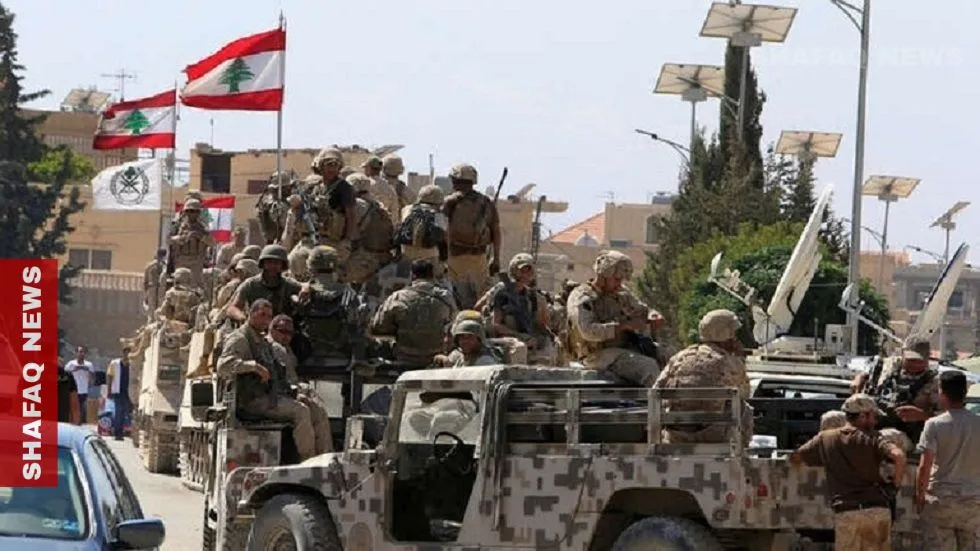
The Lebanese Army said it has completed most of the initial stage of the “Homeland Shield” plan in southern Lebanon, reporting tens of thousands of violations recorded since the ceasefire.
The Army’s Orientation Directorate said troops now operate from more than 200 positions south of the Litani River. The deployment follows a government directive issued on 5 August 2025 authorizing the Army to disarm all independent militias, including Hezbollah, by the end of the year.
According to the Army, the Homeland Shield plan consists of five integrated phases, starting with the border towns south of the Litani and then moving toward areas south of the Awali River in stages. So far, forces have surveyed 80% of the first sub-area—the frontline border towns—and 34% of the second sub-area, which includes the rear towns.
Before the plan’s launch, and since the ceasefire in November 2024, the Army seized 217,000 rounds of ammunition. After 5 September, an additional 12,600 rounds were confiscated, some of them remnants of previous Israeli attacks. The Army said several of these missions were carried out jointly with the United Nations Interim Force in Lebanon (UNIFIL).
Army data showed that since the start of Homeland Shield, engineers have handled 177 tunnels, closed 11 crossings along the Litani River, and seized 566 rocket launchers.
During a media tour organized by the South Litani Sector Command, sector commander Brig. Gen. Nicolas Tabet pointed out that the Army is working in an area that includes about ten kilometres of occupied and buffer zones, including five Israeli-held points and two buffer areas in the town of Dhayra and between Adaisseh and Kfarkela.
In the region where the Army traditionally maintained positions along the border, 13,891 homes have been destroyed by Israel.
The Army has recorded 15,198 violations since the ceasefire, in addition to 332 land and 17 maritime violations registered since the start of the Homeland Shield plan in early September.
About 10,000 soldiers are deployed south of the Litani, backed by roughly 200 Army positions, twenty of which were destroyed by Israeli strikes. He added that Israel continues to hold five key positions inside Lebanese territory, while the Army has repositioned at 11 border sites and nine areas where it used to be present before the Israeli ground maneuver remain under occupation.
“We are presenting the details of the Army’s plan for the first time,” Tabet told reporters, adding that inspections showed no weapons had entered the area south of the Litani during the implementation of the plan and pointing to “full cooperation” from residents. He said the houses recently targeted in the border towns are civilian, and that Army inspections after the strikes did not reveal any weapons inside. “There are no obstacles to the Army’s work, and residents are assisting and welcoming the state,” he said.
The Orientation Directorate said the Army has carried out 11,713 joint missions with UNIFIL since the ceasefire as part of efforts to stabilize the south.
Read more: Israel warns Lebanon: Deterrence or descent into new war?
The Israeli newspaper Maariv said Israel is closely monitoring the Lebanese Army’s activities, describing the operation as part of efforts to remove Hezbollah’s weapons south of the Litani River. The paper quoted Israeli assessments that Hezbollah is seeking to rebuild its capabilities and acquire new weapons, but that the group remains under strict Israeli surveillance as it focuses on restoring its forces.
The Lebanese Ministry of Health reported 335 deaths and 973 injuries between 28 November 2024 and 27 November 2025, bringing total casualties since the ceasefire to 1,308.
Read more: Lebanon: A nation unraveling tensions overshadow independence