“Attack on Identity”: Israel damages 55 historic towns in Lebanon


Shafaq News- Beirut
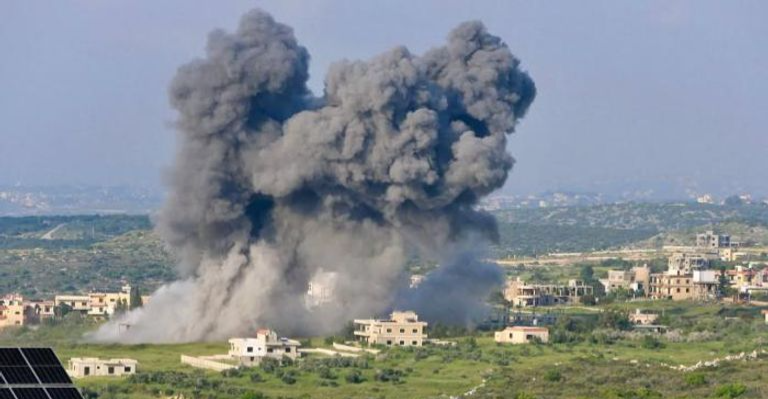
Israel's military campaign in Lebanon has extended beyond civilian casualties and damage to infrastructure to affect dozens of archaeological sites, historic villages, places of worship, and other cultural landmarks, according to a Lebanese Ministry of Culture report documenting the conflict's impact on the country's cultural, environmental, and intangible heritage.
Nearly 55 historic towns and villages in southern Lebanon were destroyed or severely damaged after the conflict began in 2023 and intensified between 2024 and 2026, with the destruction extending to traditional homes, religious shrines, churches, mosques, schools, hospitals, administrative buildings, historic markets, farmland, and centers housing civil records and personal documents, which the ministry described as a "direct and systematic" campaign aimed at erasing Lebanon's cultural identity, historical landscape, and collective memory.
Protected Cultural Sites
Among the affected landmarks are several sites protected under the 1954 Hague Convention for the Protection of Cultural Property in the Event of Armed Conflict and its Second Protocol. They include the ancient city of Tyre and the Al-Bass archaeological site, both UNESCO World Heritage Sites, as well as Shamaa Castle, Beaufort Castle (Qalaat Al-Shaqif), and Tebnine Castle, which are included on UNESCO's Tentative List for possible World Heritage inscription. The archaeological sites of Umm al-Amad and Shaqra Castle were also listed among the damaged locations, alongside the Gouraud Barracks, the Roman wall in Baalbek, the historic Qubbat Duris, the landmark Palmyra Hotel, and the Al-Manshiya building.
Places of Worship and Historic Landmarks
The conflict also affected churches, mosques, traditional markets, and historic buildings across southern Lebanon. Historic Maronite, Orthodox, and Catholic churches in Yaroun, Dardghaya, Sarda, Deir Mimas, Alma Al-Shaab, Nabatieh, Qlayaa, and Khiam were listed among the damaged sites, along with a Maronite monastery near Baalbek's UNESCO-listed archaeological complex.
Historic mosques include the Prophet Shuayb Mosque in Blida, the Kfartebnit Mosque in Nabatieh, the Tyre Debba Mosque, Ainata's heritage mosque, the old mosque in Nabatieh El Tahta, the Great Mosque of Bint Jbeil, the historic Al-Bayad neighborhood mosque in Nabatieh, the Prophet Muhaibib Mosque and shrine in Mays Al-Jabal, and the Prophet Mundhir Mosque in Markaba.
Traditional markets in Nabatieh —including the Spice Market and the Ottoman Market— as well as the market of Bint Jbeil also sustained damage. Around 120 historic buildings across Nabatieh were affected, including parts of the city's old Serail, the approximately 150-year-old Shaheen House, and stone houses in Harouf that are more than a century old.
Historic Villages and Natural Landscapes
The affected areas also include dozens of historic villages across the districts of Bint Jbeil, Marjayoun, Tyre, and Hasbaya, including Aita Al-Shaab, Maroun Al-Ras, Yaroun, Rmeish, Khiam, Kfarkela, Mays Al-Jabal, Naqoura, Shamaa, Alma Al-Shaab, Al-Bustan, Al-Bazourieh, Al-Wazzani, and Al-Majidiyah.
The report also records extensive losses to Lebanon's natural environment. Centuries-old olive groves were uprooted across the districts of Tyre, Bint Jbeil, and Nabatieh, while fig, grape, and carob orchards were destroyed. The ministry further affirmed that ancient olive, oak, and carob trees were stolen from woodlands in Hasbaya and Bint Jbeil, and accused Israel of deliberately burning and clearing oak forests and leveling historic agricultural terraces, altering landscapes that had been preserved for generations.
Intangible Cultural Heritage
Beyond the loss of monuments and cultural sites, the report warns that the conflict has also disrupted Lebanon's intangible cultural heritage.
According to the ministry, the destruction of villages, markets, churches, mosques, cemeteries, and public spaces has erased important "places of memory" where traditions and social practices were maintained. It also cautioned that assaults on areas associated with traditional crafts threaten the continuity of artisanal skills and community traditions, while the displacement of residents from southern Lebanon, the Beqaa Valley, and Beirut's southern suburbs has interrupted the transmission of customs and traditional knowledge between generations.
Lebanese Prime Minister Nawaf Salam previously accused Israel of attempting to erase Lebanon's history through its expanding military campaign, saying recent strikes had increasingly targeted heritage sites alongside homes, schools, hospitals, and production facilities.