Nechirvan Barzani and the challenges of political dialogue


Shafaq News
By Bakhtiar Sadjadi, University Professor and Cultural Critic
Nechirvan Barzani’s political career is often cited through the language of stability, development, negotiation, and regional diplomacy. These themes are in close association and thoroughly connected. Economic development requires a measure of security; security is difficult to sustain without political understanding; and political understanding becomes harder to achieve when communication gives way to confrontation. In a region marked by numerous conflicts, competing national projects, and the concerns of powerful external actors, Barzani has built much of his public identity around the belief that political problems must be addressed through communication and practical compromise.
This approach should not be understood as a claim that dialogue can resolve every dispute or that Barzani’s political record is beyond criticism. Relations between the Kurdistan Regional Government (KRG) and the federal government in Baghdad remain complicated, regional tensions continue to shape Kurdish politics, and questions about governance, party influence, and democratic accountability remain important. Supporters argue that Barzani’s willingness to maintain channels of communication, including with actors with whom he might disagree, has helped preserve opportunities for political solutions. This emphasis on dialogue is also reflected in Barzani’s own words: “Iraq’s strength lies in addressing issues through dialogue and understanding” (Presidency of the Kurdistan Region, 2026a). Critics, however, ask whether diplomacy has produced enough concrete progress and whether the same commitment to dialogue is always reflected in domestic political life.
The controversy that followed the MERI Forum provides a significant reason to further examine these questions. The discussion was not simply about one event or its guest list; it raised a wider issue about representation and inclusion. If dialogue is presented as a central political principle, how should that principle be applied when Kurdish parties or political voices believe they have been overlooked? This essay considers Barzani’s central role in Kurdish diplomatic affairs while treating the MERI Forum episode as a turning point for examining the relationship between dialogue abroad and inclusion at home.
1. Nechirvan Barzani’s Approach to Diplomacy
Dialogue is sometimes portrayed as a soft alternative to political power. In a region as complex as the Middle East, however, it can be a demanding form of political work. It requires leaders to keep channels open when public opinion is angry, to recognize that opponents have interests that cannot simply be dismissed, and to seek agreements that may not satisfy every constituency. Barzani’s diplomatic style rests on the premise that political differences are rarely resolved by refusing to speak to those who hold opposing positions. Even when negotiations do not produce a complete settlement, continued contact can reduce misunderstandings and leave room for future agreement.
His relationships with political leaders in Baghdad, Ankara, Tehran, Western capitals, and the Persian Gulf countries have helped him present the Kurdistan Region as a place capable of communicating across competing interests. Such relationships can be useful to a region whose geography and political circumstances make isolation difficult. They can create opportunities to explain Kurdish concerns, seek support, and manage tensions before they develop into larger crises. Yet diplomatic access should not be confused with mediation in every dispute, nor should the ability to meet influential figures automatically be treated as proof of successful conflict resolution.
The strongest case for Barzani’s method is therefore not that conversation alone can overcome every conflict, but that sustained engagement gives political actors a better chance of managing disagreements without violence or permanent rupture. Barzani expressed this principle directly in August 2026, stating that “peace and dialogue are the best options, and that the era for arms and military solutions has come to an end” (Presidency of the Kurdistan Region, 2026b). Its limitations are equally important. Dialogue must be accompanied by clear commitments, institutional follow-through, and accountability. Without these, it can become a performance rather than a means of resolving problems. The relevant question is not simply whether meetings take place, but whether they help produce practical outcomes and whether the people affected by political decisions have a meaningful voice in the process.
This distinction is central to assessing Barzani’s diplomacy. Maintaining relations with different governments is a strategic necessity; however, the credibility of a dialogue-based approach also depends on how it faces disagreements within Kurdish society. Recognizing that tension makes it possible to assess his diplomatic record without either idealizing it or dismissing its potential value.
2. Baghdad and the Significance of Political Partnership
Relations between Baghdad and Erbil have long been among the most difficult challenges facing Iraqi politics. Disputes over the federal budget, oil and gas, disputed territories, border administration, security, and the interpretation of the Iraqi Constitution have repeatedly strained relations between the Kurdistan Region and the federal government. Nechirvan Barzani has generally sought to address these disagreements through negotiation rather than confrontation. His approach reflects the understanding that neither side can secure lasting political stability by ignoring the other’s interests.
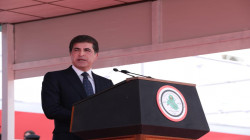
A significant recent moment in this relationship came with Barzani’s presence in Baghdad at a ceremony marking the conclusion of the Coalition’s military mission in Iraq, where he delivered a speech in Arabic. The appearance carried significance beyond the occasion itself. It was for the first time in a formal event that he presented his ideas in Arabic. His remarks were framed around the importance of Iraq strengthening its sovereignty and developing confidence in its own institutions. The broader point was that Iraq should be able to manage its affairs and determine its future through its own political institutions, while continuing to engage constructively with international partners where necessary.
Read more: The mediator in the room: President Barzani
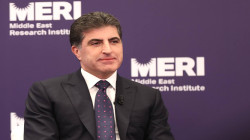
This perspective has direct implications for relations between Baghdad and Erbil. A stable Iraq requires a workable partnership between the federal government and the Kurdistan Region, grounded in the Constitution, mutual respect, and a willingness to negotiate unresolved questions. At the MERI Forum in 2023, he put the point succinctly: “The solution to our problems is in Baghdad and nowhere else” (Presidency of the Kurdistan Region, 2023). Strengthening Iraq as a whole need not come at the expense of Kurdish rights or the Kurdistan Region’s constitutional status. On the contrary, cooperation between Baghdad and Erbil is essential to the country’s long-term stability, particularly when disagreements over resources, authority, and security are handled through political engagement rather than threats or unilateral action.
At the same time, dialogue alone cannot resolve disputes when commitments are not followed by practical measures. Critics may reasonably ask whether negotiations have delivered sufficient progress on budget payments, the management of natural resources, and other longstanding questions. The alternative including allowing disagreements to deepen without sustained communication, carries further serious risks. Barzani’s continued engagement with Baghdad is best understood not as evidence that all differences have been overcome, but as a conviction that negotiation remains indispensable to a more stable relationship between the Kurdistan Region and the Iraqi state.
3. Turkey: Supporting a Political Settlement
Turkey represents one of the most sensitive dimensions of Barzani’s regional diplomacy. The conflict involving the Kurdistan Workers’ Party (PKK) has shaped Kurdish politics and regional security for decades. It has affected communities on both sides of the border, influenced relations between Ankara and Kurdish political actors, and complicated the position of the Kurdistan Region. For leaders in Erbil, the challenge has been to protect the region’s interests while avoiding a wider confrontation with Turkey, an important neighbor and economic partner.
Barzani’s approach has generally emphasized communication, restraint, and support for political efforts that could reduce the human and security costs of conflict. In a meeting with an Imrali delegation in February 2025, he reiterated that “we have consistently advocated for the peace process and the resolution of issues through dialogue,” adding that history shows “conflict and violence do not resolve disputes” (Presidency of the Kurdistan Region, 2025a). Backing dialogue does not erase the difficult questions surrounding the PKK, Turkey’s security concerns, or the rights and political aspirations of Kurdish communities. Nor does it guarantee that negotiations will succeed. Peace processes can stall, trust can be lost, and political leaders may face pressure from constituencies that regard compromise as a concession. Nevertheless, a negotiated process offers a possibility that military confrontation alone cannot provide: a way to address underlying political grievances and reduce the likelihood of further suffering.
Read more: Nechirvan Barzani: The Man with the Map
The Kurdistan Region must also navigate its own security and economic interests. Its relationship with Turkey has been significant for trade, investment, and energy exports, while military operations connected to the conflict have imposed costs on border communities. A policy of dialogue is therefore both a political principle and a practical necessity. It seeks to preserve relations with a powerful neighbour without treating security concerns as the only questions that matter. Its success, however, depends on whether the parties involved are prepared to move beyond statements and take verifiable steps toward a more durable settlement.
Turkey has a decisive level in Nechirvan Barzani’s diplomatic practice. Maintaining communication can help prevent misunderstandings and preserve opportunities for negotiation; however, constructive relations with Ankara do not automatically resolve the underlying Kurdish question. The measure of diplomacy is not simply whether relations remain cordial, but whether political engagement contributes to a reduction in violence and creates space for a more lasting settlement.
4. Syria: The Challenge of Kurdish Representation
Syria presents a different but equally important test for Kurdish diplomacy. The conflict has displaced millions of people, weakened state institutions, and drawn regional and international powers into overlapping struggles. Kurdish political actors in Syria have sought recognition, security, and a meaningful role in the country’s future, while neighboring states have viewed some developments through the lens of their own security concerns. In this environment, a durable political settlement will require more than a military balance. It will depend on constitutional arrangements, protection for communities, and a political process capable of accommodating Syria’s diversity.
Barzani’s public emphasis on dialogue and political inclusion provides a framework for approaching this challenge. His position and relationships in the Kurdistan Region give him opportunities to encourage communication among Syrian Kurdish actors and to support efforts to ensure that Kurdish concerns are heard in discussions about Syria’s future. Such engagement matters because questions of decentralization, constitutional protection, political participation, and the future governance of Kurdish-populated areas cannot be resolved sustainably if relevant political constituencies are excluded. At the same time, Syria’s circumstances differ from those of the Kurdistan Region of Iraq, and its future cannot simply be modelled on the Iraqi Kurdish experience.
An important part of this discussion concerns the Kurdish National Council in Syria, commonly known by its Kurdish acronym ENKS, a Kurdish political umbrella representing a distinct current within Syrian Kurdish politics. Its political identity and relationships differ from those of other Kurdish forces, and its participation matters because Syrian Kurdish society is not politically uniform. Any serious effort to develop a broadly accepted Kurdish position on Syria’s future must recognize these differences and provide room for competing political organizations to take part.
Barzani’s efforts to encourage dialogue among Syrian Kurdish actors should therefore be assessed in terms of whether they help create conditions for meaningful participation. This emphasis also appears in the Presidency’s account of his June 2026 meeting with ENKS, which said that he “highlighted the influential role of ENKS” and stressed “the importance of ongoing dialogue and understanding among all Kurdish factions” (Presidency of the Kurdistan Region, 2026c). The objective should not merely be to bring representatives together for meetings, but to make dialogue substantial enough that disagreements can be addressed and common positions can emerge where possible. Such efforts are especially important when divisions among Kurdish parties risk weakening their ability to influence discussions about Syria’s future. Dialogue among Kurdish actors and dialogue with Damascus are connected: a representative Kurdish position is more likely to carry weight when it reflects a genuine process of consultation and debate.
At the same time, critics argue that ENKS has been neglected or has not received sufficient inclusion in the political discourse surrounding the Syrian Kurds. This concern deserves consideration rather than dismissal. If a process is presented as an effort to promote Kurdish dialogue but an important political organization believes its voice has been marginalized, questions naturally arise about the breadth of representation and the steadiness of the process. The existence of dialogue initiatives alone does not establish that all relevant parties have been included on equal or satisfactory terms.
It is important to distinguish between encouraging dialogue in principle and ensuring inclusive representation in practice. Barzani’s efforts to promote communication among Syrian Kurdish actors may contribute to a more constructive political environment, but their effectiveness must also be evaluated. The broader lesson is that Kurdish political unity cannot be established simply by asking different organizations to cooperate. It requires recognition of their distinct political identities, a willingness to address disagreements, and a process that participants regard as sufficiently fair and representative. For Barzani, the challenge is not only to encourage dialogue between Syrian Kurdish actors and Damascus, but also to help create the conditions for dialogue among the Syrian Kurds themselves. The credibility of this effort will depend in part on whether ENKS can participate meaningfully in shaping the outcome.
5. Iran: The Difficult Test of Barzani’s Diplomacy
Relations with Iran present a particularly delicate challenge for the Kurdistan Region. Geography, trade, shared borders, and long-standing political connections make engagement with Tehran unavoidable, while regional rivalries and security concerns can place Erbil in a difficult position. The Kurdistan Region must maintain workable relations with Iran without losing the ability to pursue its own interests or preserve its relationships with Baghdad, the United States, and other international partners. This requires a careful balance rather than automatic alignment with any one external power.
Iran is not simply another neighboring state in the region’s diplomatic landscape. It has significant political, economic, and security influence in Iraq, and developments in the wider confrontation between Iran and the United States does have direct consequences for Iraqi territory and Kurdish security. The Kurdistan Region may find itself exposed to pressures that it did not create. Its leaders must therefore consider how to preserve channels of communication with Tehran while avoiding actions that could unnecessarily intensify tensions or compromise the region’s constitutional position within Iraq.
Barzani’s diplomatic approach has generally favored maintaining communication even when the regional atmosphere is tense. Speaking about Iran in 2023, he described it as “an important neighbor” and said that he wanted concerns arising from the shared border “to be resolved through dialogue” (Presidency of the Kurdistan Region, 2023). Such engagement can help reduce the risk of misunderstanding and protect channels that may be needed during a crisis. The value of diplomacy lies in creating room for the Kurdistan Region to explain its position, protect its interests, and avoid becoming a battleground for wider rivalries. Simultaneously, Barzani has called for the resolution of the Kurdish question in Iran. At the MERI forum, he clearly said “the Kurdish question in Iran is not resolved through the refusal of the question.”
A diplomacy of dialogue in relation to Iran must also be judged by its practical results. Maintaining communication can be valuable, but it cannot substitute for clear principles, effective institutions, or a realistic assessment of power. The Kurdistan Region needs to protect its security, economic interests, and constitutional rights while avoiding unnecessary escalation. The wider challenge is to preserve the Kurdistan Region’s room for manoeuvre. Its security and prosperity depend on relationships that cross political divides. Barzani’s approach can be understood as an attempt to preserve options in a dangerous regional environment. Iran is perhaps the clearest example of why dialogue is necessary, and why dialogue, on its own, is never enough.
6. The MERI Forum: Representation and Inclusion
The controversy surrounding the MERI Forum is central to the questions explored in this essay. The issue raised by the event and the subsequent response from Barzani’s headquarters was not only about the organization of a forum; it touched on the broader question of which Kurdish party is represented in political discussions about Syria and Iran, and whose voices are given space. The statement from Barzani’s headquarters disapproving of the forum’s treatment of other parts and political parties of Kurdistan brought the question of inclusion into sharper focus.
Supporters of the forum may argue that diplomatic gatherings operate within political and organizational constraints, and that no event can be comprehensive. Critics, however, may see exclusions as evidence that the language of dialogue is applied selectively, especially when political groups believe that their views or constituencies have been overlooked. Whie we should pay attention to the practical limits of event organization, we should also ask whether the process was sufficiently representative. Therefore, the wider significance of the MERI episode lies in the relationship between diplomatic openness and domestic political inclusion. These are not identical tasks, but they are connected by a common principle: dialogue is most credible when those affected by decisions have a meaningful opportunity to express their views.
In its statement on the forum, ENKS argued that invitations to discussions on Kurdish affairs “should include all political sides” and called for participation “without discrimination or exclusion” (Rudaw, 2026). The statement should be read as a concern about the forum’s arrangements. At the MERI Forum, Barzani again emphasized cooperation between Syria and Kurdish parties on strategic questions. The significance of such discussions depends not only on their subject matter, but also on whether they allow meaningful disagreement and contribute to practical outcomes. Dialogue should not be measured solely by the number of meetings held or by the visibility of the participants. It should also be judged by whether competing views and political engagements help build trust rather than deepen perceptions of exclusion.
7. Political Responsibility and Kurdish Unity
Nechirvan Barzani’s political identity is marked with his long experience of developing KRI and constructive diplomacy. His political legacy too is closely associated with the Kurdistan Democratic Party and particularly that of President Masoud Barzani, to whom he is a deputy in in KDP. These features have helped provide him with an established political base and relations with influential regional and international political figures.
A balanced assessment must recognize both the practical value of his diplomatic approach and the limitations of the regional framework in which he acts. Supporters point to his ability to maintain relationships across competing interests, seek dialogue during periods of tension, and present the Kurdistan Region as a partner in regional stability. Critics ask whether these efforts have translated into stronger democratic context and lasting solutions to constitutional disputes.
Political unity is often invoked as a necessary goal for the Kurds, particularly when regional decisions may shape their future. A similar principle appears in Barzani’s comments on Iraqi political participation: “All Iraqi communities must consider themselves as participants in the political process in the country” (Presidency of the Kurdistan Region, 2022). The future of Barzani’s diplomacy will depend on whether dialogue can be converted into durable results. The Kurdistan Region’s interests will be better served if diplomacy is supported by stronger domestic governance and a political environment in which criticism can be freely expressed.
Conclusion: Kurdistan as a Bridge, Not a Battlefield
Nechirvan Barzani’s political approach is built around a clear proposition: in a region shaped by conflict and competing interests, dialogue is a necessary instrument of political survival and progress. His engagement with Baghdad, his approach to the Turkey–PKK question, his interest in Kurdish participation in Syria, and his efforts to maintain relations with Iran while addressing the Kurish question in Iran all reflect an attempt to preserve room for negotiation in circumstances that often reward confrontation.
His approach should not be romanticized. Dialogue can be slow, compromise can disappoint supporters, and diplomatic visibility does not by itself resolve disputes over rights, resources, or accountability. The strongest assessment of Barzani’s record must therefore consider both his willingness to maintain channels of communication and the concrete results those channels produce. It must also consider the quality of inclusion in political processes, including the questions raised by the recent MERI Forum concerning Syrian an Ianian Kurdish discourse.
The Kurdistan Region has often found itself at the intersection of larger regional struggles. In his October 2026 speech in Baghdad, Barzani described the aspiration as a constitutional, federal, stable, and fully sovereign Iraq that serves “not as an arena for regional tensions but as a platform for constructive dialogue” (Presidency of the Kurdistan Region, 2026a). Barzani’s vision presents it instead as a potential bridge between political actors who need ways to communicate despite their disagreements. Lasting security is more likely to emerge from negotiation, mutual recognition, and accountable governance than from a permanent cycle of confrontation. The challenge is to turn that principle into practical political achievements.
This article was originally published by Kurd Press
Disclaimer: The views and opinions expressed are solely those of the author and do not necessarily reflect the views or editorial position of Shafaq News.