Analysts: Iraq-Syria talks boost economic, security prospects


Shafaq News- Baghdad/ Damascus
Iraqi Prime Minister Ali Al-Zaidi’s visit to Damascus could pave the way for closer economic and security cooperation between Iraq and Syria, particularly in border security, oil exports, and trade, Syrian analysts told Shafaq News.
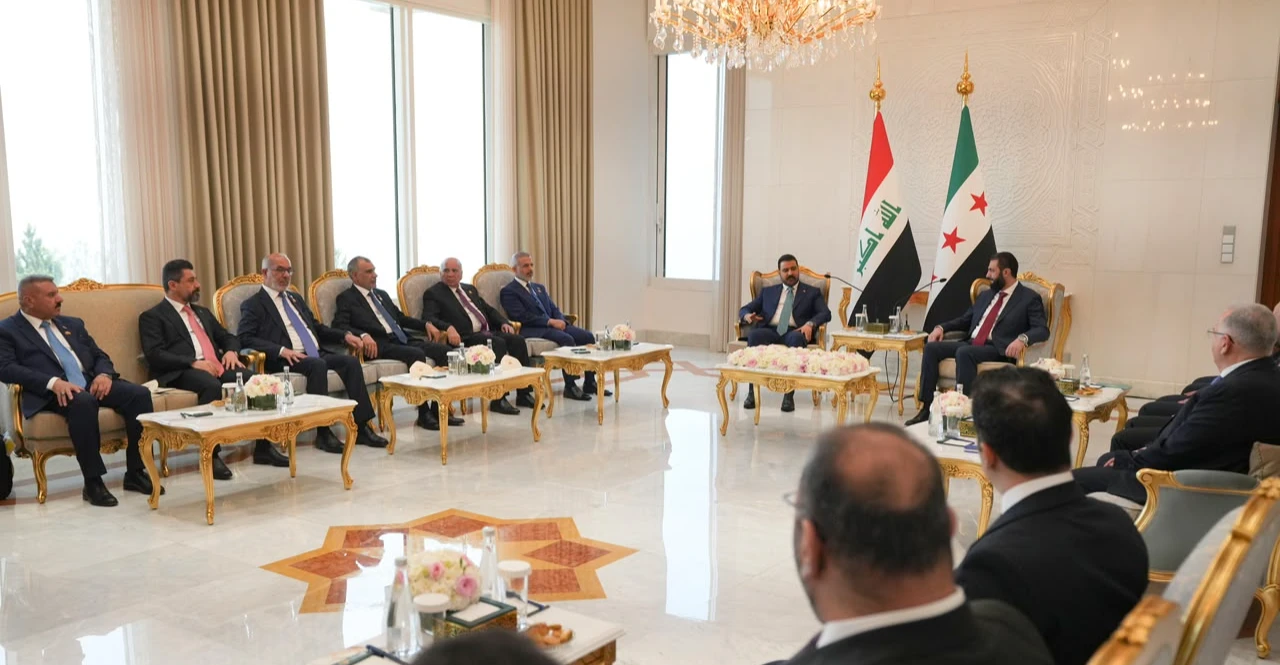
Al-Zaidi and Syrian President Ahmad Al-Sharaa co-chaired expanded talks between the two countries’ delegations in Damascus on Wednesday. The talks covered plans to export Iraqi oil through the Baniyas pipeline, which has a stated capacity of up to 2 million barrels per day, as well as efforts to expand bilateral trade, according to the Iraqi Prime Minister’s Media Office, which said the two sides also discussed joint efforts to develop the agricultural sector to promote food security and economic integration.
Lezgin Ibrahim, a researcher at Syria’s Al-Furat Center for Studies, said the visit could move bilateral relations beyond limited security cooperation toward a broader partnership based on shared interests, while Syrian political science and international relations professor Salah Kirata emphasized the importance of direct dialogue and respect for sovereignty.
Border Security As A Priority
ISIS cells, smuggling networks, and armed groups operating along the shared border pose “common security challenges,” Ibrahim said, calling for permanent intelligence-sharing mechanisms and closer coordination between Iraqi and Syrian security forces.
Recalling a visit with journalists and diplomats about 20 years ago, Syrian writer and journalist Ahmed Kamel said patrols and unilateral measures had proved insufficient to prevent unauthorized crossings because of the border’s length and the difficulty of monitoring it.
Kirata called for tighter controls at official crossings and measures to prevent infiltration, arguing that Iraq and Syria’s security was closely connected and that instability in either country could affect the other.
Oil Exports And Trade Opportunities
Ibrahim identified plans to export Iraqi oil through Syria’s Mediterranean port of Baniyas as a potential benefit of closer economic ties, alongside restoring transport links and expanding agricultural cooperation. These projects, he said, could give Iraq another route to international markets while helping Syria regain its role as a transit corridor to the eastern Mediterranean.
Syrian transit routes could also provide Iraqi goods with access to European and African markets, benefiting commerce in both countries, Kamel noted, while Kirata proposed modernizing border crossings, simplifying customs procedures, introducing electronic data exchanges, and rehabilitating transport infrastructure.
Both Kamel and Kirata stressed that tangible progress would depend on implementing these proposals rather than limiting cooperation to diplomatic declarations.
Read more: Iraq-Syria relations: From caution to pragmatic engagement?