Syrian adviser questions economic recovery despite $46M surplus


Shafaq News- Damascus
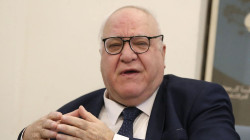
Early signs of economic “recovery” in Syria require cautious interpretation and do not necessarily reflect sustainable structural improvement, government economic adviser Ziad Arabsh told Shafaq News on Monday.
After a visit to Damascus under an “intensive engagement” program, the International Monetary Fund (IMF) pointed to improved economic activity, stronger consumption and trade, and a relative rise in consumer and investor confidence in the country. However, Arabsh said these indicators mask deeper weaknesses, citing estimates by the Syrian Center for Policy Research showing real growth did not exceed 0.3%, while per capita GDP declined by 6%.
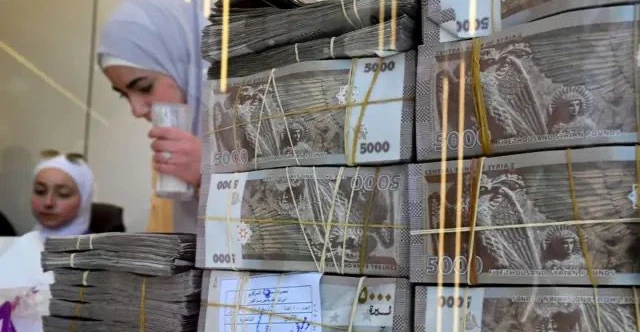
He described the reported $46 million budget surplus in 2025, the first since 1990, as “fragile,” driven primarily by strict austerity measures rather than productive gains. Customs revenues accounted for about 39% of total income, while wages and salaries made up roughly 41% of spending, reflecting a focus on short-term support over long-term investment.
According to Arabsh, the relative improvement in activity is largely tied to temporary factors, including stronger agricultural output due to rainfall, limited easing of sanctions, and early signs of regional reintegration, though he warned that structural constraints –including weak infrastructure, high production costs, and liquidity shortages– continue to limit any sustainable recovery.
The government, he acknowledged, has made progress in halting deficit financing through the central bank, improving fiscal transparency, and implementing tax and customs reforms, but major challenges remain, particularly in governance and public sector restructuring.
“The reality is growth without development,” Arabsh said, as recovery indicators have not translated into improved living conditions, with poverty levels still high and large segments of the population facing food insecurity.
In the short term, Arabsh predicted that 2026–2027 could see a return to deficits as public spending expands, with oil revenues expected to play a larger role in state income, and over the medium term, recovery will depend on large-scale investment and reconstruction, requiring “hundreds of billions of dollars and the creation of hundreds of thousands of jobs.”
Arabsh concluded that the most likely scenario is a gradual but uneven recovery, warning of widening social gaps unless policies shift toward inclusive and sustainable development.