Syria-Iraq trade recovers as energy transit expands


Shafaq News- Damascus
Trade between Syria and Iraq is gradually recovering as border crossings reopen, while expanding energy transit is giving Syria a growing role as an alternative route for Iraqi petroleum exports to the Mediterranean.
Louay Al-Ashqar, a board member of the Damascus Chamber of Commerce, told Shafaq News that current commercial exchange remains well below its potential despite improving cross-border traffic.
Syrian exports to Iraq rose from about $58 million in 2024 to $62 million in 2025, according to Iraqi Finance Ministry figures previously cited by Shafaq News. Before Syria’s war, bilateral trade was substantially higher, reaching about $2.2 billion in 2010.
Al-Ashqar said Syrian exports currently center on fruit and vegetables, food products, clothing and textiles, plastics, pharmaceuticals and detergents. Iraq previously supplied Syria with products including dates, date paste and wheat.
Energy, however, has emerged as one of the fastest-growing areas of cooperation.
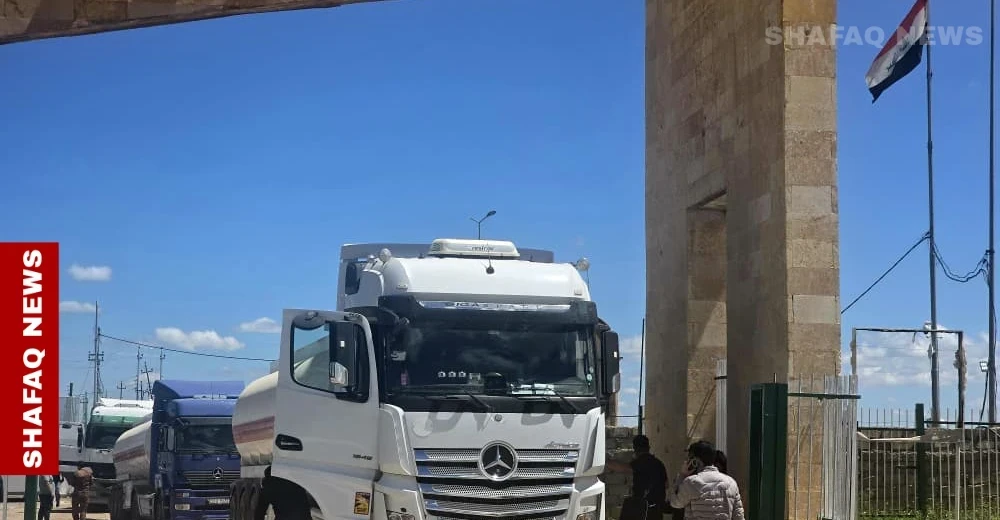
Iraq began moving fuel oil through Syria to the Mediterranean coast in April after disruptions to shipping through the Strait of Hormuz. Tanker trucks carry the product across Syrian territory to Baniyas, where it is loaded onto vessels for re-export.
The operation has since expanded sharply. Syria said in August that more than 2 million metric tons of Iraqi petroleum products had moved through Baniyas under the transit system since the beginning of 2026.
Al-Ashqar identified agriculture and food processing, pharmaceuticals and plastics, construction materials and reconstruction, and energy and transit as the sectors with the strongest potential for near-term growth.
He said reopening border crossings was also helping restore conventional trade. The Al-Qaim-Al-Bukamal crossing resumed commercial and passenger traffic in June 2025, while Rabia-Al-Yarubiyah reopened in April 2026 after around 13 years of closure.
The Rabia route has taken on particular importance for petroleum transit. Iraq sent its first shipments through the crossing in May, and subsequent convoys carried fuel oil toward Baniyas.
Al-Ashqar said traders still face three main obstacles: repeated disruption at border crossings, difficulties registering Syrian companies in Iraq and the absence of formal banking channels between the two countries. The lack of banking links forces many traders to rely on informal transfers, while high Syrian production and transport costs further constrain exports.
Baghdad and Damascus have also moved to deepen their energy links. On July 17, the two governments signed a US-sponsored memorandum of understanding to study the rehabilitation of the Kirkuk-Baniyas oil pipeline, which could give Iraq a direct Mediterranean export outlet and reduce its reliance on Gulf routes.
Iraq is simultaneously considering a wider pipeline network linking Basra with Haditha and extending westward to Baniyas and northward toward Fishkhabur. Chevron, TI Capital and Qatar’s UCC are involved in discussions over the proposed infrastructure.
Al-Ashqar said sustained growth in bilateral trade would depend on keeping the crossings open, improving security, simplifying customs procedures and establishing reliable banking links between the two countries.