CBI pledges unrestricted dollar supply after devaluation


Shafaq News- Baghdad
The Central Bank of Iraq (CBI) said on Wednesday its foreign reserves “are strong enough to meet all requests for dollars in full and without restrictions,” as its new exchange rate, weakening the dinar, took effect.
The reserves guarantee immediate coverage of all external transfer requests to finance trade, bank card settlements and cash sales to travelers, the bank said in a statement.
Under the new rate, the central bank buys dollars from the Finance Ministry at 1,500 dinars, sells them to banks at 1,510 dinars and sells cash dollars to the public at 1,520 dinars. The previous end-user rate was 1,320 dinars per dollar.
The bank described the change as a "positive adjustment" that would support Iraqi products and local industry by making domestic goods more competitive against imports. It said the move would encourage factories and national companies to expand, attract investment to non-oil sectors and create jobs, particularly for young Iraqis, by helping small and medium-sized businesses grow.
The adjustment was made in coordination with the Council of Ministers under the amended Central Bank Law No. 56 of 2004, according to the statement.
The Iraqi Contractors Union asked Prime Minister Ali Al-Zaidi on Wednesday to postpone applying the new rate, warning it would raise project costs. Lawmakers have also called for an emergency parliamentary session to reconsider the decision over concerns about consumer prices.
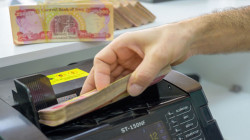
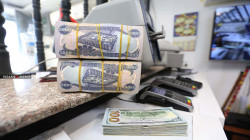
The new rate brings the official price closer to the parallel market, where Baghdad exchange shops were selling $100 for 168,500 dinars on Wednesday.
Read more: Banking without trust: Why Iraqis still keep their money in cash
New Record
The Eco Iraq economic observatory said on Wednesday that the US dollar had reached its highest level of the year against the Iraqi dinar on the parallel market, hitting 168,000 dinars per $100 in October after six major waves of increases in 2026.
Each wave pushed the parallel-market rate to a new high. The first came in January, when the dollar reached about 150,400 dinars per $100. It exceeded 155,000 in March, rose to about 156,000 in April and reached 157,250 in June.
The dollar climbed again in September, moving above 157,000 and approaching 160,000, before breaking that level in October, according to the observatory.
Eco Iraq warned that a widening gap between the official and parallel exchange rates could raise import costs and feed through to prices of goods and services, eroding consumers’ purchasing power. It called for closer market monitoring, measures to curb speculation and stronger dollar flows through official channels.