Deniz Undav’s dance turns World Cup spotlight on Kurdish identity


Shafaq News- Erbil
When Deniz Undav rose from Germany's bench in Toronto with his team trailing and its World Cup ambitions under pressure, few could have anticipated that the substitution would produce one of the tournament's most resonant stories.
By the final whistle, Undav had scored twice to overturn Germany's deficit against Côte d'Ivoire, secure a place in the knockout rounds, and deepen a connection with millions of Kurds who see in the 29-year-old striker more than a footballer. For a community without an internationally recognized national team, his goals —and the traditional govend dance that followed them— have transformed him into an unexpected symbol of identity and visibility on football's grandest stage.
Germany entered its second Group E match burdened by the memory of successive group-stage exits in 2018 and 2022. Franck Kessié's first-half goal threatened to revive those anxieties as a disciplined Ivorian side frustrated Julian Nagelsmann's team and exposed familiar shortcomings in attack.
Seeking a breakthrough, Nagelsmann introduced Undav shortly after the hour mark as part of a triple substitution that immediately altered the game's tempo.
Eight minutes after entering the pitch, Undav timed his run perfectly to meet a cross from Nadiem Amiri and draw Germany level. Deep into stoppage time, he spun inside the penalty area and fired home the winner, completing a 2-1 comeback that may prove pivotal to Germany's hopes of re-establishing itself among the world's elite. "Victory was very important, and we showed strong character," Undav said after the match.
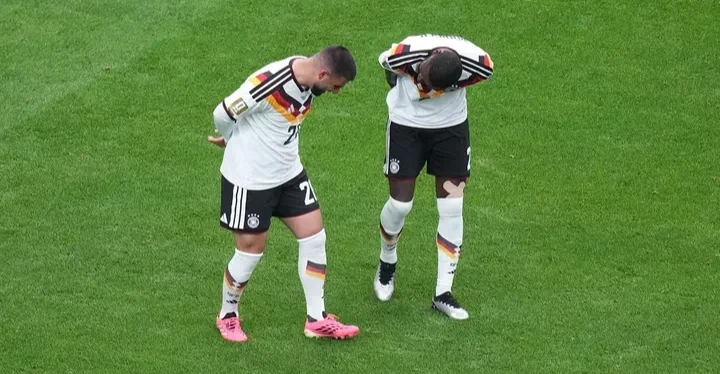
Undav's influence at this World Cup, however, extends well beyond his decisive goals. In Germany's opening 7-1 victory over Curaçao, he came off the bench to score once and provide two assists before celebrating with a traditional Kurdish govend dance alongside teammate Antonio Rüdiger. The images spread rapidly across Kurdish communities in Iraq, Syria, Turkiye, Iran, and the European diaspora.
For many Kurds, the celebration represented a rare moment of recognition for Kurdish identity has largely remained absent from football's most visible platforms. Undav's public embrace of his heritage changed that, if only for a moment.
Kurdish media outlets described him as the first player of Kurdish origin to score at a World Cup, while social media filled with messages celebrating what many viewed as a long-overdue acknowledgment of a people often overlooked in international sport.
The dance itself had already become part of Undav's public image. After scoring for Stuttgart against Eintracht Frankfurt in April 2024, he performed the same celebration, prompting widespread attention in the German press. Newspaper Bild reported that the striker had first introduced the dance in the dressing room before teammates encouraged him to bring it onto the pitch.
Born in Varel, Lower Saxony, in 1996 and raised in Achim, Undav is the son of a Kurdish Yazidi family originally from Viranşehir in Turkiye's southeastern Şanlıurfa province. German media reports indicate that his family left Turkiye in the aftermath of the 1980 military coup, carrying with them the experiences of a marginalized minority and building a new life in Germany.
That history has shaped Undav's relationship with identity. Although he has repeatedly emphasized his strong connection to Germany, he has also corrected descriptions of himself as a player of Turkish origin, stating clearly that he identifies as Kurdish. His comments have occasionally triggered nationalist backlash, particularly following Stuttgart's Europa League meeting with Fenerbahçe, but they have also strengthened his standing among Kurdish communities.
Undav never represented Germany at youth level and spent years in the lower divisions after leaving the Werder Bremen academy, playing for Havelse, Eintracht Braunschweig II, and Meppen while balancing football with vocational training and part-time work.
His breakthrough came at Belgian side Union Saint-Gilloise, where a 25-goal season earned him a move to Brighton before a loan spell at Stuttgart transformed his career.
He scored 18 goals and registered nine assists during the 2023-24 Bundesliga campaign, helping Stuttgart return to the UEFA Champions League. He improved again in 2025-26, recording 19 league goals and six assists to finish as the Bundesliga's second-highest scorer behind Harry Kane.
Nagelsmann handed Undav his first senior international call-up in March 2024, when he was already 27 years old. Two years later, the late bloomer who once balanced football with part-time jobs has emerged as one of Germany's most influential players at the World Cup.