Iraqi workers march: Foreign labor pressures jobs despite falling unemployment


Shafaq News- Baghdad
Iraq marked International Workers' Day on May 1 with a contradiction: unemployment fell from 16 percent to 13 percent, according to the Planning Ministry, but workers say cheaper foreign labor is pushing them out of jobs.
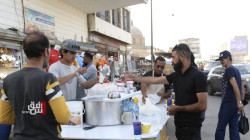
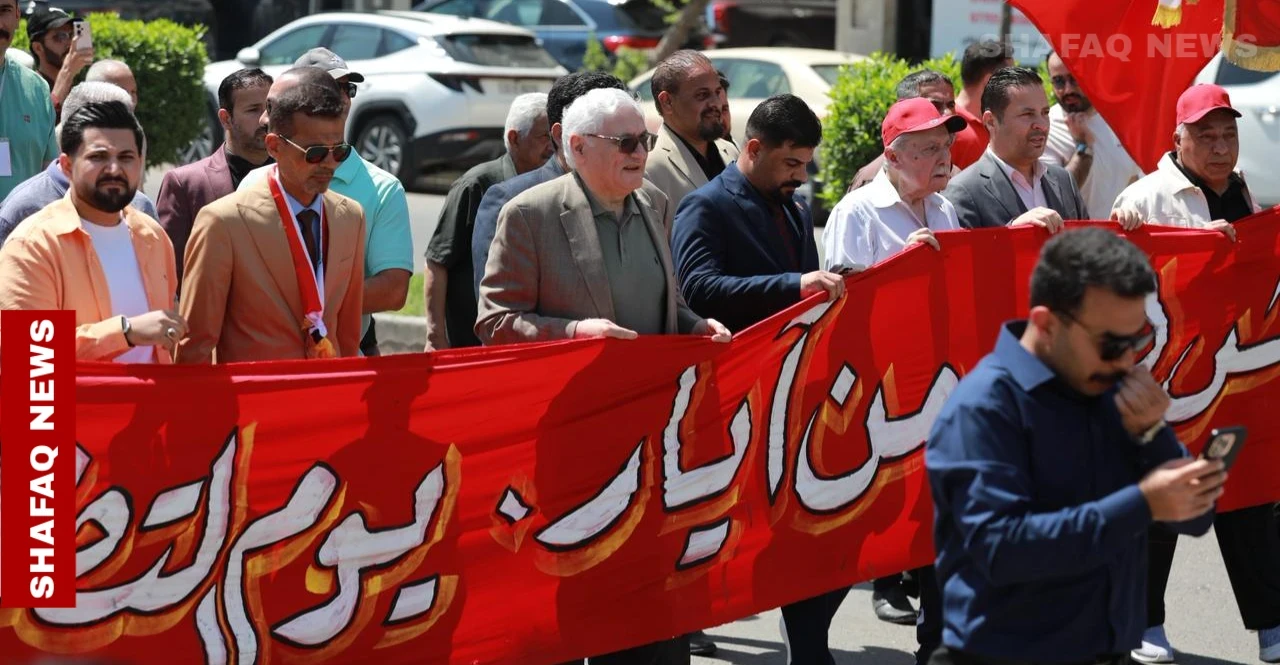
Workers began the day with demonstrations in Baghdad, where marches moved from Firdos Square to Nasr Square, with participants calling for enforceable contracts, a fair wage scale, activation of the civil service law, and a functioning social security and health insurance system.
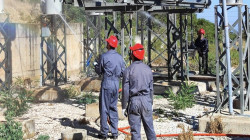
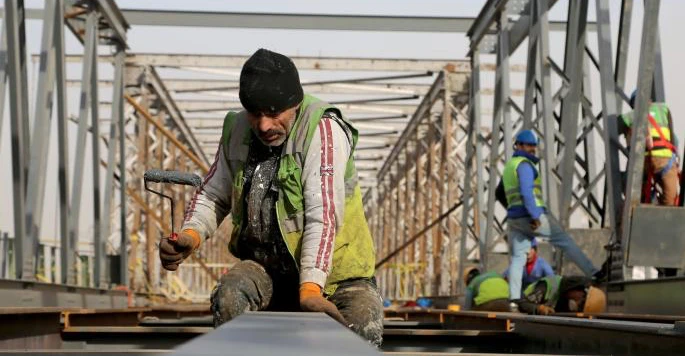
In Al-Sulaymaniyah, like in all provinces, workers face longer hours, lower wages, and fewer protections as employers favor imported labor that is cheaper and easier to control. Construction worker Sardar Ahmed told Shafaq News the cost of workplace injuries falls entirely on the worker. "When you get injured on the job, no one covers your treatment. You pay out of your own pocket and hope you can still work the next day."
Read more: Iraq's workers rise: New union challenges old guard
Factory worker Hewa Karim described conditions that leave little room for stability or legal recourse. "The wage does not cover basic needs. There is no future guarantee, and when you ask for the leave the law gives you, they make it nearly impossible to take."
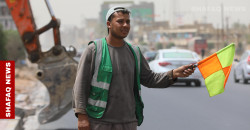
Employers prefer foreign workers because they are cheaper and easier to control, pushing local workers into insecure jobs without health, social, or economic guarantees, Bakhtiyar Mohammed, a member of an independent labor committee, told Shafaq News. "Employers prefer foreign workers because they cost less and they are easier to control. That pushes local workers into jobs with no health coverage, no social protection, and no economic security. And women workers and children are paying an even heavier price."
Labor Ministry data show that 47,000 foreign workers are officially registered, while 55,000 were deported as illegal over the past two years, including 20,000 in 2024 and 35,000 in 2025. A 2024 cabinet decision caps foreign labor at 20 percent of any workforce and includes restrictions on several nationalities, but enforcement remains weak. Aram Hassan, a labor researcher, said this, along with limited oversight and the privatization of essential services, has raised living costs while eroding worker protections.
Read more: Youth in despair, no jobs to share: Iraq's workforce hanging in the air
Labor groups are now pushing for enforceable contracts, fair wages, and legislation aligned with International Labor Organization Convention No. 87, which Iraq has yet to ratify. Walid Naama, head of the Iraqi General Federation of Trade Unions, told Shafaq News the demands go beyond legislation. "We need enforceable contracts, fair wages, and legislation that meets ILO standards. Workers must also have a real voice in parliament, not just promises made on Labor Day."
Prime Minister-designate Ali Al-Zaidi, named on April 27, has 30 days to form a government. He said in a statement that his administration would work to ensure a "decent" work environment. Three labor files remain unresolved: implementing the 2023 law, enforcing limits on foreign labor, and establishing a stable mechanism for Erbil-Baghdad salary transfers.