Iraqi pilgrims reroute as Sayyida Zainab shrine rituals suspended in Syria


Shafaq News – Al-Diwaniyah/Damascus
Iraqi religious tour groups have rerouted Muharram pilgrimage campaigns after ceremonies at the Sayyida Zainab shrine near Damascus were suspended this year, according to sources.
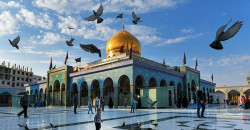
The Sayyida Zainab shrine, located south of the Syrian capital, is a major Shiite pilgrimage site believed to house the tomb of Zainab, the granddaughter of the Prophet Muhammad. It draws thousands of visitors annually, particularly during Ashura—the 10th day of the Islamic month of Muharram—which commemorates the death of Imam Hussein, a central figure in Shiite Islam.
Um Hassan, 55, from Iraq’s Al-Diwaniyah province, has participated in annual visits to the shrine for years. She typically saves up to 500,000 Iraqi dinars (approximately $380) to join these campaigns during Ashura. This year, organizers informed her that while the shrine remains open to visitors, commemorative rituals would not take place inside the compound.
“I used to travel annually with these groups,” she told Shafaq News. “Now, with the rituals halted, the experience has lost its meaning. I used to take part in the commemorations with women there. The absence of those ceremonies left me deeply saddened.”
Following the update, she opted to travel instead to Iran, joining a pilgrimage to the shrine of Fatima Masumeh in the city of Qom, one of Iran’s major Shiite religious centers. She noted that the costs for the Iranian tour were roughly equivalent to the Syria trip.
The Syrian Ministry of Religious Endowments publicly denied issuing any directive to close the Sayyida Zainab shrine or prohibit rituals. However, a source familiar with the shrine’s internal operations confirmed to Shafaq News that a decision had been made to relocate this year’s Muharram ceremonies outside the shrine for security and organizational reasons.
“The official statement emphasized that the shrine remains open and that rituals are not banned,” the source said, requesting anonymity. “But a separate internal decision was made to suspend ceremonies inside the shrine to prevent potential incidents.”
As of publication, Shafaq News had contacted relevant authorities to obtain photos or videos confirming whether rituals had been held within the shrine, but received no response.
No official statement has been issued by shrine administrators regarding the matter.
The ritual suspension followed a wave of public speculation earlier this month claiming that Syrian authorities had ordered the shrine closed during Muharram. These claims were later denied by officials, but the confusion led to uncertainty among organizers and pilgrims.
In parallel, several Iraqi political figures called for avoiding travel to Syria during Ashura. Among them was Issam Hussein, a political figure associated with the Sadrist movement—a prominent Shiite religious and political current in Iraq led by cleric Muqtada al-Sadr—who accused the Syrian government of operating under what he described as a “terrorist law” and urged Iraqis not to travel.
Religious tourism to Syria has gradually resumed in recent years as relative stability returned under the government of President Bashar al-Assad. Iraqi tour companies have increasingly offered organized visits to Sayyida Zainab, modeled after similar campaigns to religious sites in Iran.