Iraq’s legal gaps leave minorities exposed to hate speech


Shafaq News- Baghdad
Rising hate speech on social media has raised concerns over its impact on Iraq’s social cohesion, particularly among religious and ethnic minorities, as the country remains without legislation specifically defining hate speech.
Amina Al-Dhahabi, director of the Hate Speech Center at the Masarat Foundation for Cultural and Media Development, told Shafaq News that the organization has monitored increasing levels of hate speech on social media over the past decade.
“This rhetoric threatens social cohesion, incites violence and often promotes extremist ideas, whether social, political or religious,” Al-Dhahabi said, warning of serious psychological and social consequences.
She called for accountability for those promoting hatred and said Masarat had submitted proposed legislation to Iraq’s parliament and presidency aimed at preventing discrimination and hate speech. The proposal seeks to criminalize hate speech while safeguarding freedom of expression.
Legal Shortfalls
In a 2025 article published by Iraq’s Supreme Judicial Council, Judge Areej Khalil said Iraqi law lacks a clear definition of hate speech, although several existing laws criminalize related conduct.
Khalil noted that Article 195 of the Penal Code provides for life imprisonment for acts intended to provoke civil war or sectarian fighting, while Article 200 provides for prison terms of up to seven years for promoting sectarian tensions, inciting conflict between sects or ethnic groups, or stirring hatred among Iraqis. Article 372 also covers offenses against religious beliefs, rites and sacred symbols.
She called for amendments to the Penal Code to clearly define hate speech and specify what constitutes its promotion or incitement.
Ram Asaad Al-Othmani, spokesperson for Iraq’s Sabean-Mandaean community, an ancient monotheistic religious minority historically rooted in Iraq, told Shafaq News that Article 7 of the Constitution prohibits entities or approaches that promote racism, terrorism, takfir -declaring others unbelievers- or sectarian cleansing. However, he said Iraq still lacks specific legislation clearly defining and penalizing hate speech.
Without such a law, victims face difficulties pursuing complaints, Al-Othmani said, with some cases instead handled under provisions covering insult and defamation, which he considers inadequate to address the nature and consequences of hate speech.
Al-Othmani said Mandaeans face religious rhetoric portraying them as unbelievers and impure, claiming that more than 90% of hate speech targeting the community appears on Facebook and TikTok.
He divided such rhetoric into three categories: religious condemnation portraying Mandaeans as non-believers; cultural attacks targeting their religion, customs and practices; and exclusionary rhetoric that he said seeks to drive them from Iraq.
The impact is particularly serious because of the community’s dwindling population, he added. Al-Othmani estimated that fewer than 15,000 Mandaeans remain in Iraq, down from what he said was about 200,000 in previous decades.
He also accused some political parties and groups of exploiting sectarian grievances and using coordinated online networks to fuel tensions between communities.
Al-Othmani further raised concerns over “political exclusion,” saying any attempt by major political blocs to take control of the parliamentary seat reserved for the Sabean-Mandaean community under Iraq’s minority quota system would constitute another form of marginalization.
Read more: Read more: Iraq’s 2025 Elections: Minority quota under spotlight
Yazidi Safeguards
The Alliance of Iraqi Minorities Network has also documented widespread hate speech targeting minority communities.
Network head Bassam Salem said the organization recorded more than 100,000 instances of hate speech in a single week. He separately cited other violations, including 80 cases of encroachment on Christian-owned property and the demolition of a sacred Baha’i site in Baghdad.
While citing progress in 2024, including the restoration of religious sites, the return of displaced people and discussions on minority-rights legislation, Salem said Iraq still lacks specific laws protecting minority cultures.
Salam Haskani, a Yazidi civil activist from Sinjar, told Shafaq News that Iraq needs clear legislation defining hate speech and establishing legal responsibility for incitement to violence or discrimination based on religion, ethnicity or sect.
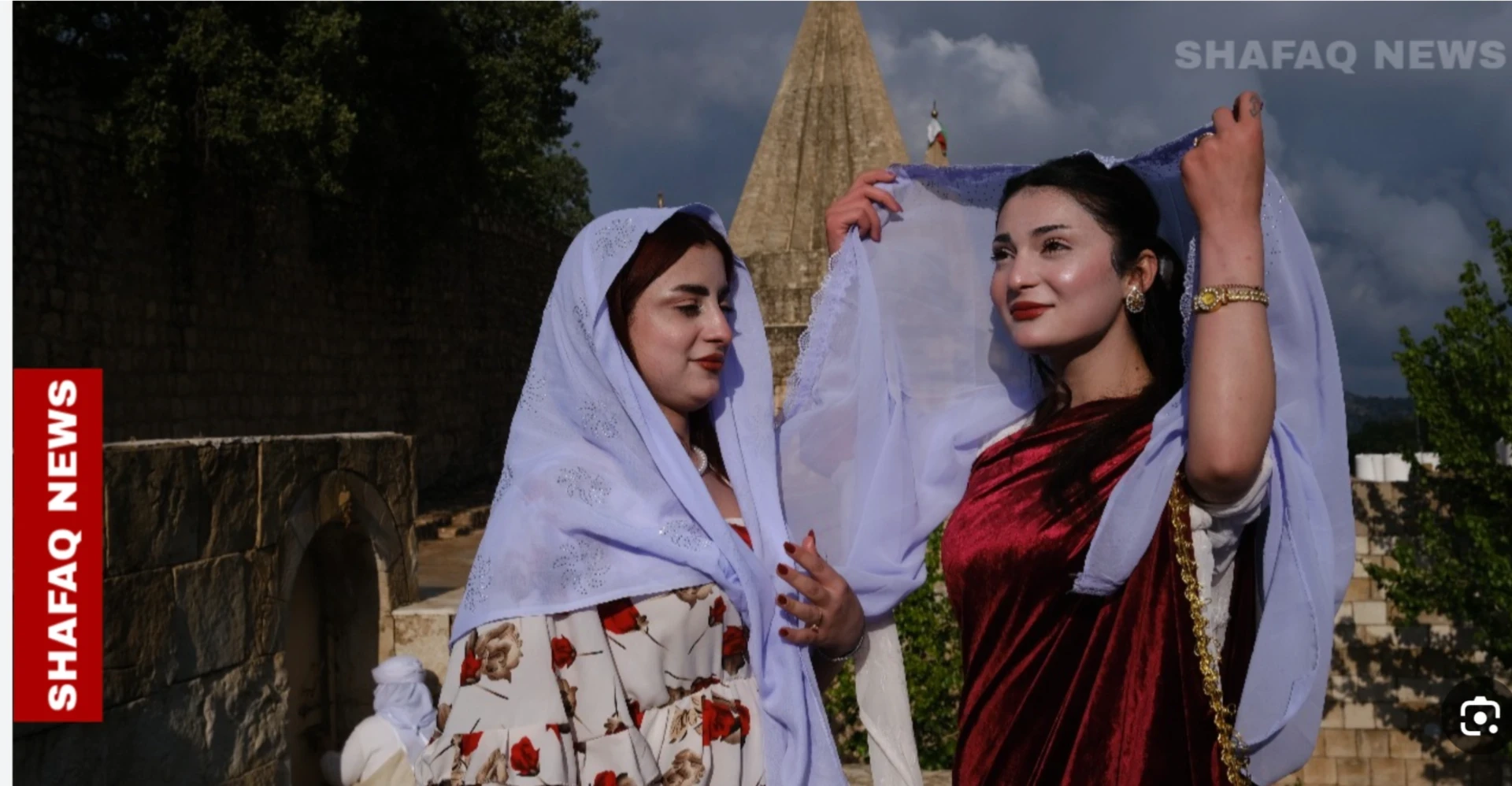
Yazidis are a religious minority historically concentrated in northern Iraq, particularly the Sinjar district of Nineveh province.
At the same time, Haskani called for safeguards to protect freedom of expression and the press and prevent any legislation from being used to silence opinions or criticism. Any law, he added, should apply equally to everyone.
Haskani said Yazidis have long faced stereotypes, misinformation and inflammatory rhetoric that contributed to negative perceptions of the community.
He linked that history to the atrocities committed against Yazidis in 2014, arguing that ISIS exploited existing prejudices and stereotypes to justify its crimes and genocide against the community.
Read more: Yazidis struggle to return home a decade after ISIS atrocities
Curbing Incitement
At the first meeting of a committee formed to monitor sectarian, ethnic and racial rhetoric, General Abdul-Amir Al-Shammari, director of the Office of the Commander-in-Chief of the Armed Forces, said security agencies would act against incitement regardless of who promotes it, with the judiciary responsible for legal measures and rulings under existing laws.
Committee chairman Lieutenant General Saad Maan said the body would monitor such rhetoric under established legal frameworks in an effort to curb hate speech and protect social stability and national cohesion.
Iraq’s Supreme Judicial Council has also instructed investigative courts and public prosecutors to take legal action against sectarian incitement in the media and on social platforms.
The council directed judicial authorities to monitor rhetoric used to fuel divisions for political or personal interests and pursue cases under existing Iraqi law.
Minority Pressures
Iraq is home to a diverse range of religious and ethnic communities whose populations have fallen sharply over the past two decades amid conflict, displacement, sectarian violence and migration.
The Sabean-Mandaeans were once a much larger community in Iraq, but only a fraction remain today, with many resettling in Europe, Australia and the United States.
Yazidis, historically concentrated in Sinjar and Shekhan in Nineveh province, continue to face the consequences of the 2014 ISIS genocide. Around 200,000 remain displaced, according to UN figures, while about 2,600 are still missing.
The Shabak, a minority community historically concentrated in the Nineveh Plains east of Mosul, have also faced years of displacement and migration.
Kakais, also known as Yarsanis, are a religious minority concentrated mainly in Kirkuk, Diyala and parts of the Kurdistan Region, while a small Zoroastrian community is also active in the Region.
Minority political representation has also undergone significant changes. Iraq’s Federal Supreme Court abolished the Kurdistan Parliament’s previous 11 minority quota seats in February 2024. Five seats were subsequently allocated for minority representation ahead of the Kurdistan Regional election —two each in Erbil and Al-Sulaymaniyah and one in Duhok.
Read more: Five days to eternity: inside the Mandaeans' sacred Brunaya