IOHR: Iraq's new government must answer for 600 dead protesters


Shafaq News- Baghdad
Iraq's Observatory for Human Rights on Tuesday urged Prime Minister-designate Ali al-Zaidi to place accountability for the deaths of protesters, the fate of the forcibly disappeared, and the prosecution of those responsible for years of political violence at the center of his incoming government's agenda.
In a statement addressed to al-Zaidi, the Observatory questioned whether human rights would constitute a genuine policy priority or remain, as in previous governments, confined to ministerial rhetoric. "Will human rights be a genuine priority for this government, or will they remain mere rhetorical headlines in official statements, absent from practical implementation?" it asked.
Any government program that failed to protect Iraqis' dignity and fundamental freedoms at its core would be incapable of achieving substantive change —regardless of its political or economic pledges, the Observatory said.
Read more: Twenty-three years on: Iraq got what the 2003 invasion produced
October 2019 Crackdown
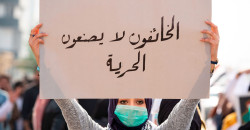
During the October 2019 uprising (Thawrat Tishreen), security forces and state-affiliated armed groups killed at least 487 protesters, according to official figures. Amnesty International recorded at least 600 deaths in total, while the Iraqi High Commission for Human Rights documented over 15,000 serious injuries.
Of the 2,700 criminal investigations opened into the crackdown, Iraq's Supreme Judicial Council confirmed that only ten arrest warrants had been issued and seven convictions handed down, a record the Observatory described as emblematic of systemic impunity.
Victims' families "no longer accept temporary committees, vague promises, or statements issued under the pressure of public opinion only to be subsequently shelved," the Observatory said, calling for the public disclosure of genuine investigative findings and the prosecution of direct perpetrators alongside those who provided them political or security cover.
Read more: Iraq’s protests after Tishreen: A system that learned how to contain the street
Enforced Disappearances
On enforced disappearances, the Observatory warned that no government claiming constitutional respect could continue to treat the issue as a sensitive political burden.
The UN Committee on Enforced Disappearances estimates that between 250,000 and one million individuals have been disappeared in Iraq since 1968 across five distinct waves of political violence. The committee registered new cases in 2024 and 2025 under its urgent action procedure and reiterated that Iraq has still not incorporated enforced disappearance as a standalone criminal offence in national legislation, a recommendation it has issued to Baghdad since 2015.
Press Freedom and Dissent
The Observatory also warned against the continued use of broadly worded security legislation to silence journalists, activists, and critics. Democracy could not take hold in an environment where citizens feared expressing dissent or exposing corruption, it said.
Read more: Can Iraq's free press survive its politically-tainted rulers?