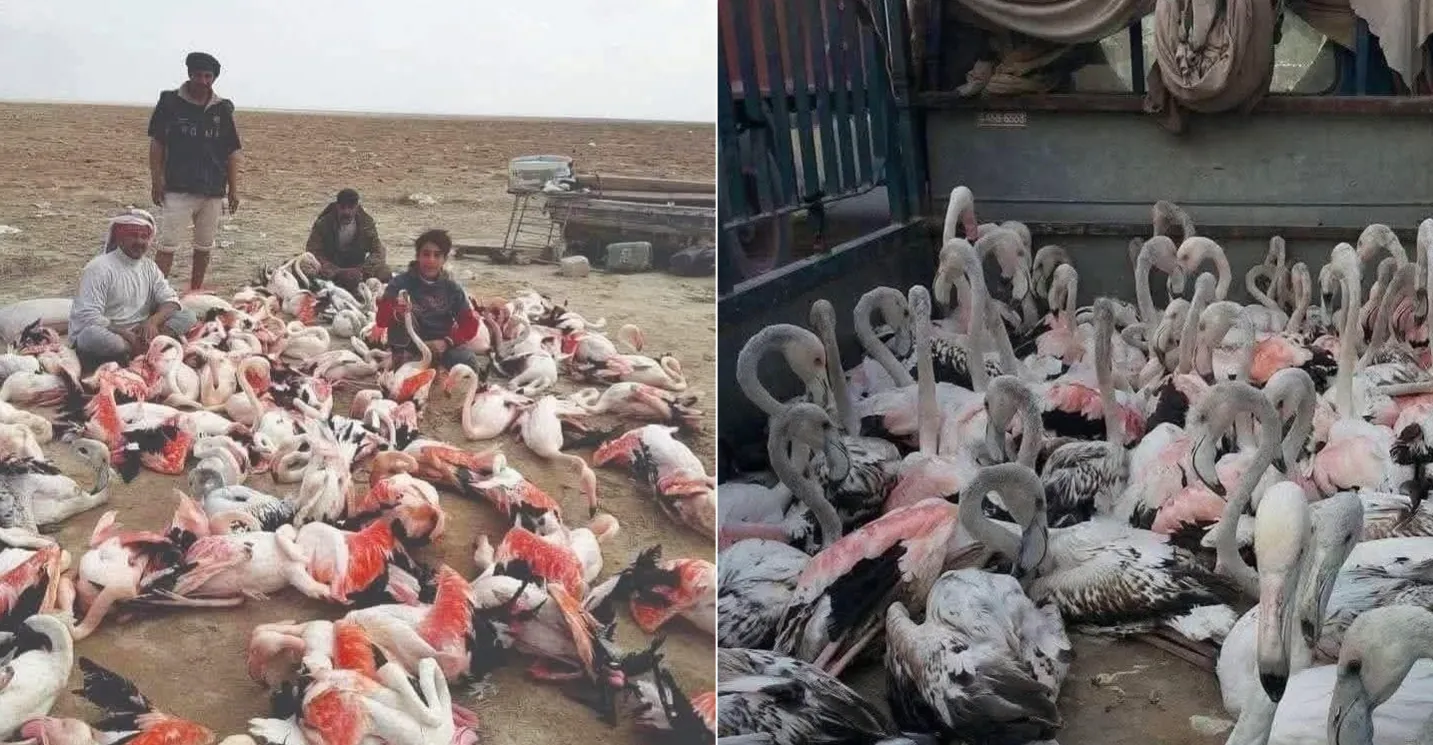
Hundreds of flamingos fall to poaching in Southern Iraq marshes


Shafaq News – Dhi Qar / Basra / Maysan
Environmental activists in southern Iraq have warned of a sharp increase in illegal hunting targeting the flamingo in the marshlands and water bodies of Dhi Qar, Basra, and Maysan, describing the practice as a growing threat to ecological balance despite the species not being globally listed as endangered.
Speaking with Shafaq News, Raad Al-Asadi, head of the Al-Jbayish Environmental Tourism Organization in Dhi Qar, described the phenomenon as increasingly common at the start of each hunting season, with hunters capturing large numbers of birds using “brutal” methods.
Al-Asadi highlighted a stark contrast with other countries, where flamingos receive strict protection and attract eco-tourism. “Elsewhere, people pay to watch flamingos in their natural habitat,” he noted. “Here, they are hunted once they arrive.”
Bassam Muften, head of the Farm Organization for Agriculture Development in Basra, confirmed that hunting has escalated for both commercial sale and recreational purposes. He told our agency that while no official statistics exist, field observations and testimonies from hunters and activists indicate that hundreds of flamingos are killed each year.
The flamingo, he confirmed, plays an essential ecological role by feeding on algae and microscopic organisms, helping maintain the biological balance of water bodies. He warned that continued targeting could degrade aquatic ecosystems and eventually lead to the bird’s disappearance from areas that once served as seasonal habitats, as has happened with other species in Iraq.
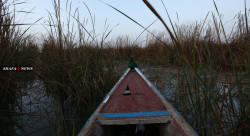
The southern marshes—designated a UNESCO World Heritage Site in 2016—have become a seasonal stopover for flamingos during migration. Despite laws criminalizing illegal hunting and mandating wildlife protection, including the Protection and Improvement of the Environment Law No. 27 of 2009, activists warn of weak oversight, limited environmental awareness, and widespread poverty in surrounding communities, where illegal bird hunting has become a lifeline for some families.
Muften called on the Ministries of Environment, Agriculture, and Interior to strengthen field inspections, update environmental data, and impose tougher penalties on violators, while supporting civil society awareness campaigns. He also urged local communities near the marshes to take part in protecting wildlife, cautioning that safeguarding the flamingo is inseparable from preserving the future of southern Iraq’s ecosystems.
Read more: Desert hunt: Tradition and controversy over hunting lizards in Kirkuk