First rain exposes fragility of Baghdad’s infrastructure


Shafaq News
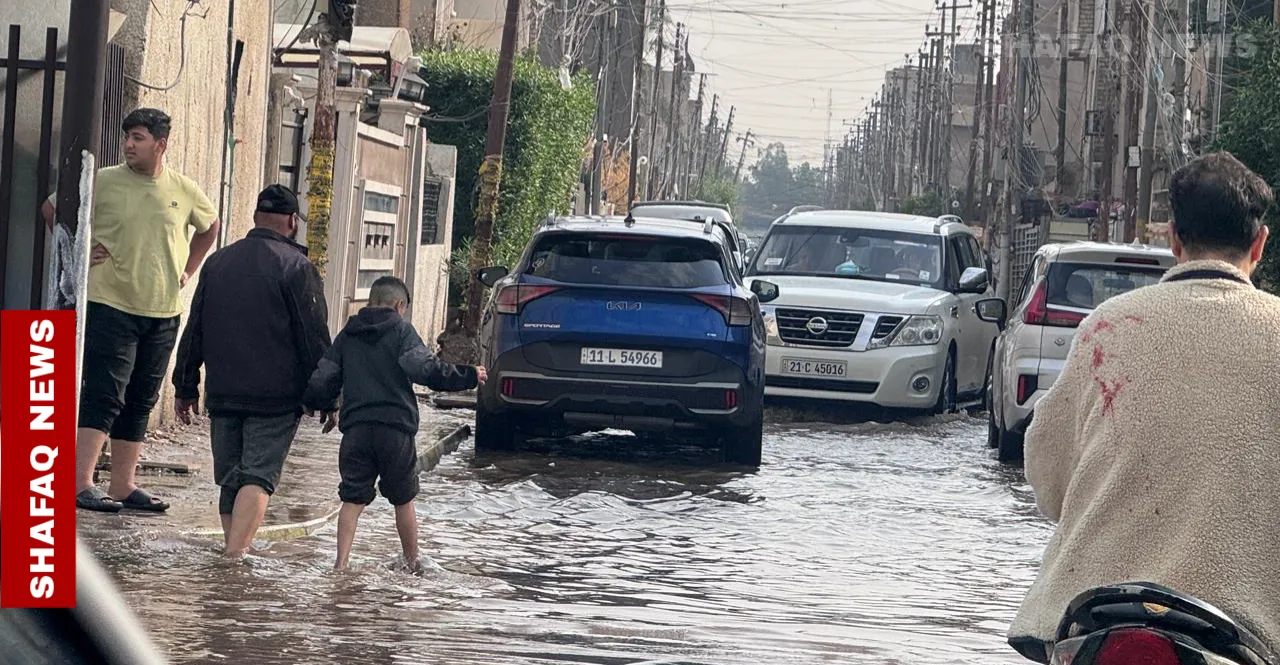
Heavy rainfall over Baghdad and several Iraqi provinces on Friday and Saturday exposed ongoing challenges in Iraq’s sewage and infrastructure systems, as main and secondary roads turned into waterlogged areas that disrupted traffic and daily life.
Videos circulated on social media showing flooded streets in the capital, prompting municipal authorities to declare a state of alert to manage the situation.
Despite government assurances of early preparation for the rainy season, widespread water accumulation resurfaced, raising questions about service delivery, the effectiveness of existing plans, and the state’s ability to implement strategic projects amid rapid population growth and urban expansion.
Administrative Challenges
Speaking to Shafaq News, Mohammed Khalil, a member of the parliamentary Services Committee, placed responsibility on the government and local authorities for what he described as failure in service provision. He highlighted that “the government calls itself a service provider, yet services are missing despite available funds.”
Khalil attributed the situation to poor management, allegations of corruption, and contracts with low-quality companies lacking clear accountability. He noted that much of the current infrastructure relies on outdated data, is unable to accommodate population increases, and cited areas where residents have multiplied several times without upgrading sewage capacities.
He also urged parliamentary oversight of provincial administrations and the enactment of legislation to classify companies by quality and performance, while holding public and private sector actors accountable for deficiencies.
Read more: Iraq needs months of rain to refill rivers
Municipal Response
The Baghdad Municipality said the flooding resulted from power outages at pumping stations during the first wave of rain. Technical teams reportedly drained the water within hours overnight.
Spokesperson Adi al-Jandil explained to Shafaq News that early preparations were in place, but “electrical faults” reduced the operating capacity of stations running on generators to 50%, while stations connected to the national grid operated at full capacity without rising water levels. Quick coordination with the Ministry of Electricity restored power, allowing accumulated water to be cleared.
Al-Jandil added that the intensity of rainfall required extra hours for drainage, but emphasized that there were no technical failures in the systems apart from the power disruption. "Emergency pipelines and secondary stations installed last year prevented flooding in areas that had been affected previously."
He also outlined strategic projects underway, including the Al-Police Canal project, designed to handle 400,000 cubic meters per day to serve eastern Baghdad, and the North Kadhimiya project, which provides pipelines and pumping stations for 17 residential areas before releasing treated wastewater into the river. Al-Jandil described the recent flooding as a “temporary delay” caused by electrical issues, noting that both immediate and long-term solutions are in progress.
Read more: Beyond 50°C: How decades of conflict are heating Iraq
Five-Year Infrastructure Plan
The Iraqi Ministry of Planning linked current bottlenecks to the need to complete infrastructure projects included in the 2024–2028 five-year development plan, particularly in sewage, water, roads, and housing.
Spokesperson Abdul Zahra al-Hindawi told Shafaq News that the plan “gives substantial attention to infrastructure,” with several projects already underway across multiple provinces. Completion of these projects, he noted, will ease pressure on sewage networks and reduce disruptions in the coming years.
Al-Hindawi added that the plan incorporates private sector participation in certain infrastructure projects, particularly roads and energy, which is "expected to improve efficiency and reduce the government’s burden."