Drought, firewood trade strip Iraq’s orchards


Shafaq News – Baghdad
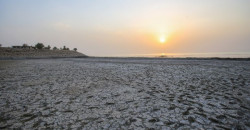
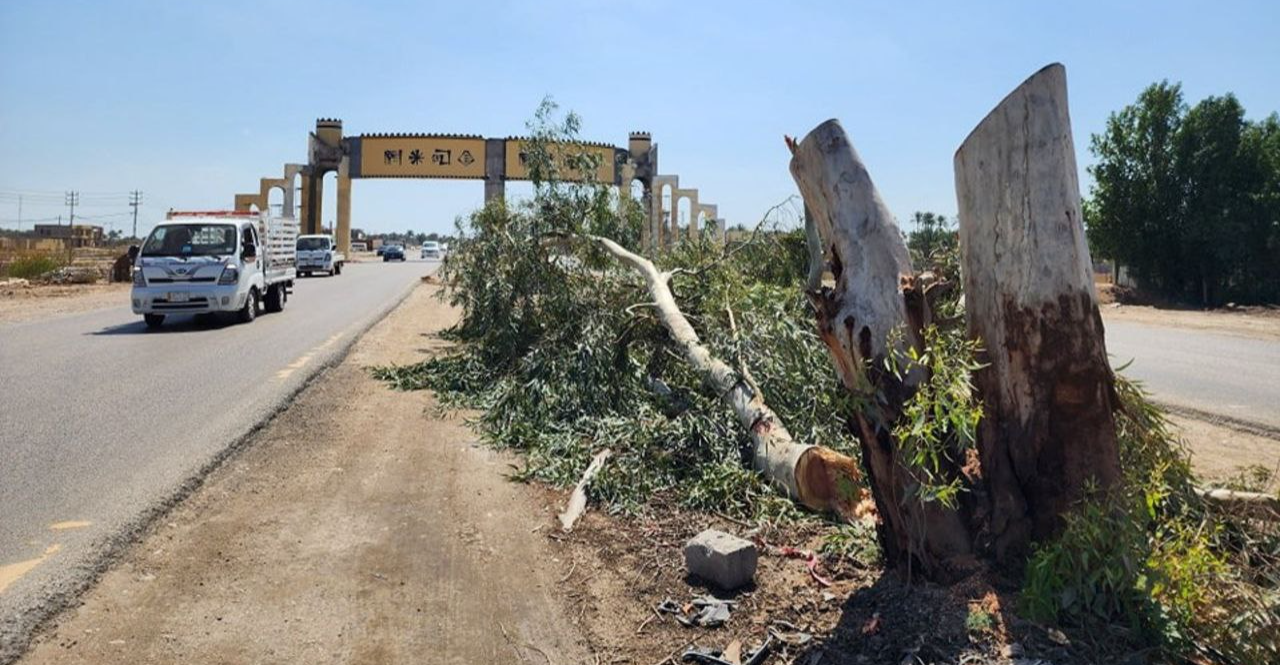
Iraq has lost more than one million trees in the past two years due to drought, poor management, and destructive practices, the Green Iraq Observatory revealed on Saturday.
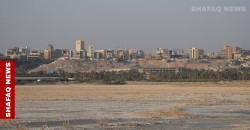
According to earlier estimates cited by the Ministry of Agriculture, the country has lost about 140,000 hectares of tree cover since 2000, including nearly half its date palm groves. Forests now make up less than two percent of Iraq’s land area, leaving vast regions exposed to desertification.
In its statement, the watchdog identified prolonged drought as the main driver, particularly in the south, where weakened orchards have withered and become prone to termite infestations. In provinces such as Nineveh, Wasit, and especially Diyala, it highlighted a damaging trend in which farmers deliberately withhold water from citrus groves so the dried wood can be sold to fish-grilling restaurants.
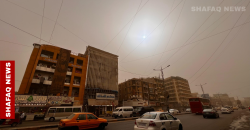
Nationwide, more than 40 percent of Iraq’s territory is now threatened by desertification, with nearly 70 percent of farmland considered barren. Provinces such as Dhi Qar and Nineveh have witnessed sharp declines in vegetation cover, worsening dust storms, and reduced agricultural output.
Read more: Green turning grey: Inside Iraq's accelerating desertification
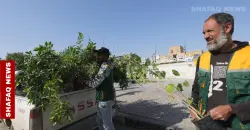
The observatory also noted that construction projects have accelerated the decline, with contractors in Baghdad uprooting mature trees for development and replacing them with saplings that often die without proper care. These young trees, it warned, cannot provide shade or serve as windbreaks, leaving communities more exposed to dust storms.
Urban expansion has intensified the problem. A Shafaq News report on Iraq’s “green decline” highlighted how municipal authorities have often approved the reclassification of agricultural land for housing projects. While the government has recently suspended many such requests, campaigners warn that planting new saplings without irrigation plans offers little protection against further decline.
It also documented cases of orchards being burned to clear land for resale—most recently in the Dora district south of Baghdad—alongside widespread removal of trees for urban expansion without replanting.
Environmental experts warn that Iraq may need to plant as many as 11 to 15 billion trees to restore its vegetation cover and slow the pace of desertification. Local initiatives—from memorial forests in Al-Anbar to neighborhood campaigns in Baghdad—show the willingness of citizens to contribute, but observers say such projects cannot compensate for large-scale losses without state backing.
The watchdog urged authorities to adopt stronger protections for existing trees and launch reforestation programs, including distributing saplings to citizens and ensuring follow-up to guarantee their survival.
In 2023, the government launched a nationwide tree-planting campaign that exceeded its initial target of five million saplings, reaching more than six million across all provinces. Projects like “Green Baghdad” and the proposed “Baghdad Sustainable Forest” aim to plant up to ten million trees by 2030. Yet water scarcity and poor follow-up remain major obstacles, with many newly planted trees failing to survive their first summer.