Counterfeit stones unsettle Najaf gemstone market


Shafaq News- Najaf
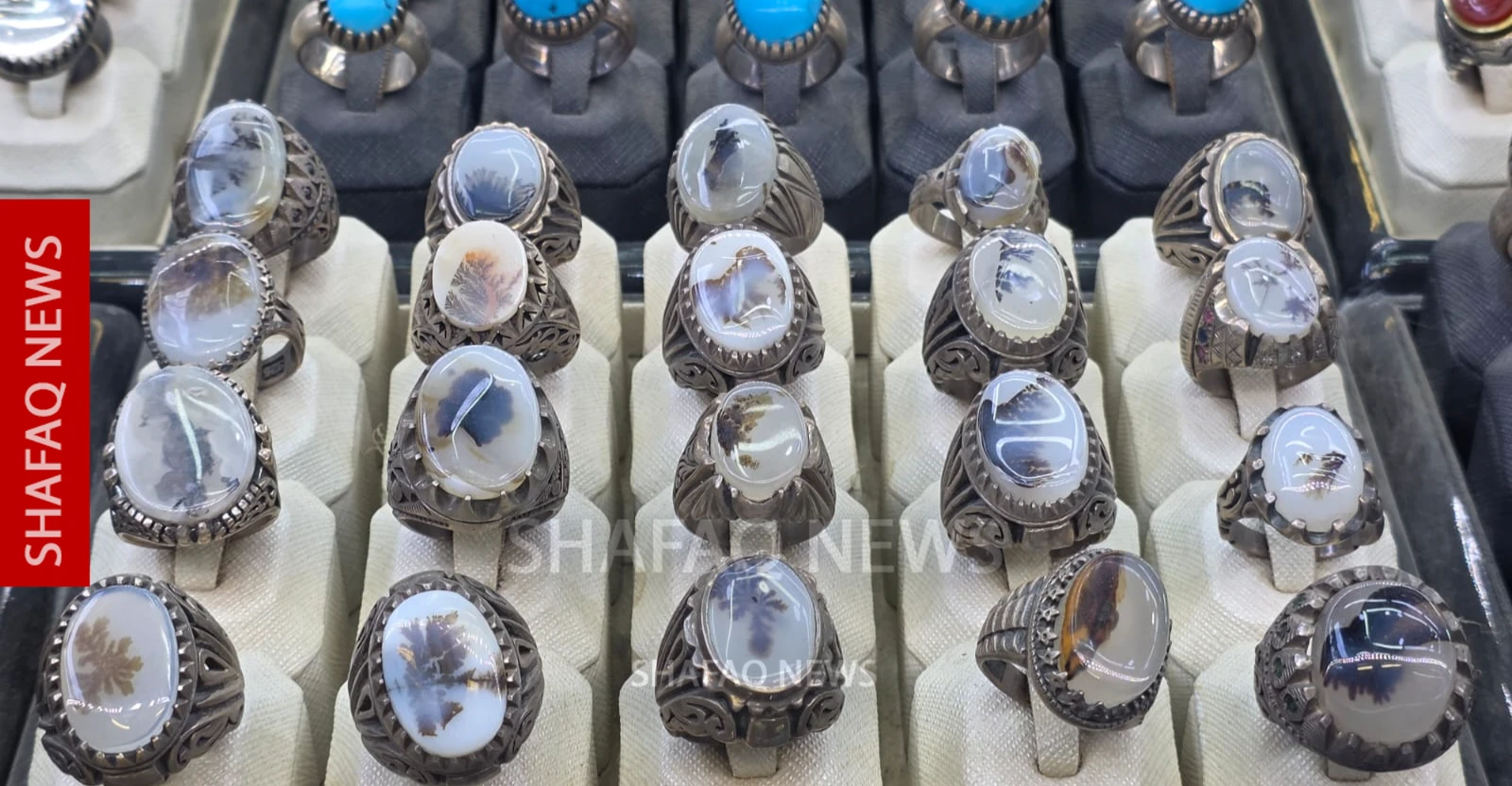
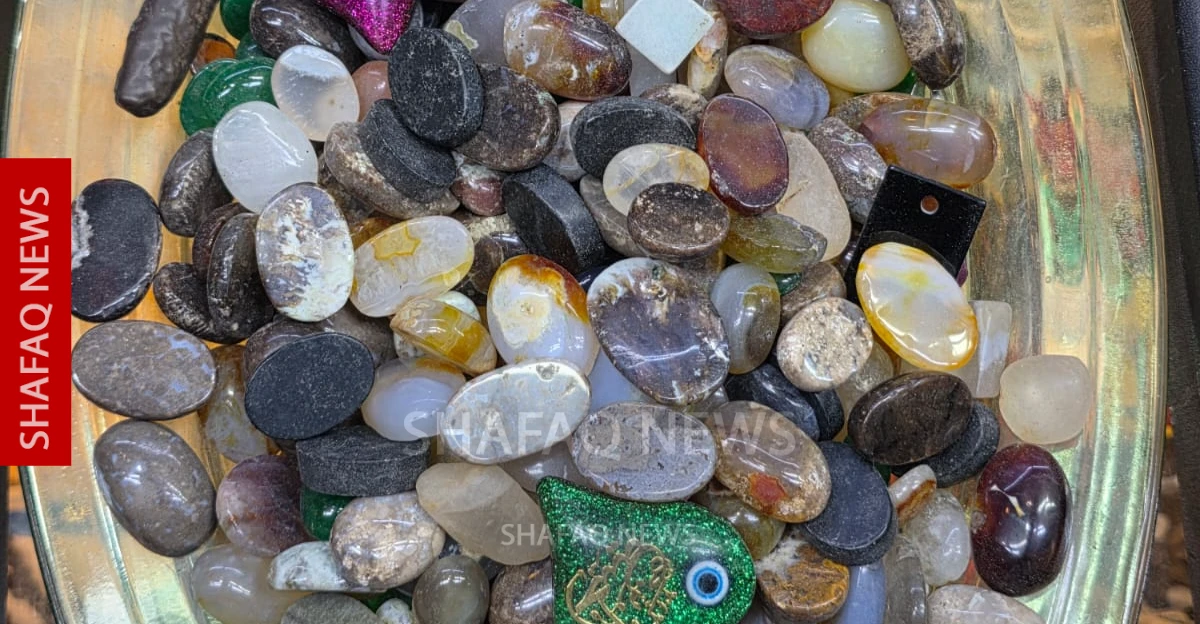
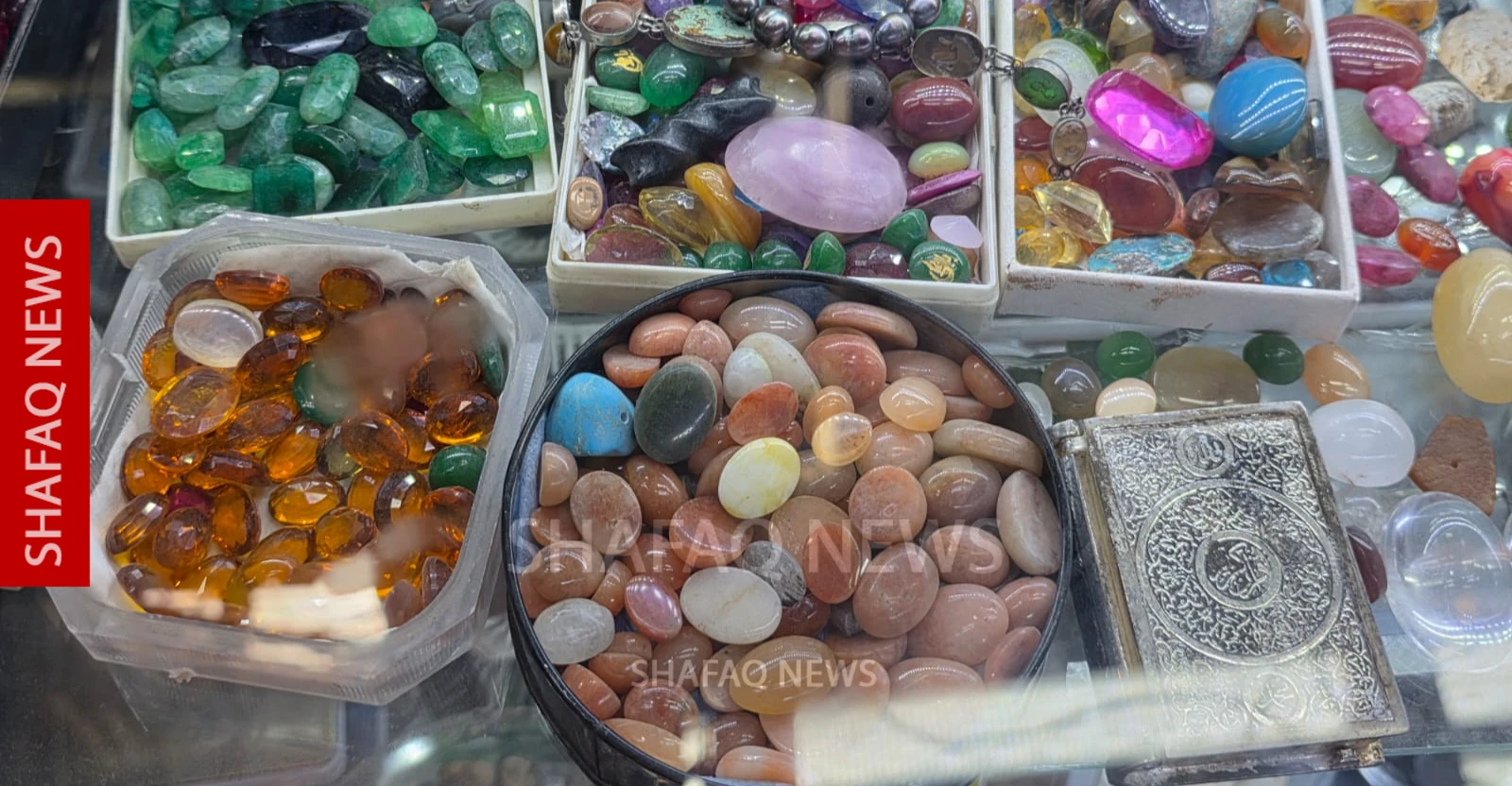
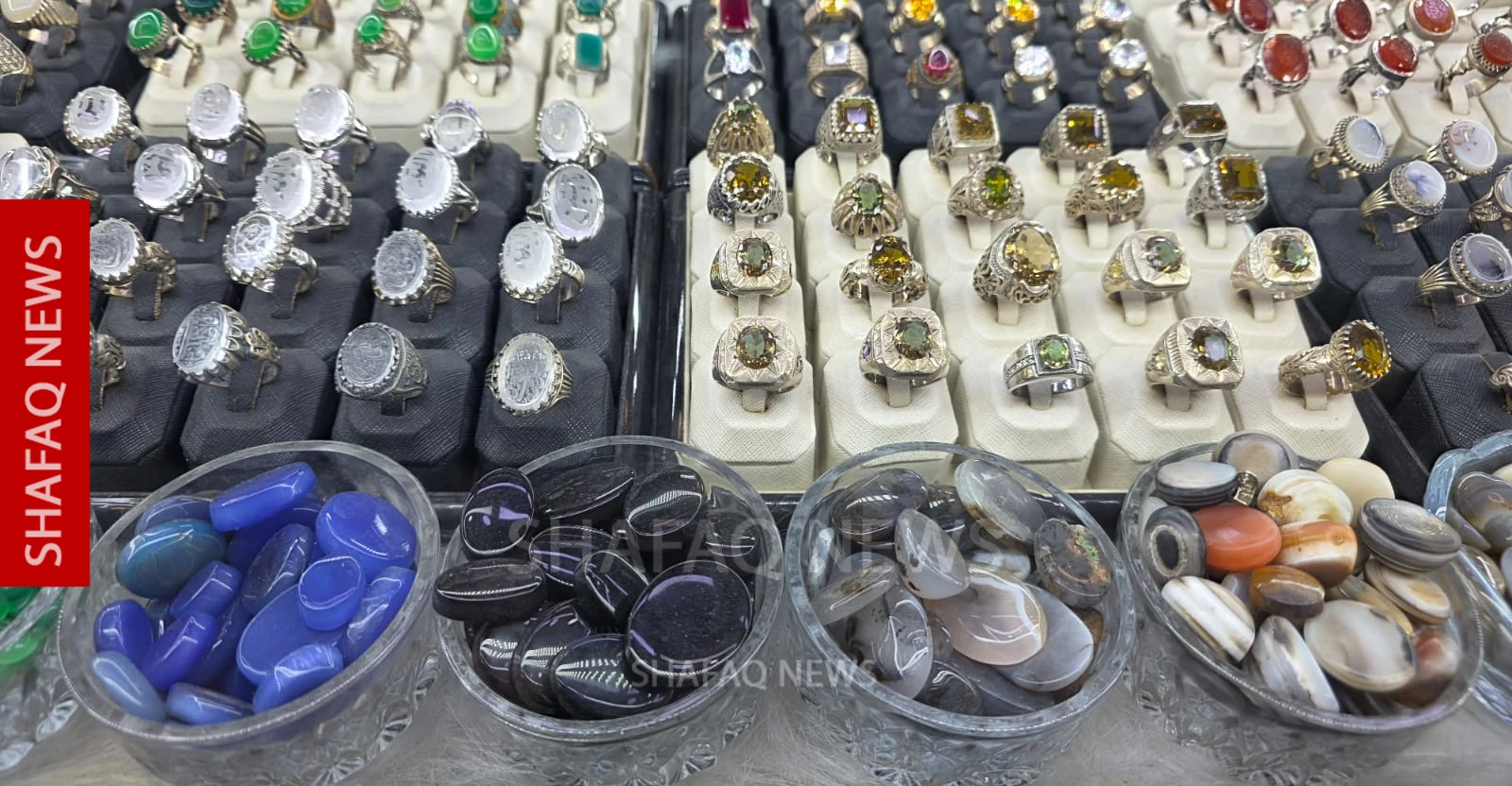
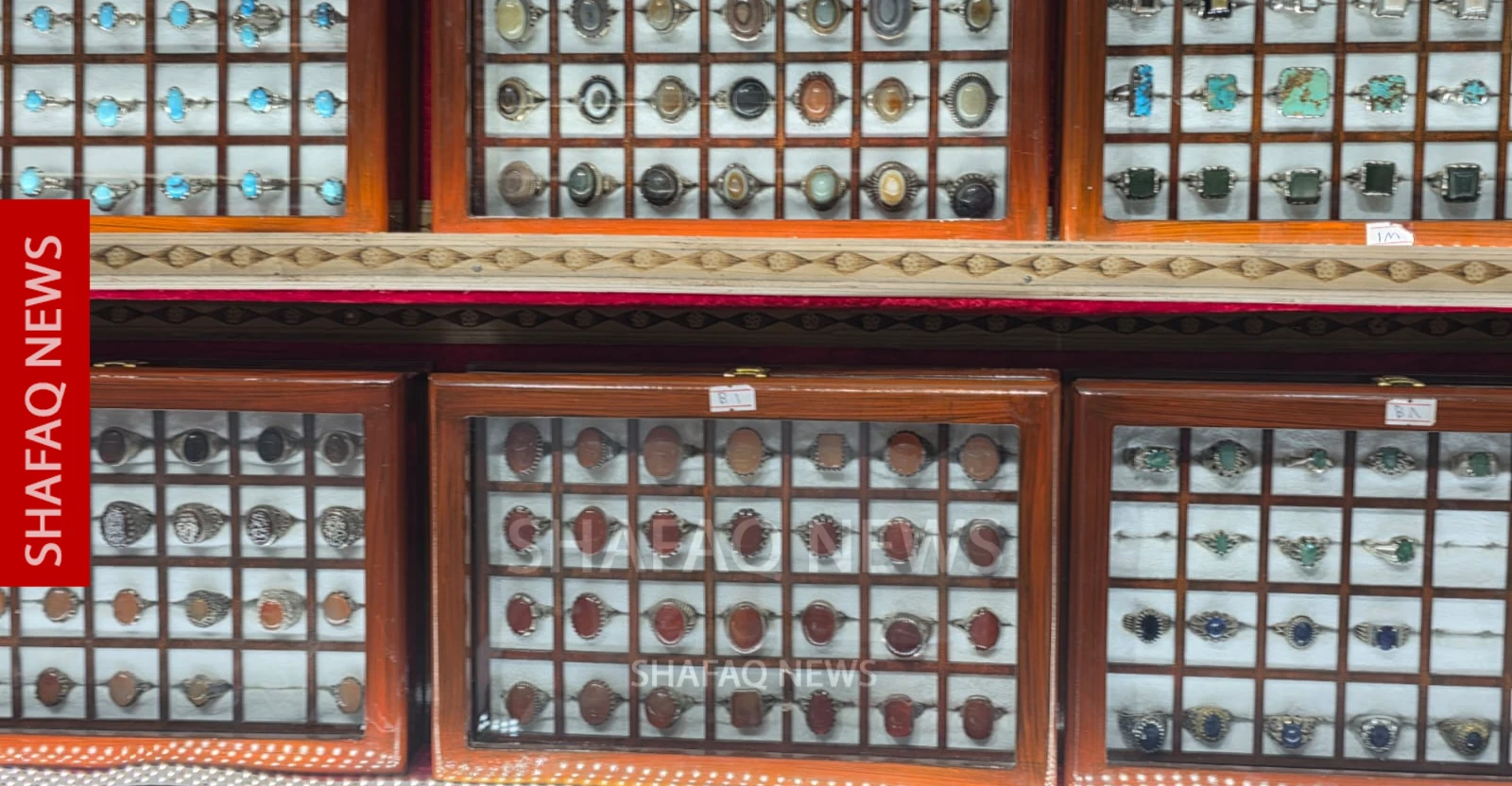
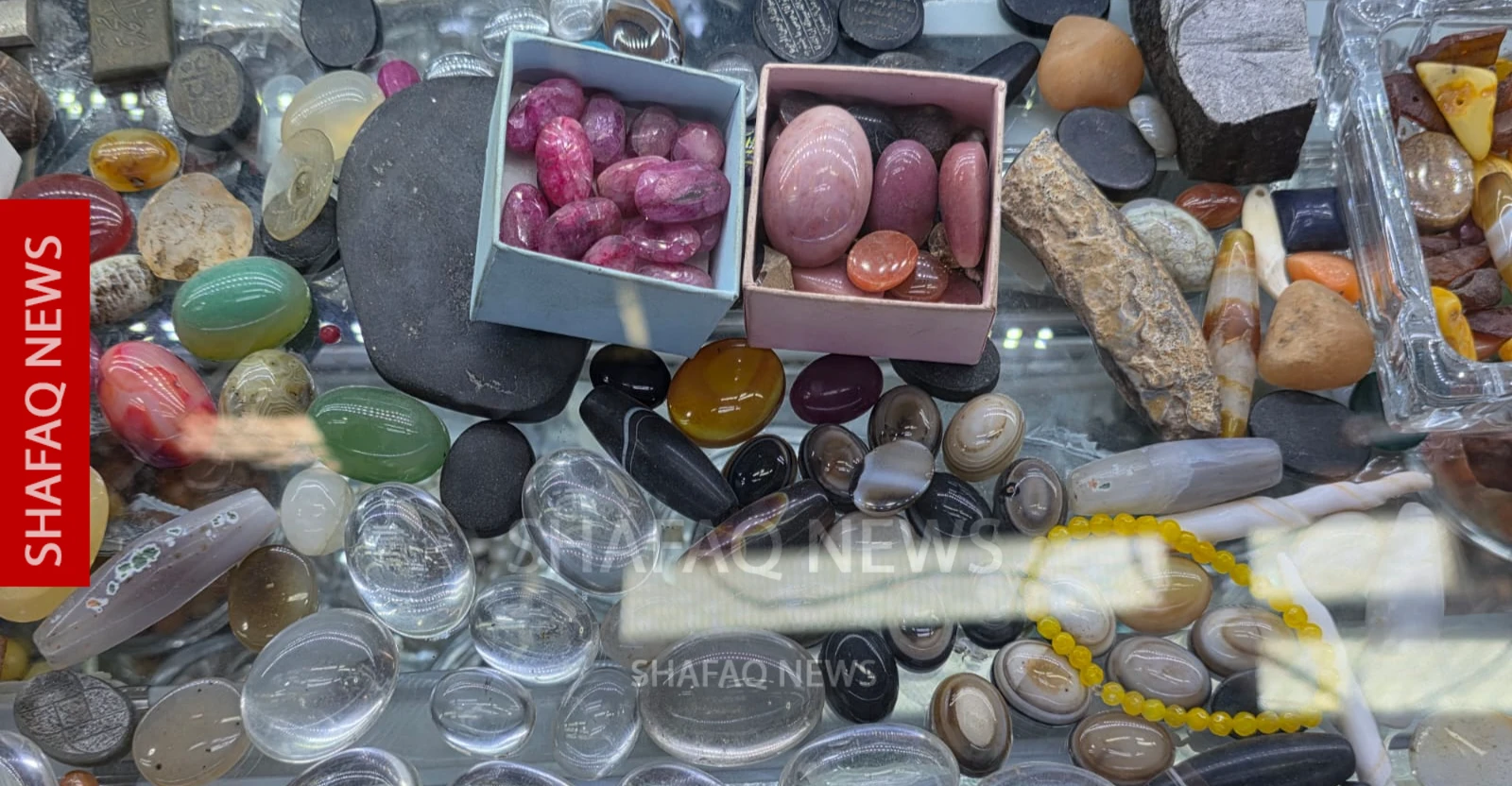
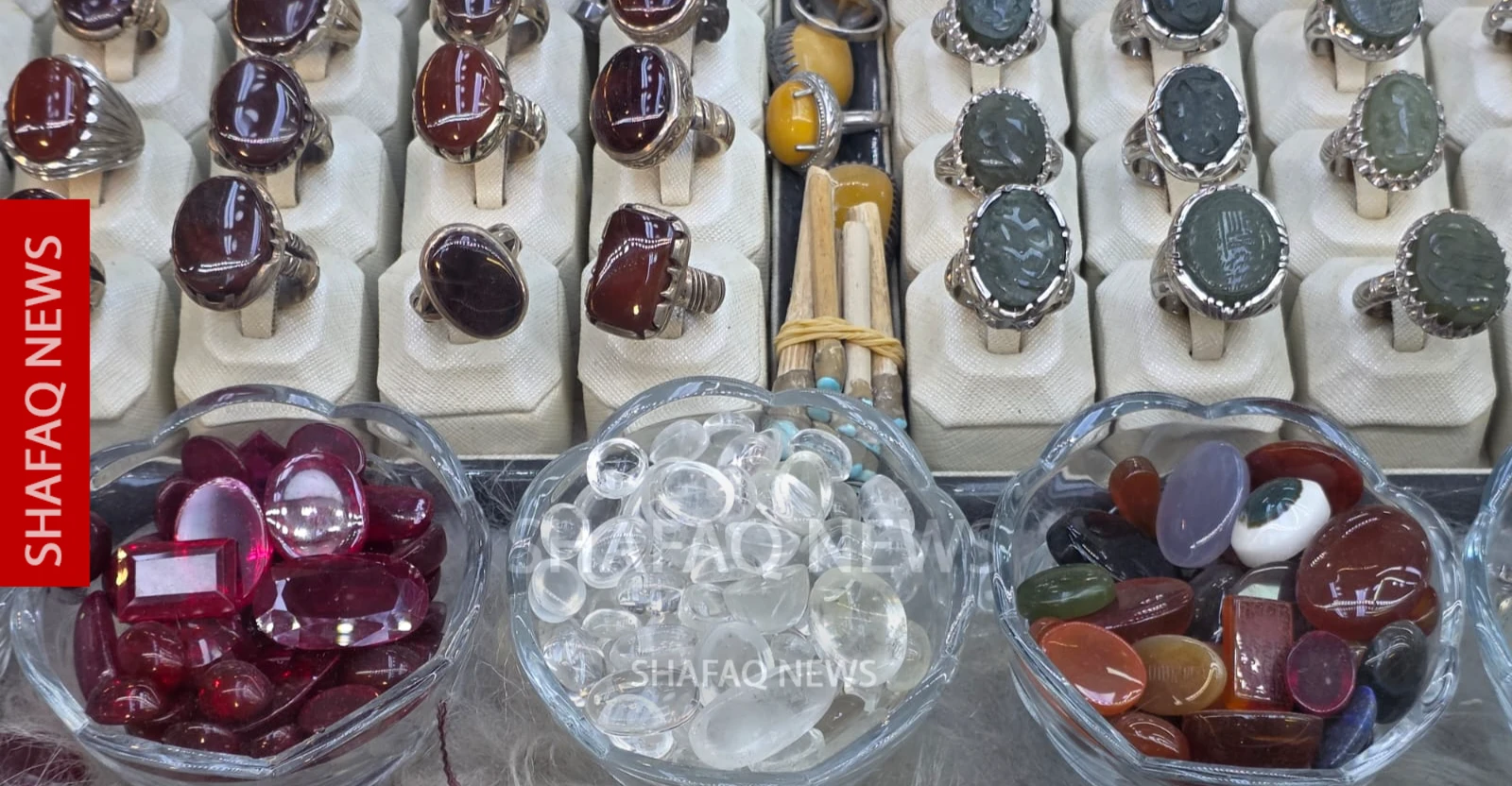
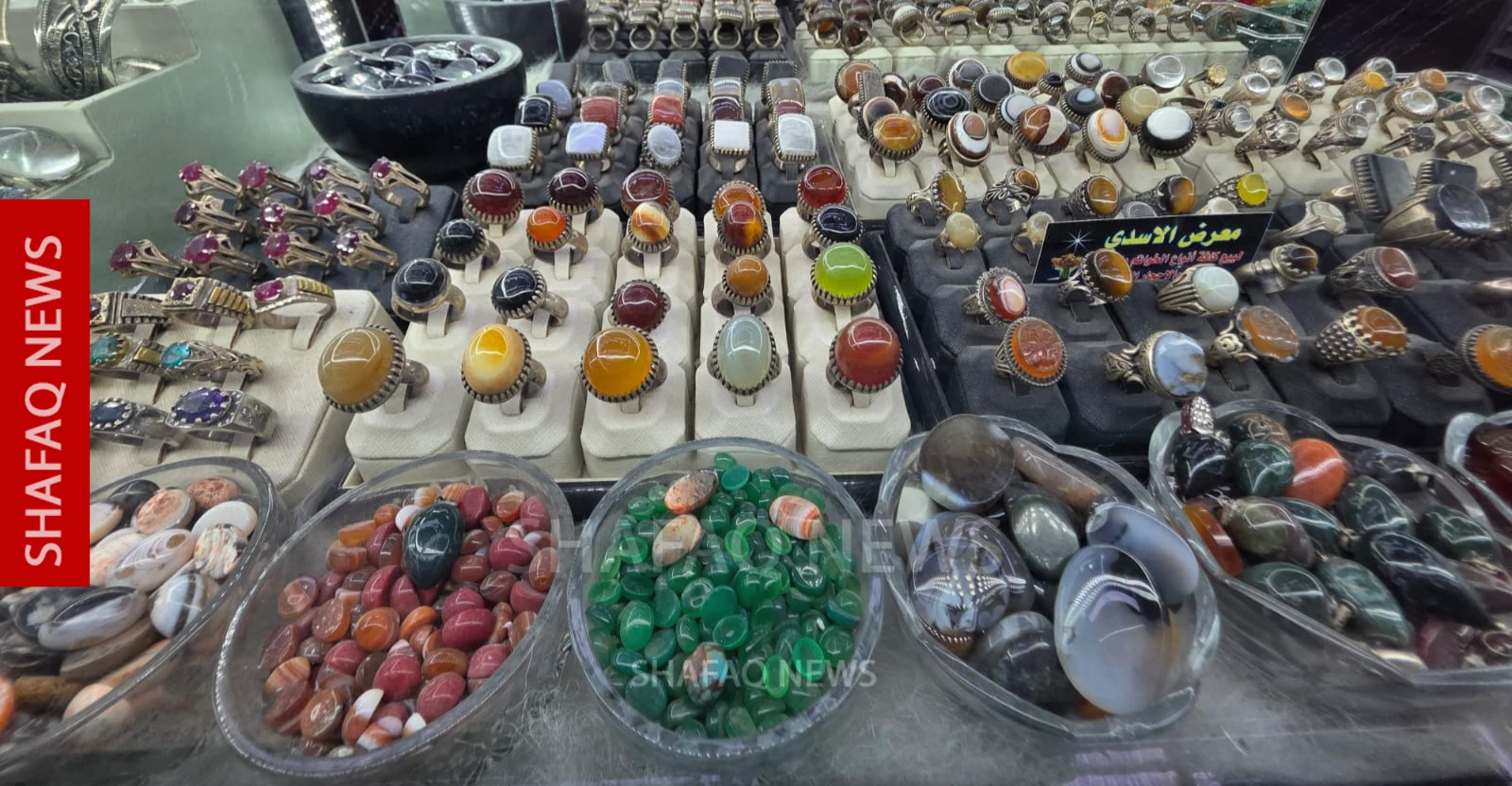
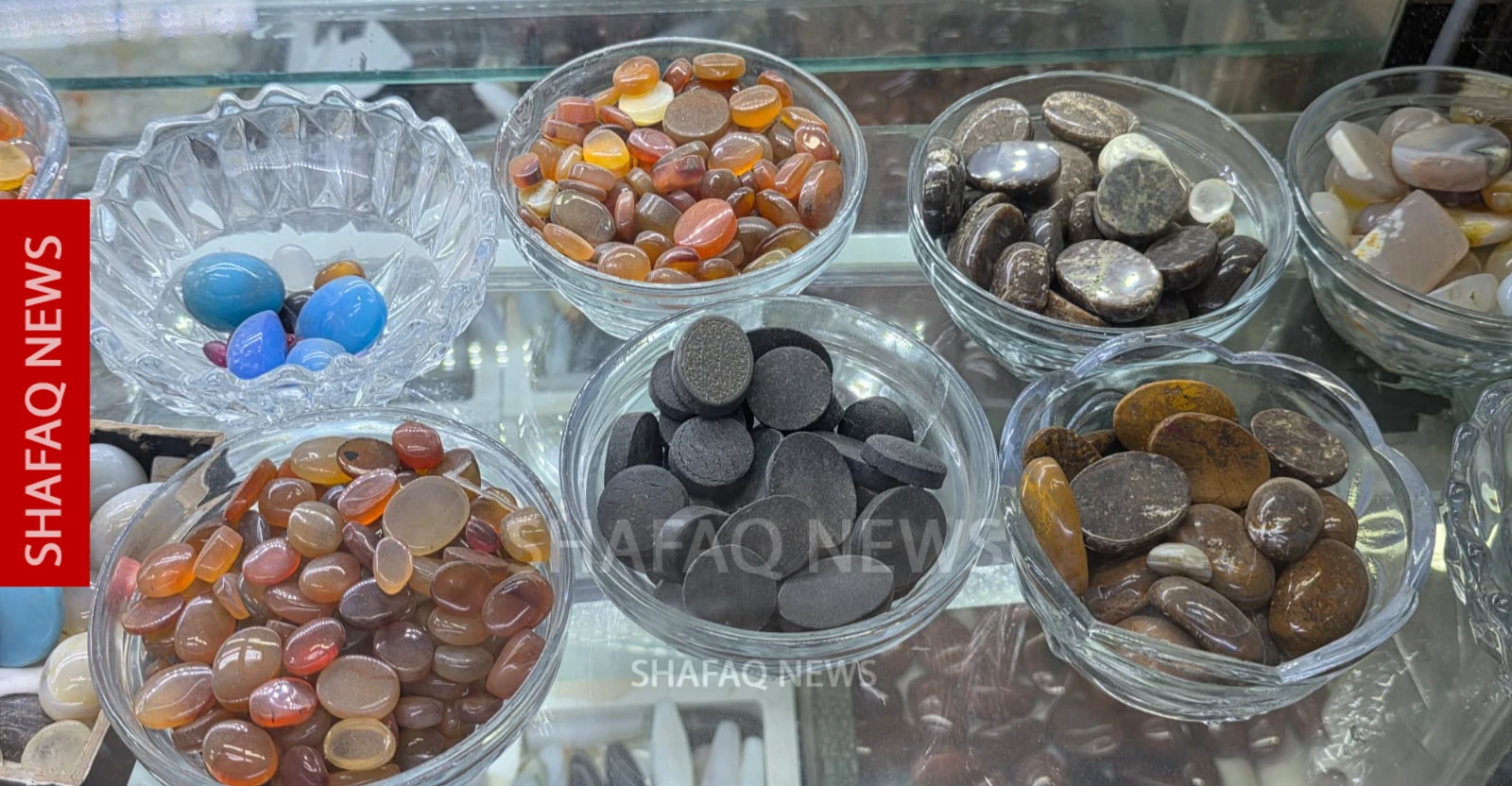
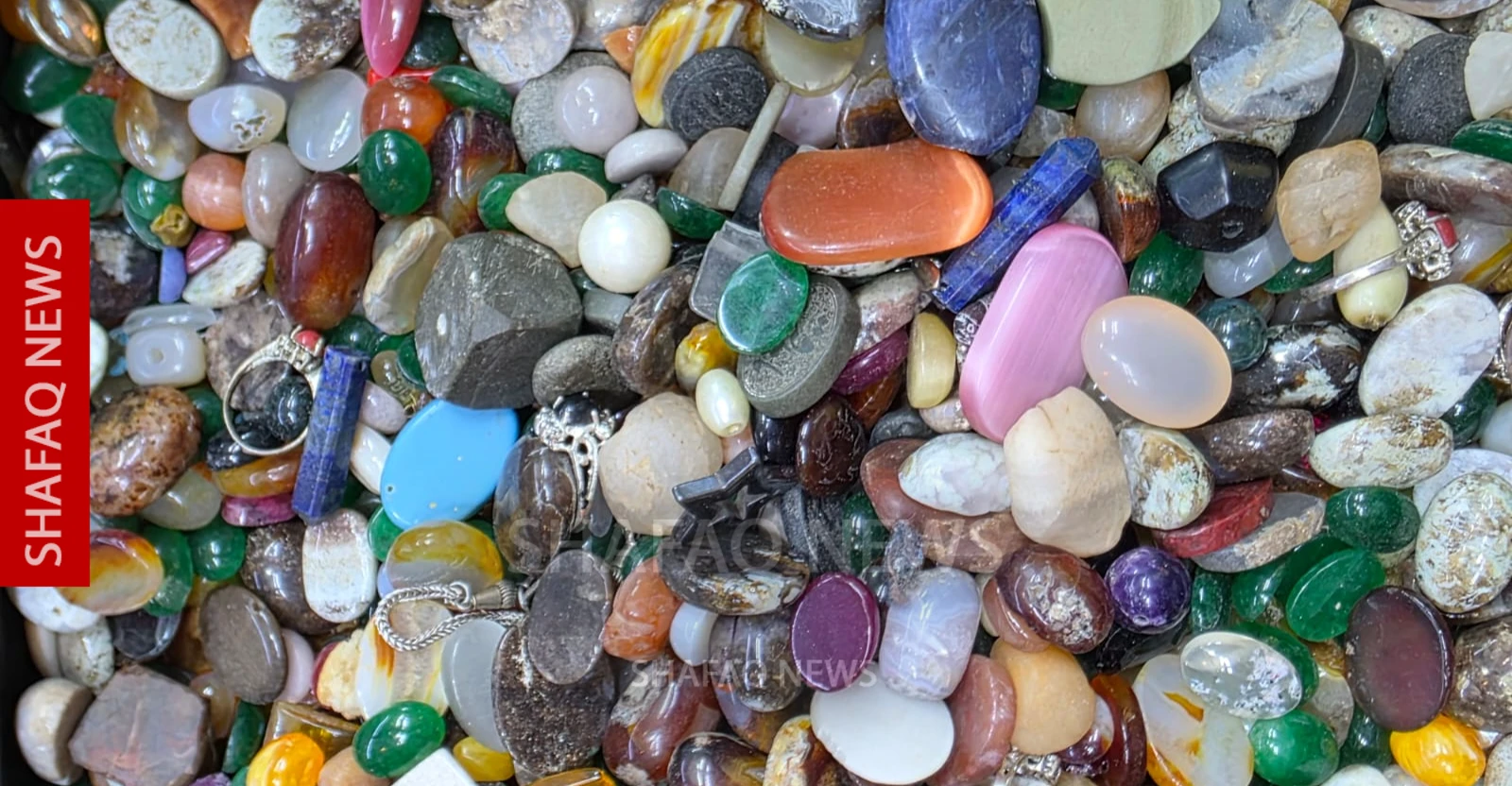
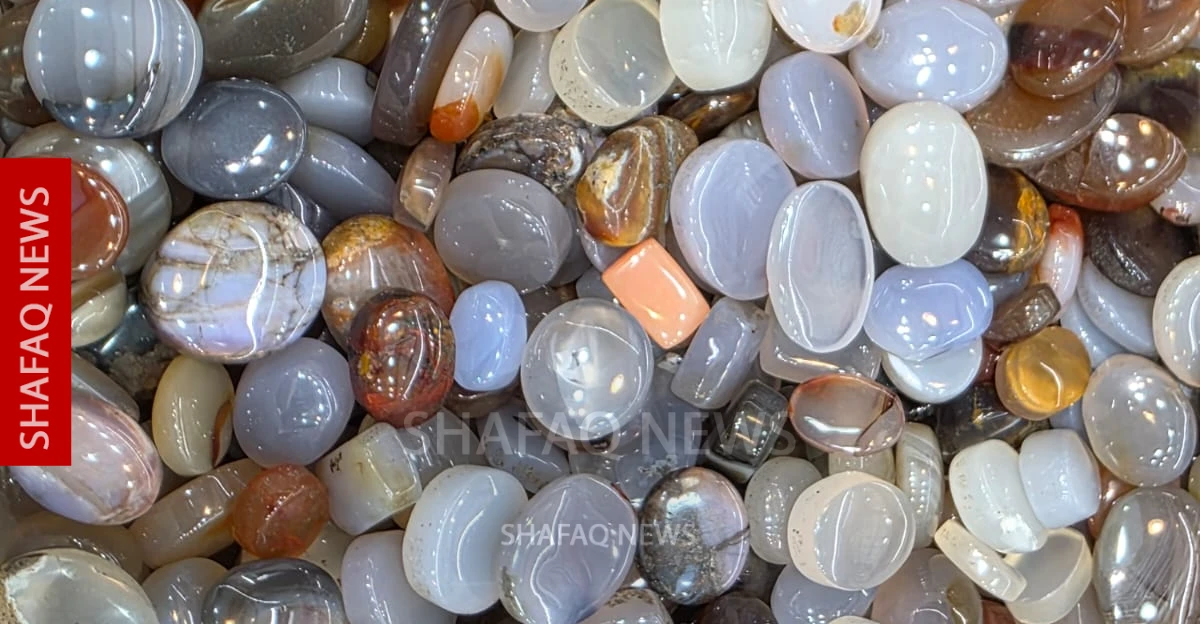
In the markets ringing the shrine of Imam Ali bin Abi Taleb in Najaf, southern Iraq, thousands of cut stones sit under glass in reds, blues, and milky whites, sorted by size and grade. The shrine, one of the holiest sites in Shia Islam, draws pilgrims year-round, and the stone and engraving shops that surround it have grown up around that traffic.
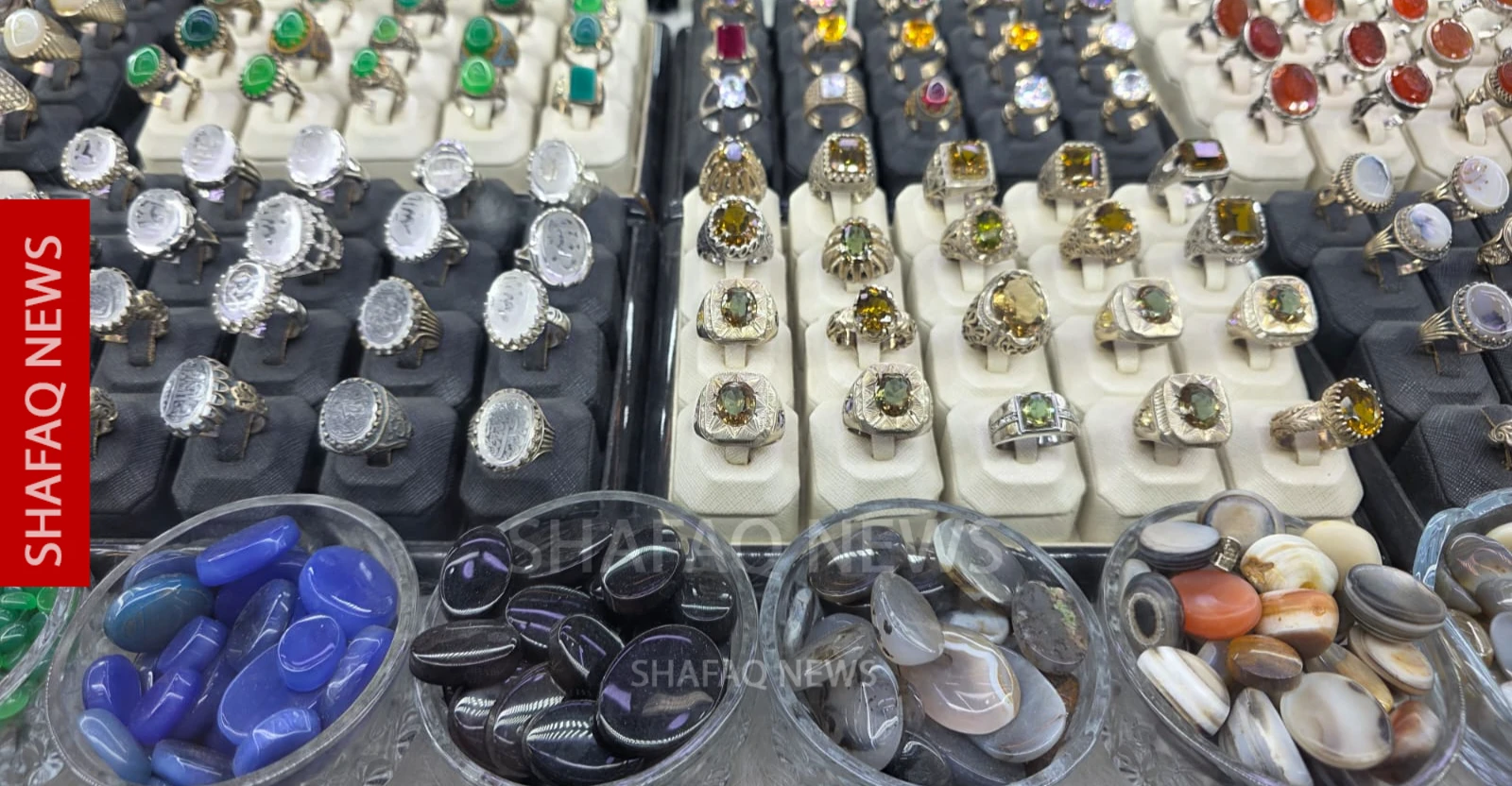
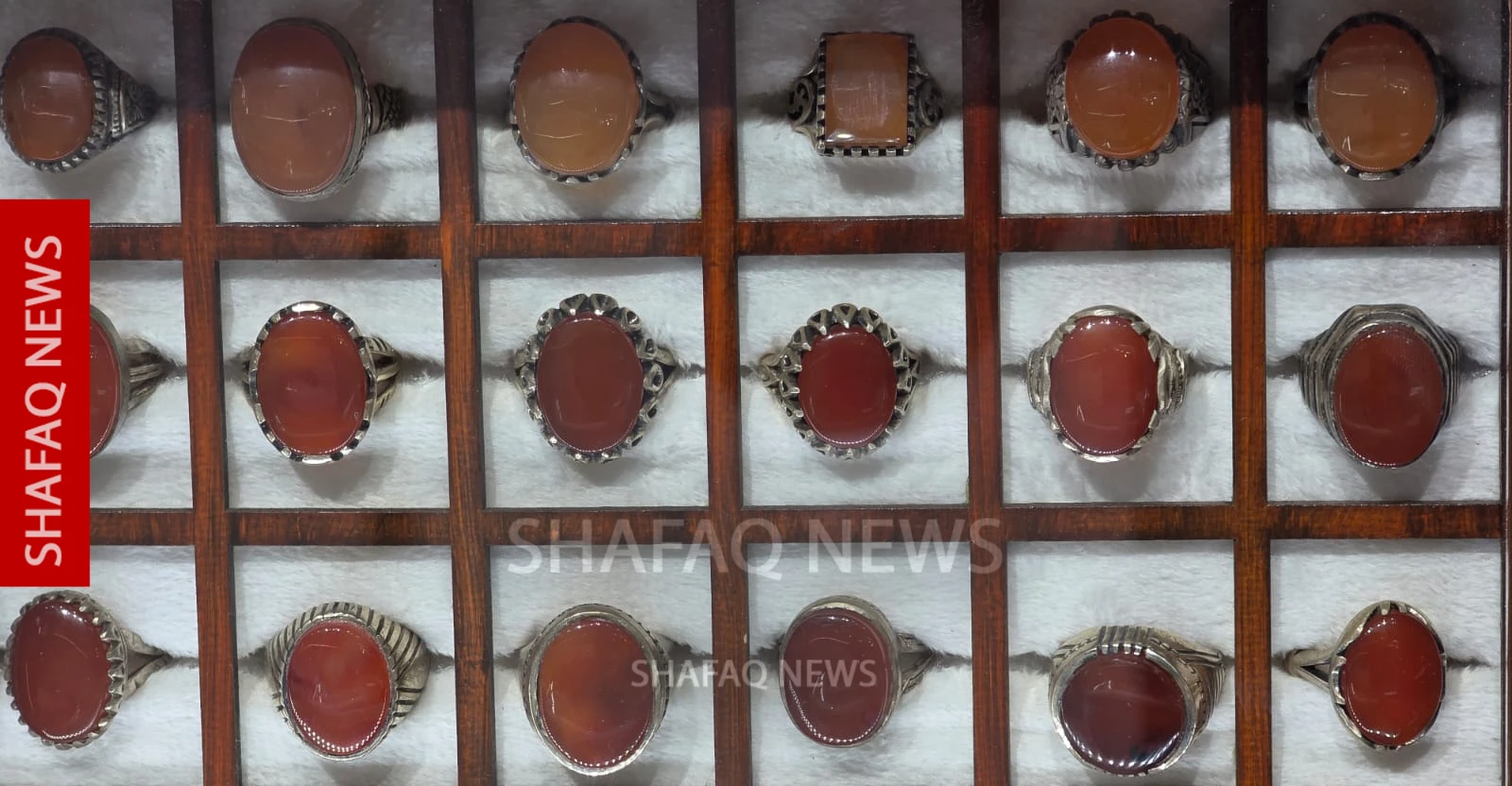
Most of the stones are set into rings. Engravers cut them with the names of God, verses from the Quran, or the names of buyers and their children, alongside older decorative motifs.
Haidar Nidhal, a Najaf resident, wears a ring that belonged to his grandfather and passed to his father before reaching him as the eldest son. He told Shafaq News that he once left it at a friend's house after performing wudu, the ritual washing that precedes prayer, and returned to find that a member of the household had set it aside to wait for its owner. “It was a difficult moment, not because the ring was expensive, but because it was a family treasure he thought he had lost.”
Another resident, Jassim Abdullah, said he owns several rings and buys stones both inside Iraq and abroad, bringing pieces back from Malaysia, Iran, and Saudi Arabia. “Wearing these stones makes me feel at ease. I hope to visit Yemen one day and buy carnelian agate directly from its source.”
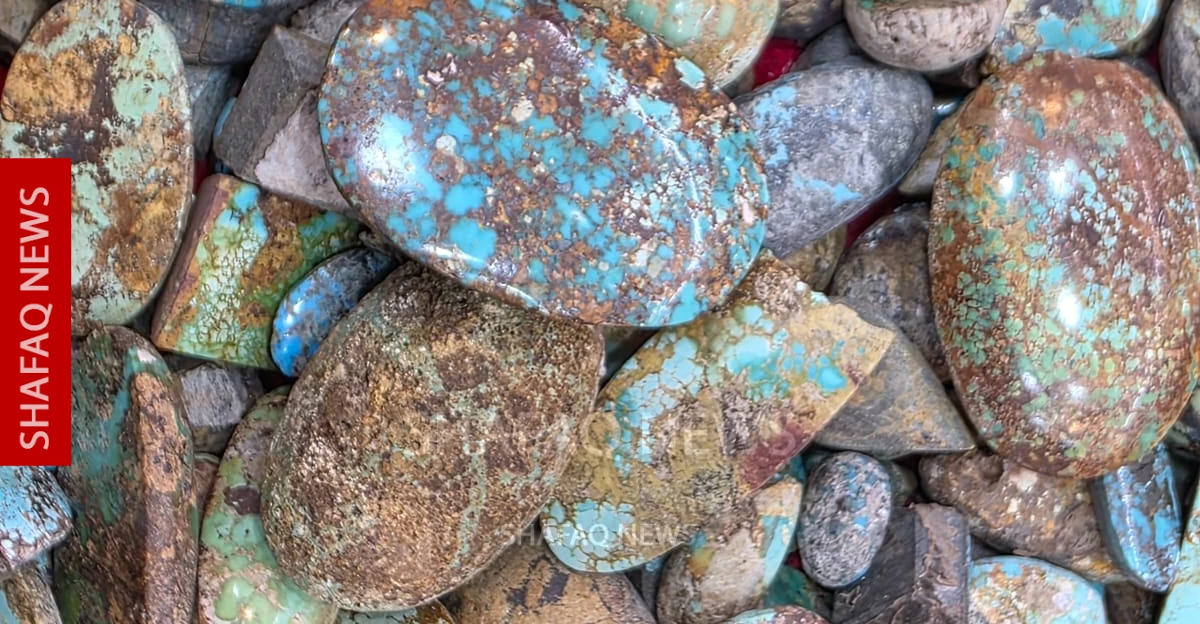
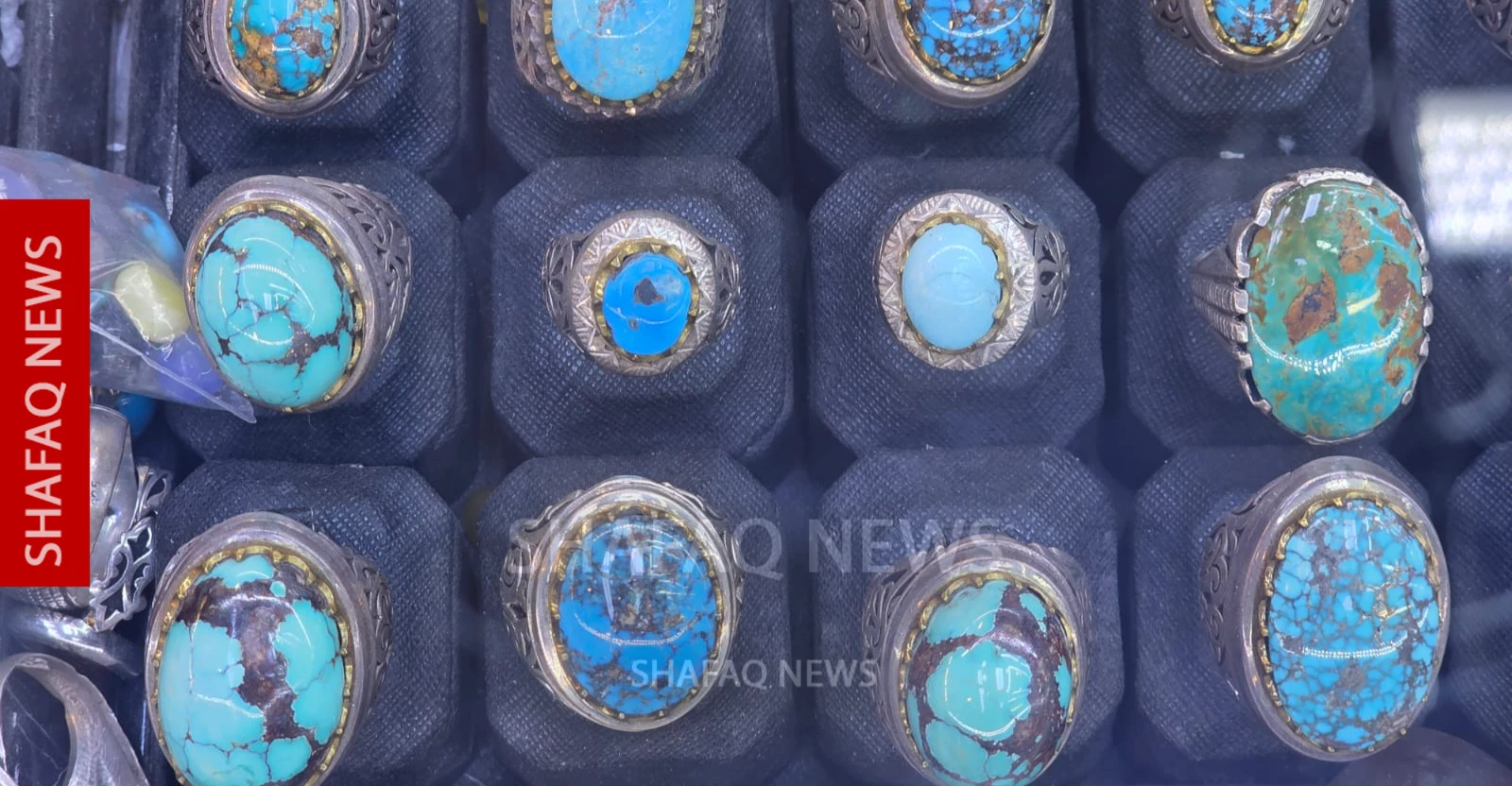
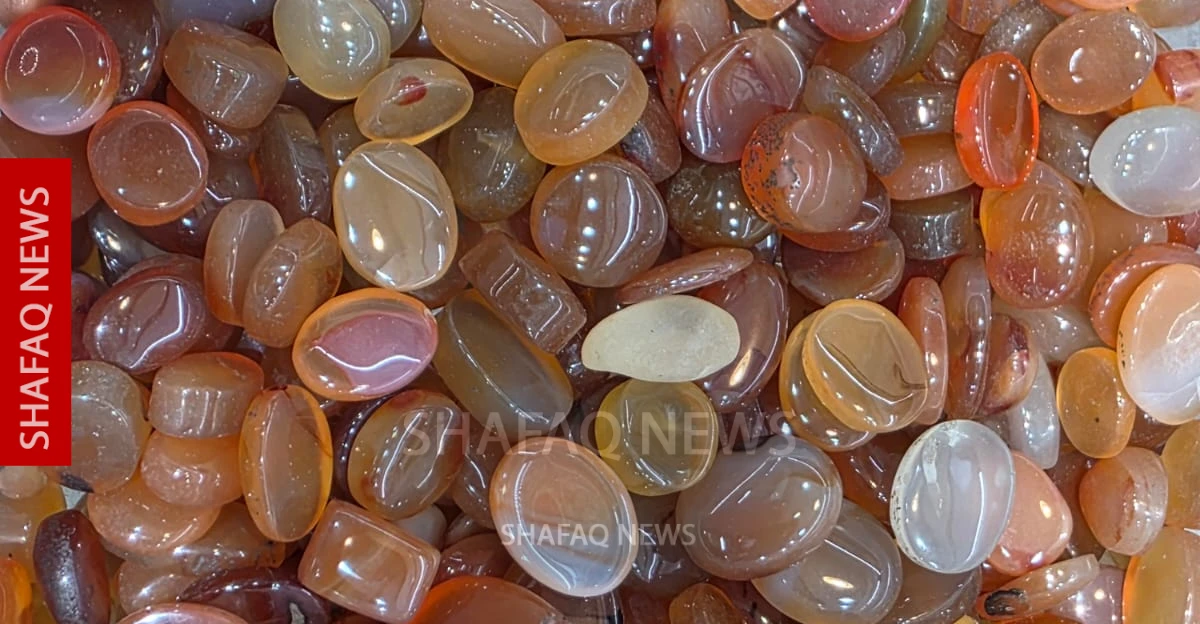
Six varieties lead demand in Iraqi markets, according to Mustafa al-Kharsan, who owns a stone and engraving shop in Najaf. He ranked Yemeni aqeeq, a carnelian agate, first, followed by ruby, turquoise, durr al-Najaf, hematite, and emerald.
Durr al-Najaf is a translucent quartz found in the white plateaus around the city, and al-Kharsan said it is usually recovered after rainfall, when Bedouin searchers cross the desert at sunrise and catch the light reflecting off the surface. Yemeni aqeeq, by contrast, is quarried from mountains in Yemen.
The supply chain runs through several countries, according to al-Kharsan: Yemen for aqeeq, Iran for turquoise and Khorasani agate, India for ruby, Africa for diamond, Brazil for topaz, and China for peridot, along with synthetic and imitation stones
“Imports are unrestricted, and the difficulty lies in imitation stones arriving from China that now resemble the originals closely enough that a non-specialist cannot tell them apart,” , al-Kharsan said, adding that raw Yemeni aqeeq sells strongly, but rough material from Iran, India, and China is marketed as Yemeni, while stone actually extracted in Yemen remains the most valuable.
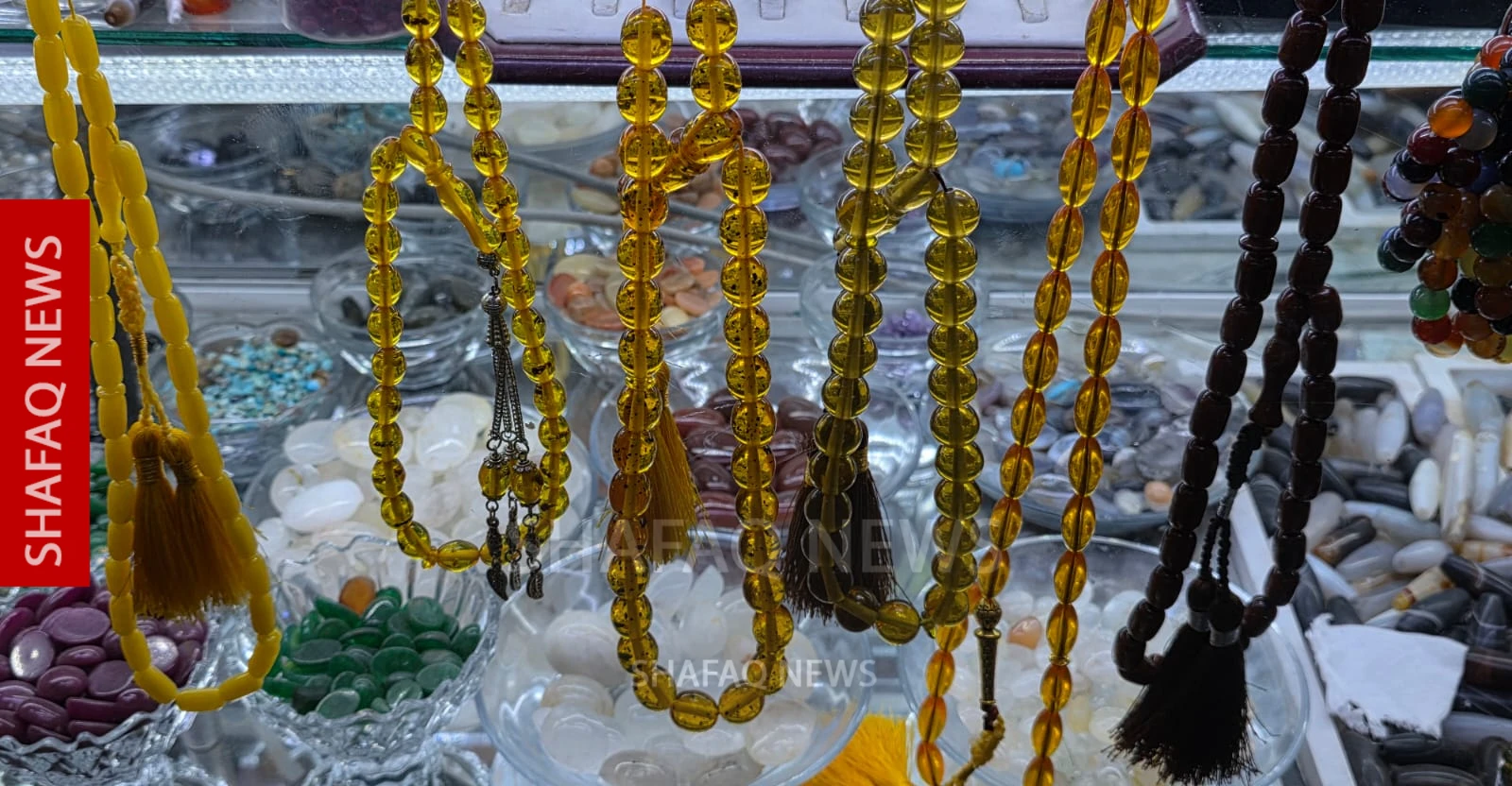
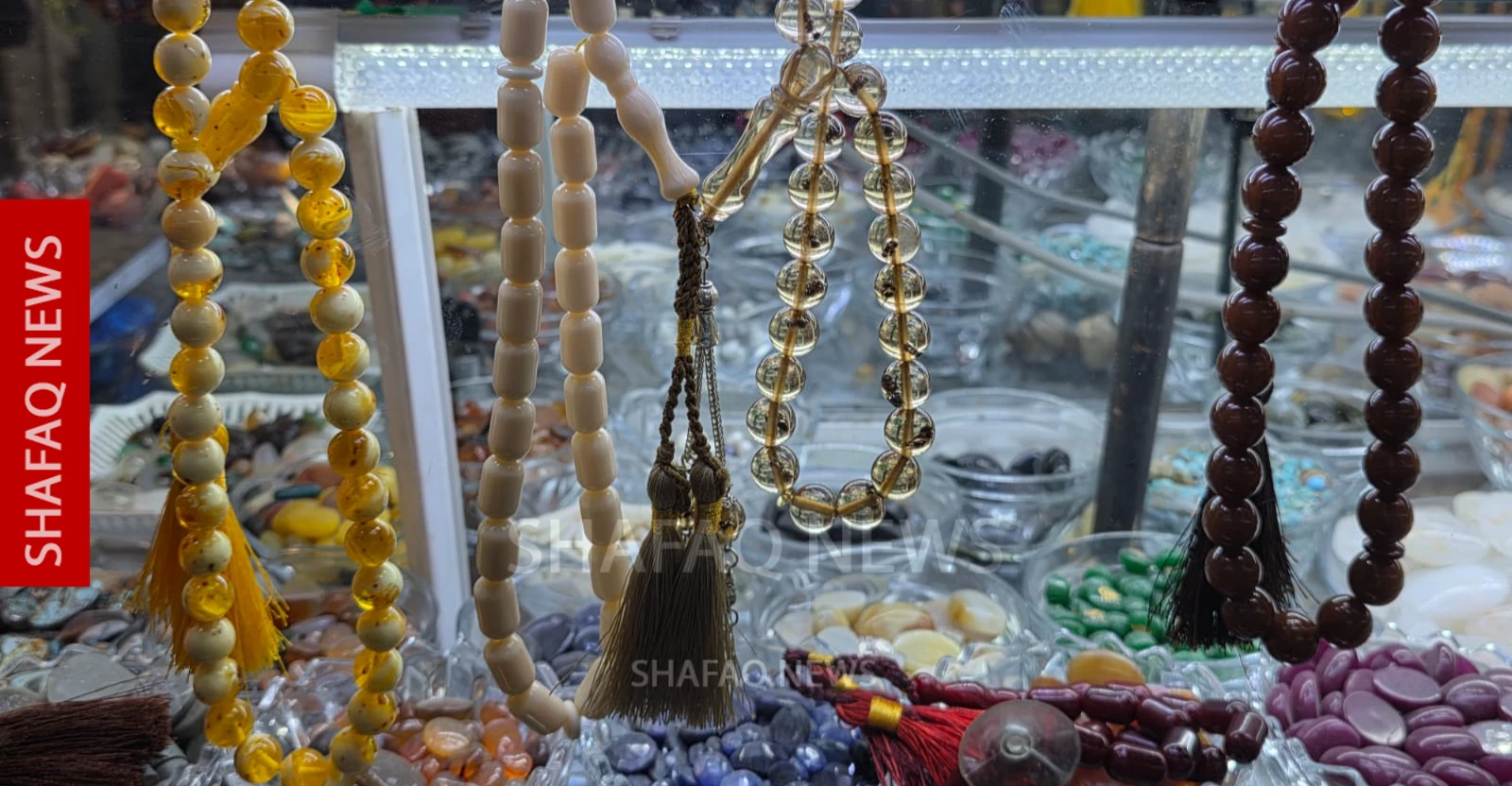
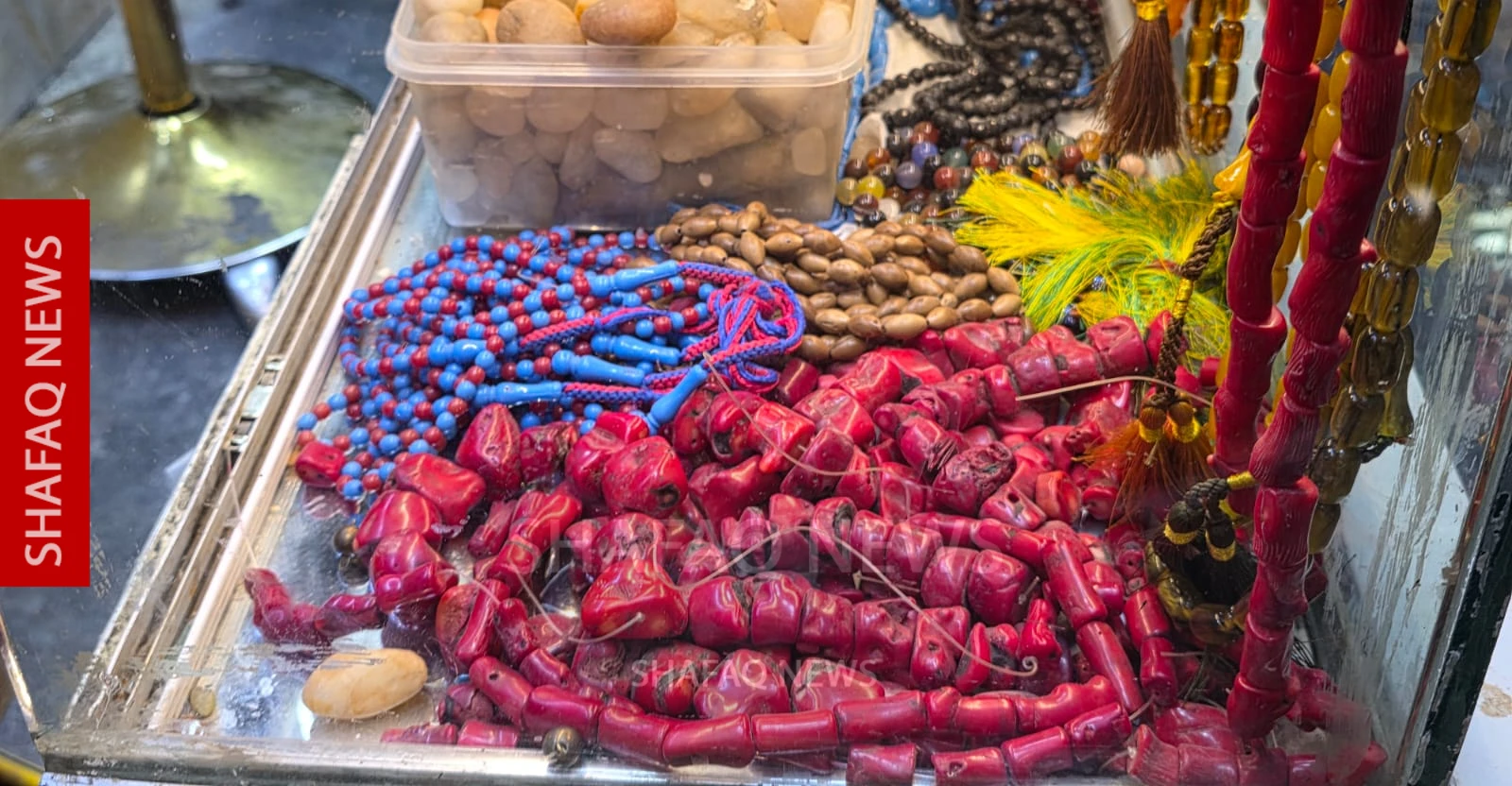
The clearest price evidence he offered was from the adjacent trade in prayer beads. Genuine amber strings once sold for between 10,000 and 20,000 dollars, he said, while Chinese imitations of near-identical appearance now sell for around 60 dollars.
Wearing a stone-set ring is treated by many Iraqi Shiites as a devotional act, supported by narrations attributed to the Ahl al-Bayt, the household of the Prophet Muhammad, whose sayings carry doctrinal authority in Shiite jurisprudence. Muhammad Mustafa, a Najaf seminary cleric, said clerics favor Yemeni aqeeq, durr al-Najaf, and turquoise for that reason.
Prices have climbed noticeably in recent years, Mustafa said, particularly since large quantities of imitation stones entered the market. He advised buying only from established dealers able to distinguish genuine from copied material and that many clerics wear old rings inherited from fathers and grandfathers.
Al-Kharsan drew a firmer line on what the stones can and cannot do. “The widespread belief that a stone can bring fortune, avert misfortune, or change the course of a life has no basis, and that stones do not alter reality.” Practices involving stones, in his view, held to carry assigned supernatural properties belonged to older civilizations, including pharaonic Egypt, and are rare in the Islamic world.
Traditional inscriptions were largely limited to short formulas such as "sovereignty belongs to God" and "as God wills," while older work also carried figures including gazelles, lions, suns, and plants, some tied in earlier civilizations to particular beliefs.
Read more: Discover Iraq: Najaf, a city of dust and divinity