Buried explosives still shape daily life for millions of Iraqis


Shafaq News – Baghdad
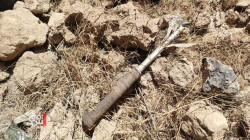
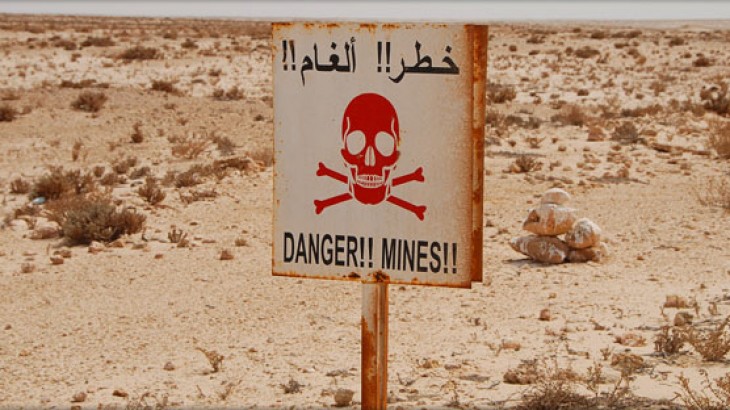
The warning signs are easy to miss. A faded skull-and-crossbones nailed to a fence in southern Iraq. A rusted metal stake on the edge of a field in the Kurdistan Region. A strip of red tape fluttering beside an olive grove. For Iraqis, these are part of the landscape — reminders that decades of conflict have left the ground itself dangerous.
Iraq remains one of the world’s most contaminated countries, according to the International Committee of the Red Cross (ICRC). More than 2,100 square kilometers of confirmed hazardous areas still conceal landmines, cluster munitions, and improvised explosive devices. In Basra province alone, over 1,200 square kilometers remain unsurveyed, including parts of the Shatt al-Arab river zone, with contamination stretching back to the 1990s.
National and international mine-action agencies estimate that up to 25 million explosive remnants remain buried across Iraq — a legacy of past wars, the US invasion, sectarian conflict, and the fight against ISIS.
In the Kurdistan Region, mines laid during the Saddam era sit beside ISIS-era explosives and, increasingly, ordnance left behind after cross-border airstrikes by Turkiye and Iran in mountainous areas such as Sidekan, Qandil, and Amedi. The Iraqi Kurdistan Mine Action Agency (IKMAA) describes these zones as carrying “multiple layers of contamination,” turning ordinary grazing land into long-term hazards.
Since 2004, Iraq’s Ministry of Health has recorded at least 14,835 civilian casualties from explosive remnants, including more than 5,000 deaths. Humanitarian groups believe the toll is significantly higher — closer to 20,000 — because many incidents in remote or rural communities are never officially documented.
Between 2023 and 2024, authorities recorded 78 people killed or wounded by explosive remnants of war. The toll continued into 2025, when three students in Basra’s Abu Khaseib district lost their lives after stumbling upon leftover munitions.
Sixteen were injured in the first quarter of 2024 alone, and minors made up 41 percent of all casualties last year.
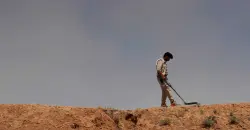
The danger also extends to demining teams, who work under constant life-threatening conditions as they attempt to clear these lethal remnants.
For years, Iraq has worked with international partners — including the United Nations Mine Action Service (UNMAS), the Mines Advisory Group (MAG), and Norwegian People’s Aid — to reclaim contaminated land. These teams have cleared more than 3,200 square kilometers and removed over 2.3 million explosive devices since 2003.
But momentum is slowing. UNMAS Iraq reports a 38 percent drop in clearance activity since 2020 due to reduced funding, bureaucratic complications, and the expiry of a key cooperation agreement in 2023. Eleven major projects have been suspended, including a recovery effort in Mosul’s Old City. More than 420 local deminers have lost their jobs, and nearly 850,000 square meters of high-risk land earmarked for clearance in 2025 now face open-ended delay.
National bodies — the National Mine Action Authority and IKMAA — are still active but stretched thin, with IKMAA operating only 18 teams across five provinces, far fewer than needed to keep pace with new reports of contamination.
Local initiatives are trying to fill the gaps. In Maysan province, the organization Wadi for Peace is training villagers to identify and report suspicious objects; its mobile alert system logged more than 1,400 reports in 2023, leading to 600 confirmed clearances by Iraqi demining teams. In Kirkuk, survivors of landmine injuries have formed a football team called “Tigers Without Borders,” using their matches and school visits to warn families about hidden hazards.
Humanitarian organizations and Iraqi officials say the country risks falling short of its obligations under the Ottawa Treaty unless international support resumes and national investment increases. A newly formed government committee is now reviewing Iraq’s demining strategy in an effort to restore coordination with the UN and revive suspended operations.
Yet for Iraqis, the danger is not abstract since an estimated 8.5 million people still live near contaminated areas, according to Humanity & Inclusion. Clearing heavily damaged cities like Mosul costs roughly six times more than operations in open terrain — about US$180 million annually, including US$50 million for Mosul alone.
In towns, farms, and mountain valleys across Iraq, the reminders remain underfoot. After more than two decades of clearance work, the country’s struggle against hidden explosives is far from over.
Read more: Spoiled by the coil: Iraq's mines battles take their toll