Al-Anbar’s lone brush: Turning pain into art
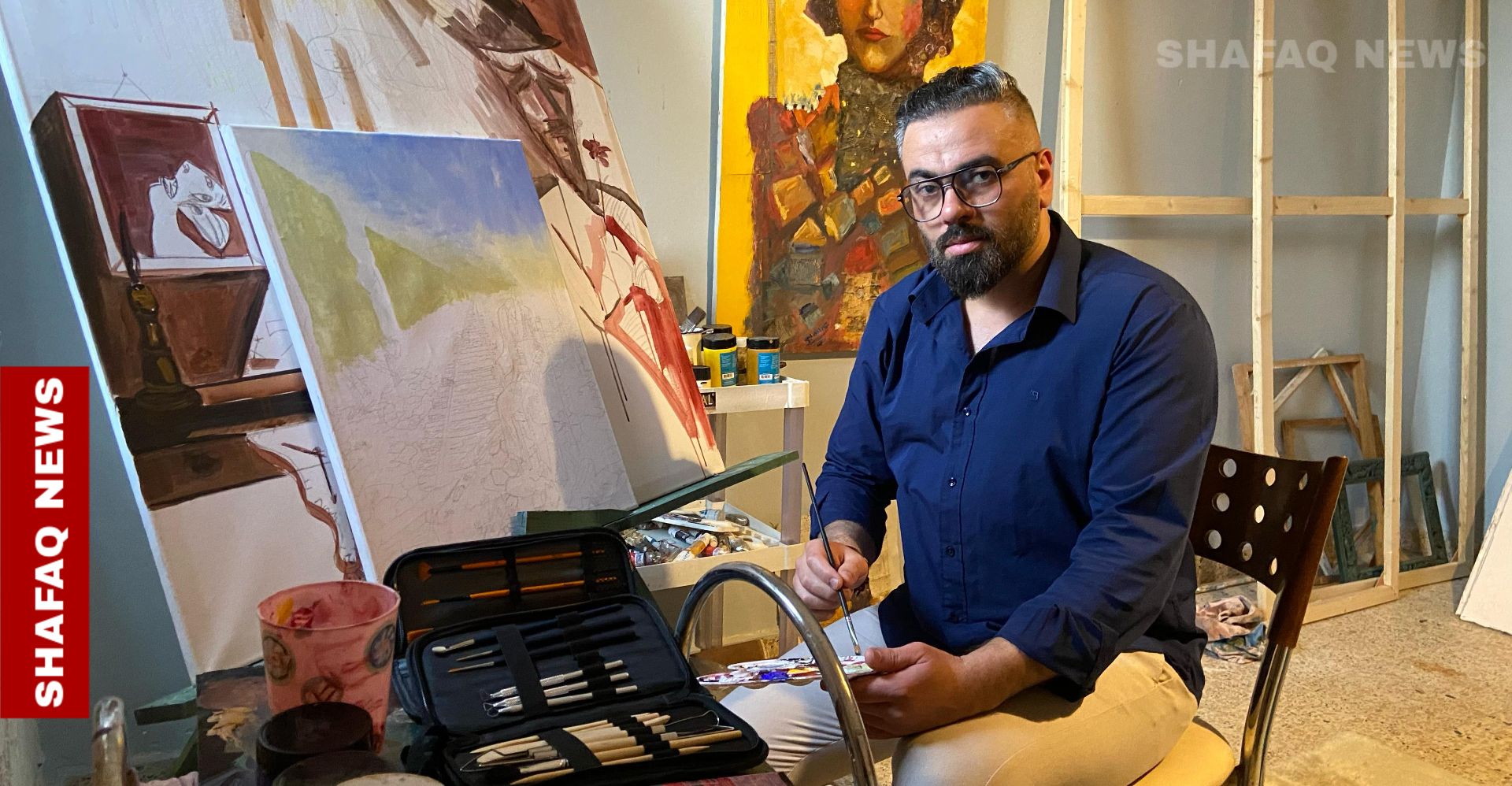


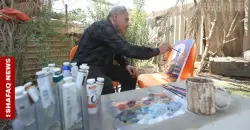
Shafaq News/ In a modest corner of his home in Al-Khalidiya, nestled in Iraq’s war-torn Anbar province, Hussam Al-Rassam paints with the intensity of a silent prayer.
He has no studio in the traditional sense. Instead, he’s transformed a small space into a boundless world where pain, memory, and defiance bleed into the canvas.
Al-Rassam is not just an artist—he is a storyteller with a brush. His work doesn’t chase aesthetics; it pursues truth. Each stroke channels the voices of the unseen, the wounds of the forgotten, and the flickers of hope that survive even in darkness.
He paints the raw textures of loss, the quiet strength of dignity, the innocence of childhood, and the stubborn light of people who refuse to surrender to despair.
What ignited his path wasn’t praise or applause, but a moment of connection—when someone stood before his painting and saw their sorrow reflected.
That silent recognition revealed to him that art isn’t ornamentation; it’s a message, a mission, a lifeline stretched between souls.
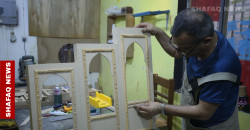
Despite steady requests for commissions—murals, school projects, and custom pieces—he refuses to let his work become mechanical. Each painting bears his fingerprints, shaped not by demand but by conviction. To him, art is not production. It’s existence.
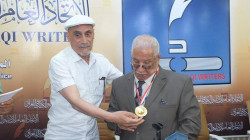
Over the years, Al-Rassam has taken part in several exhibitions across Iraq, with Baghdad offering the most fertile ground for artistic engagement.
Yet his presence in the scene has dimmed—not out of choice, but out of necessity. Support has dwindled, and the space for genuine expression has shrunk under pressure. He speaks of a silent campaign to erase cultural memory and strip communities of their creative identity.
Nowhere is this loss felt more deeply than in Anbar, a province rich in history yet completely devoid of a single art gallery.
To Al-Rassam, this absence cuts deeper than infrastructure failure—it’s a cultural wound, a symbol of neglect that threatens to silence an entire region's voice.
But his vision stretches beyond personal success. He dreams of building a permanent art space—a free school or open studio where talent, especially from marginalized communities, can flourish. He wants art to step outside gallery walls, live with the people, speak their truths, and grow from their stories.
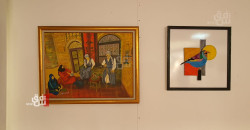
Among his most haunting works is a painting born in a moment of national grief. It carries no comfort, only a stark cry: the story of a city stripped of its honor, its people murdered, its only hope—an apology. It doesn’t seek beauty. It demands memory.
For Hussam Al-Rassam, art is not the destination. It’s where every journey begins—the kind that changes something real.
His message to fellow artists is clear: don’t measure worth in numbers but in growth. Water your talent with discipline and knowledge. Otherwise, it withers.