Podcast Icon Podcasts
Is the Vatican Jubilee living up to its promise?

Is the Vatican Jubilee living up to its promise?

More than 30 million pilgrims are expected to visit The Vatican city this year, to pass through the Holy Door at St Peter's Basilica, opened especially for 2025.

In the Italian capital Rome, which surrounds The Vatican, officials have been planning for years to accommodate the extra tourists, including major disruption for locals, but three months in business leaders are reporting that figures are down 15% on the previous year.

The city's hotel association says accommodation rates are being lowered in the hope it will encourage more non-Jubilee visitors who may have been put off travelling.

But other businesses are cashing in - we hear from faith based tourist groups around the world who say they are doubling their bookings to Rome.

Produced and presented by Daniel Rosney

(Image: Faithful carry a wooden cross on Via della Conciliazione in Rome during the pilgrimage route to the Holy Door of St. Peter's basilica in the Vatican, as part of the Catholic Jubilee Year, on 22/02/25. Credit: Getty Images)

How Finland became a hotspot for defence tech

How Finland became a hotspot for defence tech

We’re in Helsinki to find out why this small, cold, Nordic capital is spawning growing numbers of technologies designed to help countries protect and defend themselves against war.

We meet some of the Finnish defence tech and dual-use start ups attracting global interest, hear why these sorts of businesses have become more attractive for European investors, and dig into the challenges facing the sector.

Presented and produced by Maddy Savage

(Image: A Kelluu airship flying over snowy fields. Image credit: Kelluu)

How the Covid pandemic changed us

How the Covid pandemic changed us

Restrictions and government assistance varied, but for small business owners the challenges were similar.

Five years on, we hear from three entrepreneurs about their experiences - the manager of a tourism company in Tanzania, a bar owner in England, and a former gym owner in the US. What have they learnt? And has it changed the way the operate and make decisions?

If you would like to get in touch with the show, please email: [email protected]

Presenter: Sam Fenwick Producer: Josh Martin

(Image: A coffee shop owner serves a customer in the US. Credit: Getty Images)

Business Daily meets: Benedetto Vigna

Business Daily meets: Benedetto Vigna

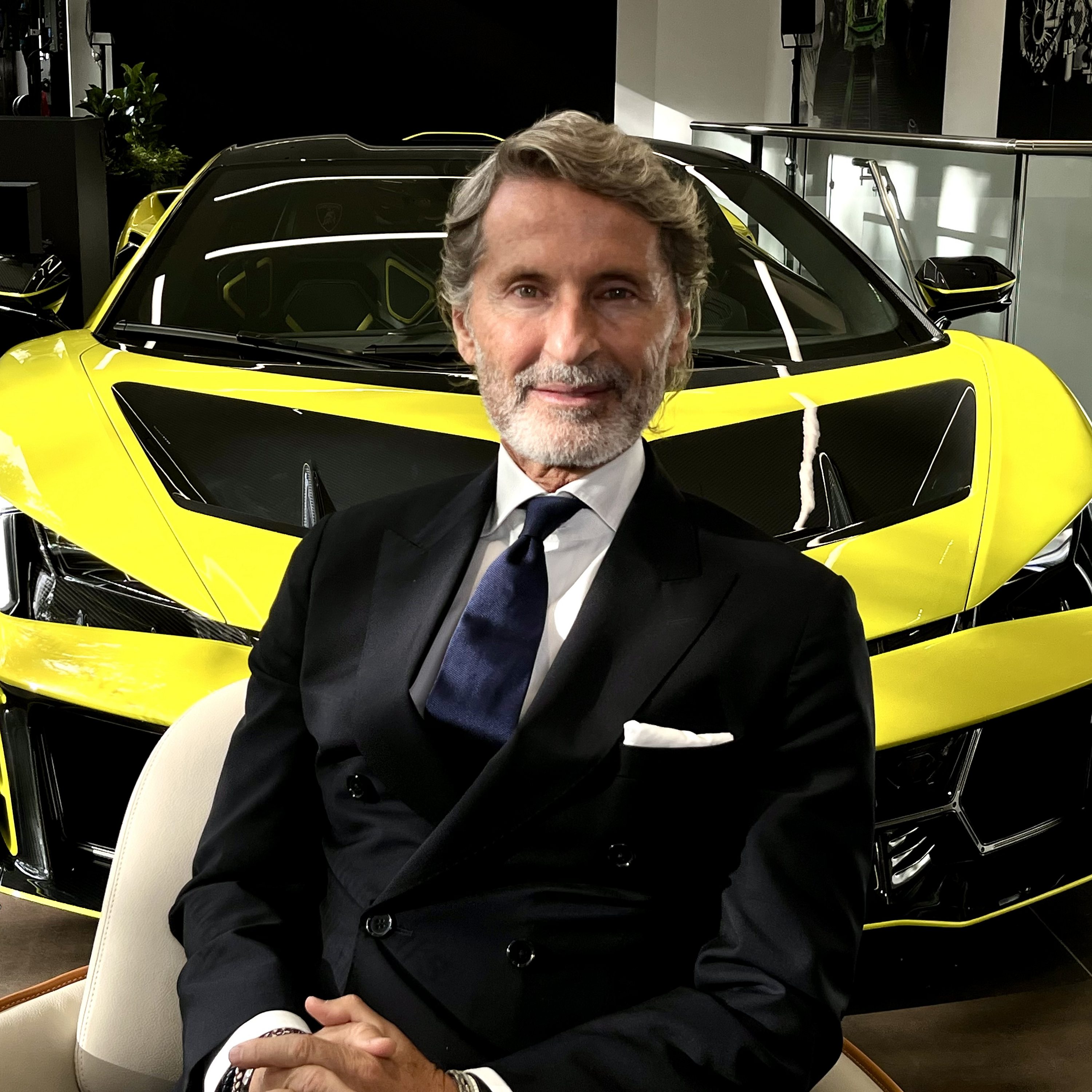
The CEO of the Italian luxury car maker tells Business Daily how his background in physics and electronics is helping him lead the company through unprecedented change, as the furious scream of high-powered petrol engines gradually gives way to the whisper of clean but quiet electric motors.

How can Ferrari stay relevant in a rapidly changing world?

If you would like to get in touch with the show, please email: [email protected]

Presenter: Theo Leggett Producer: Amber Mehmood

(Picture: Benedetto Vigna, CEO of Ferrari, sitting in the company's Mayfair dealership in London, in front of a car. Credit: BBC)

The future of the Olympics

The future of the Olympics

We're in Greece to find out what challenges await the new IOC president Kirsty Coventry - the first woman and first African to hold the most powerful role in sport.

The IOC faces several challenges, including the issue of paying prize money to athletes, finding a host for the 2036 Summer games and climate change.

There are also questions around the future of boxing as an Olympic sport and securing future revenues with NBC's multi-billion dollar deal due to expire after the Brisbane games in 2032 and other sponsorship deals up for renewal.

If you would like to get in touch with the show, please email: [email protected]

Presented and produced by Alex Capstick

(Image: Kirsty Coventry reacts as she delivers a speech after being elected as the new IOC President on Day Two of the 144th International Olympic Committee (IOC) Session on March 20, 2025 in Costa Navarino, Greece. Credit: Milos Bicanski/Getty Images)

Chile's salmon farming puzzle

Chile's salmon farming puzzle

Despite its growing popularity and its success as a global export, the industry is facing a number of challenges.

We found out how the South American country is adapting.

Produced and presented by Jane Chambers

(Image: Workers processing salmon. Credit: Multi Planta)

'Made in Canada': is manufacturing coming home?

'Made in Canada': is manufacturing coming home?

'Made in Canada': Words that are now a common sight on Canadian shelves, after Donald Trump's tariffs sparked a trade war with the country.

The US president has imposed 25% tariffs on steel and aluminium imports from Canada. Trump has also vowed to impose a sweeping range of "reciprocal" tariffs on 2 April.

North of the United States' border, the trade dispute has generated a wave of patriotism, with some consumers and businesses boycotting American products. But what impact has it had on business?

In this programme, we hear from the Canadian firms choosing to bring operations back to Canada and learn about the hurdles along the way.

If you would like to get in touch with the show, please email: [email protected]

Presenter: Sam Gruet Producer: Megan Lawton

(Picture: An employee covers a stack of aluminum billets with plastic. Credit: Getty Images)

USAID: What happened when the funding stopped?

USAID: What happened when the funding stopped?

On his first day in office, President Donald Trump signed an executive order stopping USAID projects worldwide, saying he wants overseas spending decisions to align with his election policy to "put America first".

USAID is the US government's main overseas aid agency and it administers humanitarian aid programmes on behalf of the US government.

It has bases in more than 60 countries and works in dozens of others. However, most of the work on the ground is carried out by other organisations that are contracted and funded by USAID.

The vast majority of projects have been abruptly halted. But what has this decision meant for the people who relied on them? From Kenya’s Lake Victoria to Nairobi’s slums, we explore the profound impact on lives, businesses, and livelihoods.

If you would like to get in touch with the show, please email: [email protected]

Presented and produced by Sam Fenwick

(Image: Little boy walking on railroad tracks with Kibera slum in the background. Nairobi, Kenya. Credit: Getty Images)

Business Daily meets: Sim Tshabalala

Business Daily meets: Sim Tshabalala

Sim Tshabalala is the CEO of one of Africa's largest banks, Standard Bank. In this edition of Business Daily, he tells Ed Butler about his journey from growing up under apartheid in South Africa, to be becoming a lawyer, then investment banker.

He discusses the risks of lending to companies; how the continent is improving its trade relationships; and what he thinks the future of Africa will look like.

If you would like to get in touch with the show, please email: [email protected]

Presenter: Ed Butler Producer: Amber Mehmood

Additional material: Reuters/British Pathé

(Picture: Sim Tshabalala, CEO of Standard Bank Group, speaks at Semafor's The Next 3 Billion Summit at The Pierre Hotel on September 24, 2024 in New York City. Credit: Getty Images)

Myanmar scam: A victim's story

Myanmar scam: A victim's story

We hear from a Sri Lankan woman who was trafficked and forced to conduct illegal online activity, including cyber fraud against vulnerable victims.

Aneka Boram is one of thousands of people who've recently escaped from so-called scam centres. She talks about her captivity and describes the harsh punishments and conditions she was forced to work in.

The scam centres are offices inside Myanmar or Cambodia, where people have been forced to work scamming internet users from around the world.

If you would like to get in touch with the show, please email: [email protected]

Presented and produced by Ed Butler

(Image: Aneka Boram)

Is DEI really dead?

Is DEI really dead?

Many prominent US companies have been pulling back on diversity, equity and inclusion (DEI) initiatives.

US President Donald Trump and his allies have regularly attacked DEI policies.

When he returned to the White House in January, President Trump ordered government agencies to eliminate such initiatives - and it appears some of the country's biggest corporations are following suit.

Presenter: Ed Butler Producer: Lexy O'Connor

(Image: Hands holding "equality for all" cardboard sign". Credit: Getty Images)

How to deconstruct an oil rig

How to deconstruct an oil rig

Thousands of oil and gas rigs are becoming redundant around the world – and taking them out of service, known as decommissioning, is a multi-billion dollar business.

It’s also a complex operation beset by sometimes opposing interests. In this programme, we meet the makers of the world’s biggest ship - a machine at the cutting edge of rig removal, and the visit the port that can recycle over 95% of a rig. As concerns grow over delays to decommissioning in the North Sea and Gulf of Mexico, we look into whether enough progress is being made with removing old rigs around the world.

Produced and presented by Laura Heighton-Ginns

(Image: The Brent Bravo topside oil platform is transported on the barge ‘Iron Lady’ into the mouth of the River Tees on route to the Able UK Seaton Port site for decommissioning on June 20, 2019 in Teesport, England. Credit: Getty Images)

Shafaq Live
Shafaq Live
Radio radio icon