Syria’s Al-Sharaa talks Iraq oil route, Iranian influence


Shafaq News- New York
Syria is developing a project to connect Iraqi oilfields to its Mediterranean ports, transitional President Ahmad Al-Sharaa announced in New York, presenting the route as an alternative export outlet for Baghdad amid disruptions to regional shipping.
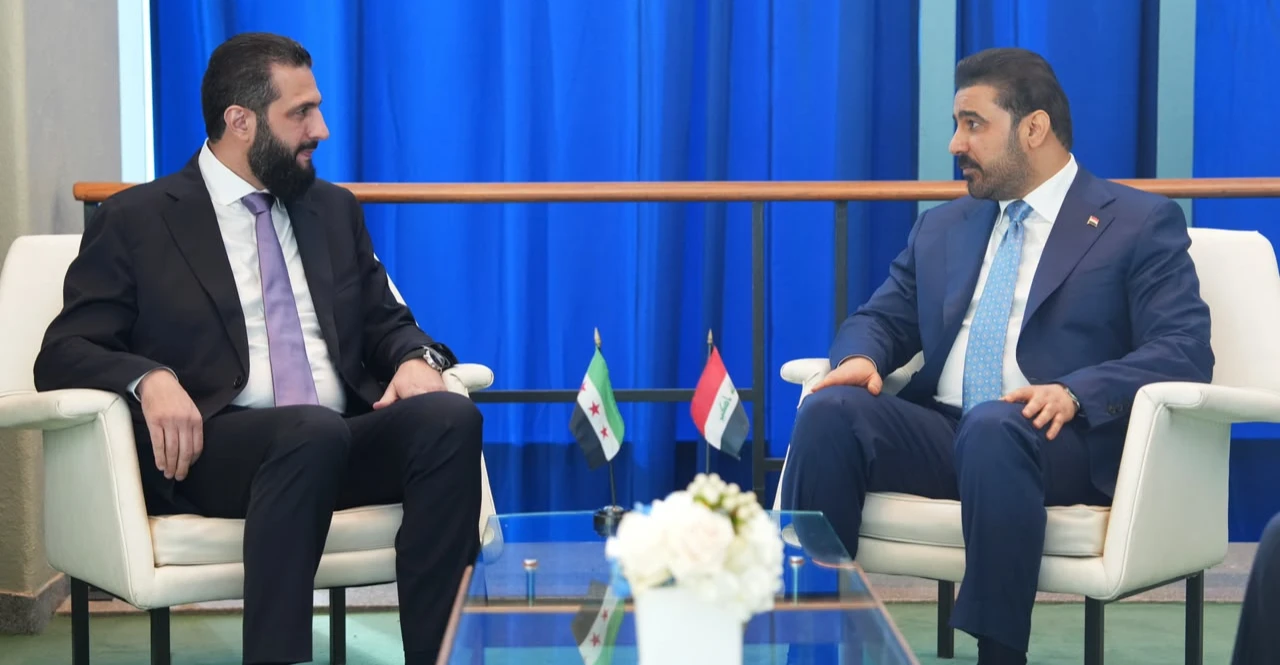
Speaking at an Atlantic Council event after meeting Iraqi Prime Minister Ali Al-Zaidi on Tuesday, Al-Sharaa said Damascus also seeks to provide “safe passage” through Syrian territory for Iraqi goods, particularly oil products. He recalled that an oil link between the two countries had operated since the 1950s before deteriorating political relations brought it to a halt.
“We are trying now to reform the errors and the problems that happened in the past half-century,” he remarked.
Iraq has sought to diversify its crude exports as the US war with Iran disrupts shipments through the Strait of Hormuz, turning to Syria and Turkiye as alternatives to its traditional Gulf outlet.
Read more: Four oil routes could cut Iraq’s Hormuz reliance
Iran And Armed Groups In Iraq
On Iraq’s political landscape, Al-Sharaa argued that the country continues to carry a “very heavy heritage” from the US-led war, which he linked to the expansion of Iranian influence within parts of the state. He also referred to armed groups operating outside state institutions and Al-Zaidi’s efforts to bring their weapons under government control, portraying these issues as among the major challenges inherited by the Iraqi prime minister.
The two leaders held talks in New York on political and security coordination as well as broader economic and trade cooperation.
Read more: Iraq's disarmament deadline pits Baghdad against Iran-aligned factions
Ties With The Kurdistan Region of Iraq
Al-Sharaa characterized Syria’s relations with the Kurdistan Regional Government (KRG) as “very good,” citing economic and security cooperation as well as contacts with Kurdish leaders, including Kurdistan Democratic Party leader Masoud Barzani and Kurdistan Region President Nechirvan Barzani.
“I believe this is something that we are still in the beginning of this relation and we can build on that for the future,” he added.
He further credited the KRG with assisting efforts to integrate the Syrian Democratic Forces (SDF) into Syrian state institutions, a key issue in negotiations over the future of northeastern Syria.
Read more: Kurds in Syria: From marginalization to a defining political force