Ghalibaf warns dams near US bases are "dual-use" too



Shafaq News- Tehran (Updated at 13:22)
Iranian parliament speaker Mohammad Bagher Ghalibaf warned on Tuesday that, under the same logic used to describe dams near Iranian missile sites as “dual-use,” dams, ports and power plants near US and Israeli bases should be treated the same way.
In response to a New York Times report suggesting that some of Iran's dams may have been built to support its missile program, Ghalibaf said that Washington and Israel are "prepping the next round on civilian infra," accusing them of using experts quoted by the newspaper to cast "dams near Iran's missile sites" as "dual-use."
Iranian Foreign Ministry spokesman Esmaeil Baqaei dismissed the report's suggestion as "baseless allegations" and "yet another example of a malicious campaign to manufacture propaganda and security pretexts aimed at justifying attacks on a country's vital infrastructure."
During the recent US and Israeli strikes on Iran, water reservoirs in Khomeyn in Markazi province, Haftkel in Khuzestan and Bamani near Sirik were hit, along with desalination plants on Qeshm Island, in Nikshahr and Tis in Sistan and Baluchestan province, and in the village of Banji near Jask, Baqaei said in a statement. The attacks disrupted or cut off water supplies to civilians and residential areas, he said.
He cited Article 56 of Additional Protocol I to the Geneva Conventions, which gives special protection to dams and similar installations, warning that Iran "knows well how to respond to any act of aggression."
What the Report Says
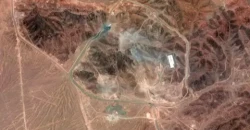
The New York Times reported on Monday that some analysts now believe Iran's large network of dams and water-transfer projects, long a puzzle to environmentalists because many were built in areas with no clear need for them, may have been developed partly to support underground military facilities, including missile sites.
The report said the idea gained ground after US and Israeli airstrikes this year on concealed missile sites hit many of the same areas where the dams are located. It stressed that, given the secrecy around Iran's missile program, any link remains speculative, though some experts consider the evidence highly suggestive.
Nima Shokri, a water security expert at the Hamburg University of Technology in Germany whose team has tracked at least 533 dams in Iran, told the newspaper that a map of airstrikes on suspected military sites closely matched his own map of dam locations. Seven water and military experts interviewed by the Times said it would be logical to place sprawling military sites near the steady water and power supplies that dams provide. A former Iran analyst for Israeli military intelligence, Danny Citrinowicz, said such placement would give Tehran "operational continuity."
Shokri also cautioned that many of Iran's dams serve essential civilian purposes, including water supply, irrigation and hydropower, in a water-scarce country, and that any potential military role should not overshadow those functions, the newspaper reported.
Iran calls its fortified underground missile bases "missile cities." Farzin Nadimi, a senior fellow at the Washington Institute, estimated there are at least 30 such sites across the country, according to the report.
Iran's Foreign and Energy ministries and the Revolutionary Guards did not respond to the newspaper's requests for comment.
The baseless allegations seeking to link Iran’s dams to missile bases constitute yet another example of a malicious campaign to manufacture propaganda and security pretexts aimed at justifying attacks on a country’s vital infrastructure. During the recent acts of aggression by the USrael against Iran, water storage reservoirs in Khomeyn (Markazi Province), Haftkel (Khuzestan Province), and Bamani (Sirik), as well as desalination facilities on Qeshm Island, in Nikshahr and Tis (Sistan and Baluchestan Province), and in the village of Banji in Jask, were targeted. These attacks disrupted or cut off water supplies to civilian populations and residential areas. Portraying the geographical proximity of civilian infrastructure to military facilities as grounds for designating it a legitimate military target is neither a credible argument nor a substantiated claim. Rather, it is a sinister fallacy intended to legitimize attacks against civilian infrastructure and normalize grave violations of international humanitarian law. Although the United States today appears to maintain, with an air of arrogance and a medieval mindset, that the law need not be invoked when dealing with those who wield the sword, international humanitarian law - particularly Article 56 of Additional Protocol I to the Geneva Conventions - provides special protection for dams and similar installations. Those who initiated the aggression against Iran are now seeking to lay the media groundwork for their sinister designs by manufacturing and disseminating baseless allegations, including the recent claims published by The New York Times and the fabricated media narrative surrounding an alleged “dirty bomb” propagated by CNN. Step by step, they are attempting to manufacture a veneer of legitimacy for further aggression and atrocities. Iran knows well how to respond to any act of aggression and ensure that it is met with an unforgettable response. The international community, however, must recognize that silence and appeasement in the face of sinister campaigns to normalize flagrant violations of international legal norms and fundamental humanitarian and moral principles will have devastating consequences - not merely for the region, but for humanity as a whole.
— Esmaeil Baqaei (@IRIMFA_SPOX) November 17, 2026
Prepping the next round on civilian infra, their “experts” tell NYT: “dams near Iran’s missile sites are dual-use.” Cool. New rule: Any dam, port, or power plant near a US or Israeli base is dual-use. We’ll apply your logic consistently and even-handedly. https://t.co/ynpDMvgLSV
— محمدباقر قالیباف | MB Ghalibaf (@mb_ghalibaf) November 17, 2026