Wednesday's US-Saudi attack on Iraq: What Is Known


Shafaq News- Baghdad
What Happened
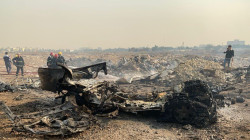
Oil facilities in Saudi Arabia's eastern province, the kingdom's main crude-producing hub, were targeted earlier this week. The Saudi authorities accused Iran-aligned Iraqi armed factions of launching the attack; and hours later, the kingdom and the United States carried out joint airstrikes on sites in Iraq belonging to the factions, which the Iraqi Popular Mobilization Forces (PMF) said killed at least 20 of its members across Baghdad, Wasit, Nineveh, Basra, Kirkuk, Karbala, and Diyala.
The accounts differ on two points: who carried out the attacks on Saudi Arabia, and whether they were launched from Iraqi territory or from Yemen.
Who Says What
Saudi Arabia accuses Iran-aligned Iraqi factions of involvement and, per assessments reported by Reuters, says some attacks were launched from Iraqi soil jointly with the Houthis under Iranian supervision.
The Iraqi factions have not responded to this accusation; a day before the strikes, they had denied responsibility for a specific earlier incident, but have said nothing on the current charge.
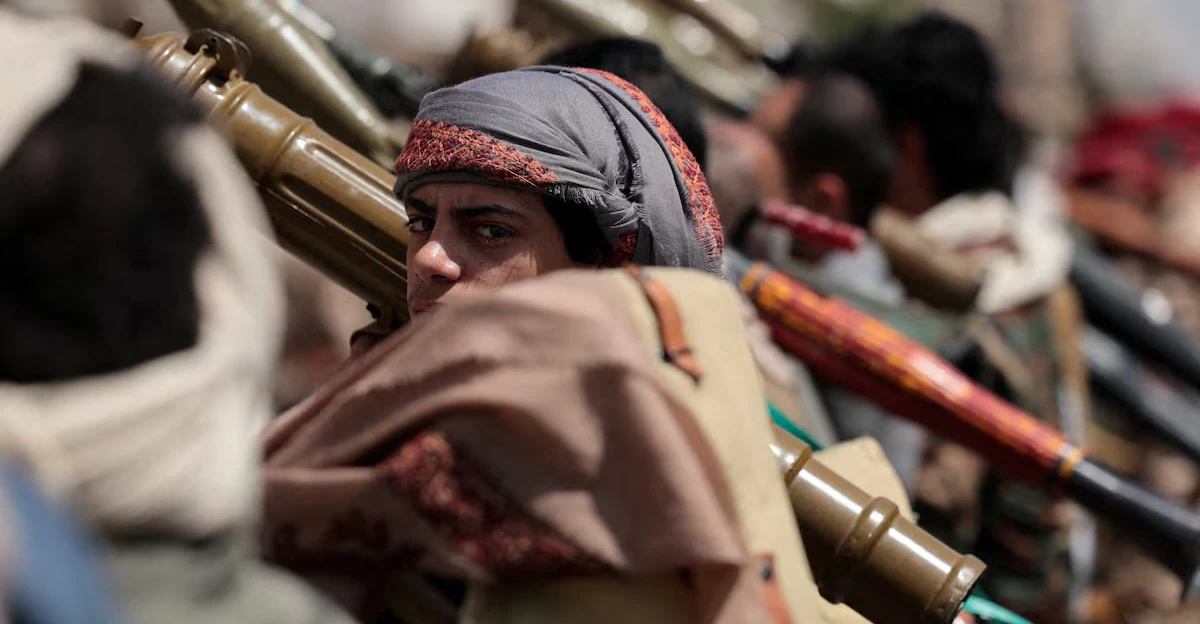
The Houthis, through political bureau member Abdullah al-Numi, told Shafaq News that they alone carried out the attacks and that the Iraqi factions were not involved, pointing out that the movement had claimed earlier operations against Saudi facilities, including at Yanbu and Jizan.
The Houthis describe their attacks as a response to Saudi operations in Yemen and an attempt to break what they call a Saudi "siege." Riyadh has denied imposing a siege, pointing to the arrival of dozens of ships at Houthi-controlled ports this year.
The Iraqi Factions' Response
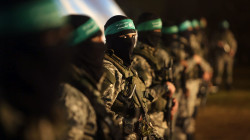
Rather than claim or deny responsibility for the attacks on Saudi Arabia, the Iran-aligned Iraqi factions have largely met the strikes with condemnation and demands for government action. Ashab al-Kahf, Saraya Awliya al-Dam, Harakat al-Nujaba, Asaib Ahl al-Haq, and the Badr Organization each denounced the assault in separate statements, some calling for the full withdrawal of foreign forces from Iraq, the severance of diplomatic and economic ties with Saudi Arabia, and the expulsion of the Saudi ambassador. Kataib Hezbollah, regarded as the largest Iran-aligned group in the country, had yet to comment.
All together under the umbrella of the Islamic Resistance in Iraq gave the government until August 6 to show it could defend Iraqi sovereignty, warning of an "inevitable" response.
The Key Players
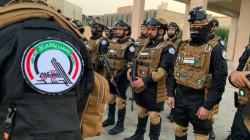
The Houthis are the Iran-aligned movement that controls much of Yemen. The PMF is a state-backed paramilitary umbrella in Iraq that includes Iran-aligned factions. Both are widely described as parts of a network of Iran-aligned groups across the region. The Houthis and Iraqi factions have a documented history of ties: in 2024, Houthi leader Abdul Malik al-Houthi announced a joint operations room with Iraqi factions, and the two sides later reported their first joint operation targeting Israel.
Who Was Killed
A Houthi official, Ahmed al-Gunaid, said a movement commander, Mohammed Khalid al-Ayyashi, was killed in Wednesday's strikes, attributing his death to Saudi Arabia, without specifying the location of the targeting. Saudi broadcaster Al-Arabiya, citing unnamed sources, reported that al-Ayyashi died in Iraq alongside several IRGC advisers whose bodies were transferred to Tehran.
The New York Times, citing a US official, reported that strikes in Iraq killed about 20 Iranian advisers, including IRGC members and technical advisers. Iran's Mehr news agency separately said that four IRGC members had been killed in the strikes.
The PMF put its preliminary toll at 20 members killed and 32 wounded in strikes across seven provinces.
Neither Houthis nor the Islamic Resistance in Iraq officially revealed casualties.
Why Iraq Matters Here
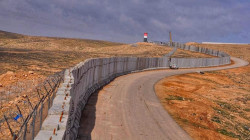
Iraq's border with Saudi Arabia runs more than 800 kilometers (500 miles) and is difficult to police, and Gulf officials have previously traced attacks to groups operating from Iraqi soil, among them a drone attack in March on the US embassy in Riyadh and a strike in May on the UAE's Barakah nuclear power plant. The Islamis Resistance in Iraq (IRI) did not claim responsibility for either. The Iraqi government has said it is investigating, but has released no findings.
In 2024, however, the IRI claimed more than 180 attacks on US forces at bases in Iraq, Syria, and Jordan, including the strike on the Tower 22 outpost.
The Iraqi Government's Position
Iraq's federal government has said it is investigating the recent attacks and the Saudi accusation, but has not named any faction as responsible, assigned blame, or announced any action against the groups Saudi Arabia accuses. Prime Minister Ali al-Zaidi canceled a visit planned for July 30 to Saudi Arabia, where he had been due to meet Crown Prince Mohammed bin Salman, after the strikes on Iraq. Al-Zaidi has separately set out a plan to bring all weapons in the country under state control by the end of September, which some armed factions oppose.