Where the Kurdistan Region of Iraq stands as split fears grow


Shafaq News
The Kurdistan Region of Iraq (KRI) is facing its deepest political rupture in years, as a dispute between its two ruling parties has revived fears of a return to the rival administrations that divided it in the 1990s.
The Patriotic Union of Kurdistan (PUK) has pulled out of the Kurdistan Regional Government (KRG) and threatened parallel institutions in areas under its control, while its rival, the Kurdistan Democratic Party (KDP), has pressed ahead with reviving parliament without it.
How The Crisis Unfolded
The October 20, 2024, KRI elections left neither party able to govern alone. The KDP won 39 seats in the 100-seat parliament and the PUK 23, and for two years the two failed to agree on a new government, deadlocked over the distribution of posts and the powers that would come with them. Prime Minister Masrour Barzani’s outgoing cabinet stayed on in a caretaker role.
On November 4, parliament resumed its unfinished inaugural session from December 2024, with 52 lawmakers attending despite official boycotts by the PUK and New Generation. Also, six lawmakers elected on PUK and New Generation lists attended despite their parties’ boycott. Some had already declared themselves independent or severed party ties.
The KDP said reviving parliament was not aimed at any party and was needed to protect the institutions.
The PUK responded the next day. Its leader, Bafel Talabani, announced the party’s withdrawal from the government, said it no longer recognized parliament’s proceedings, and warned that the PUK would appoint its own president, prime minister, and ministers if the KDP named its own.
The PUK and New Generation have jointly challenged the November 4 session before Iraq’s Federal Supreme Court, seeking to have it annulled. Separately, the court has rejected another bid to suspend the parliament’s activities, filed by National Stance Movement (Halwest) official Ali Hama Saleh.
Petition And Protests
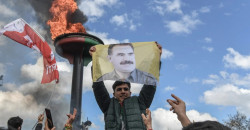
On November 15, an activist in Al-Sulaymaniyah, Bekhal Sabir Penjweni, launched a petition campaign seeking autonomous federal-region status for the province. A day later, protesters rallied in the city to affirm that Al-Sulaymaniyah is part of the Kurdistan Region, rejecting what they called political agendas that run against residents’ wishes.
The PUK has not formally endorsed the campaign.
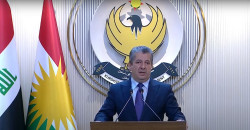
Masrour Barzani has vowed to oppose any attempt to weaken or divide the KRI, while the KDP said it was working toward talks with the PUK after an appeal for reconciliation from its leader, Masoud Barzani. Talabani dismissed Barzani’s public call for dialogue as “not serious,” saying his party would review and respond to a formal request for a meeting.
Iran, which shares a long border with Al-Sulaymaniyah and Halabja provinces, has also weighed in. Mohammed Haji Mahmoud, secretary-general of the Kurdistan Socialist Democratic Party, also known as Kaka Hama, said that an Iranian delegation that recently visited the KRI told Kurdish leaders that Tehran rejects any return to two separate administrations. Mahmoud, a KDP ally, urged both parties to preserve the KRI’s unity, noting that they had overcome far more serious disputes in the past, including armed conflict, and welcomed Masoud Barzani’s call for dialogue.
What The Law Says
Iraq’s 2005 constitution recognizes the Kurdistan Region as a single federal entity and provides no mechanism for dividing it into party zones. Under the constitution, provinces can form a new region only through a referendum, triggered by a request from a third of a provincial council’s members or a tenth of its voters.
If Al-Sulaymaniyah and Halabja broke away without winning recognition as a separate federal region, they could end up as ordinary Iraqi provinces with far fewer powers.
Talabani has since moderated the immediate prospect of a formal split, telling The National that talk of two separate governments was “jumping the gun” and ruling out violence. But he has also argued that the Kurdistan Region already functions through “two governments and two administrations.”
A Divide With Deep Roots
The two parties fought a civil war in the mid-1990s and ran separate administrations from Erbil and Al-Sulaymaniyah until the KRI’s governments were unified in the 2000s. Even since then, each has dominated its own zone. The KDP holds sway in Erbil and Duhok, while the PUK dominates Al-Sulaymaniyah and Halabja. The Peshmerga forces of both parties were folded into a single command under the Ministry of Peshmerga Affairs only in September, though sources told Shafaq News that both parties retain significant influence over security in their areas.
The rift is also spilling into negotiations over the 2027 federal budget. A source familiar with the talks told Shafaq News that some Kurdish officials have proposed separate allocations for Erbil and Al-Sulaymaniyah if the political division deepens, a proposal that has complicated efforts to finalize both the Kurdistan Region’s share and the wider federal budget.
A security source said political forces in Baghdad are themselves divided over the idea, with some supporting separate allocations and others insisting that the Kurdistan Region continue to be treated as a single budgetary entity. The debate comes despite Masrour Barzani saying on November 9 that he and Iraqi Prime Minister Ali al-Zaidi had agreed on a single allocation covering all parts of the Kurdistan Region.
Read more: The evolution of Kurdish power in Iraq: Governance, oil, and constitutional ambiguity