US pressure cannot halt Iraq-Iran trade, expert says


Shafaq News- Baghdad
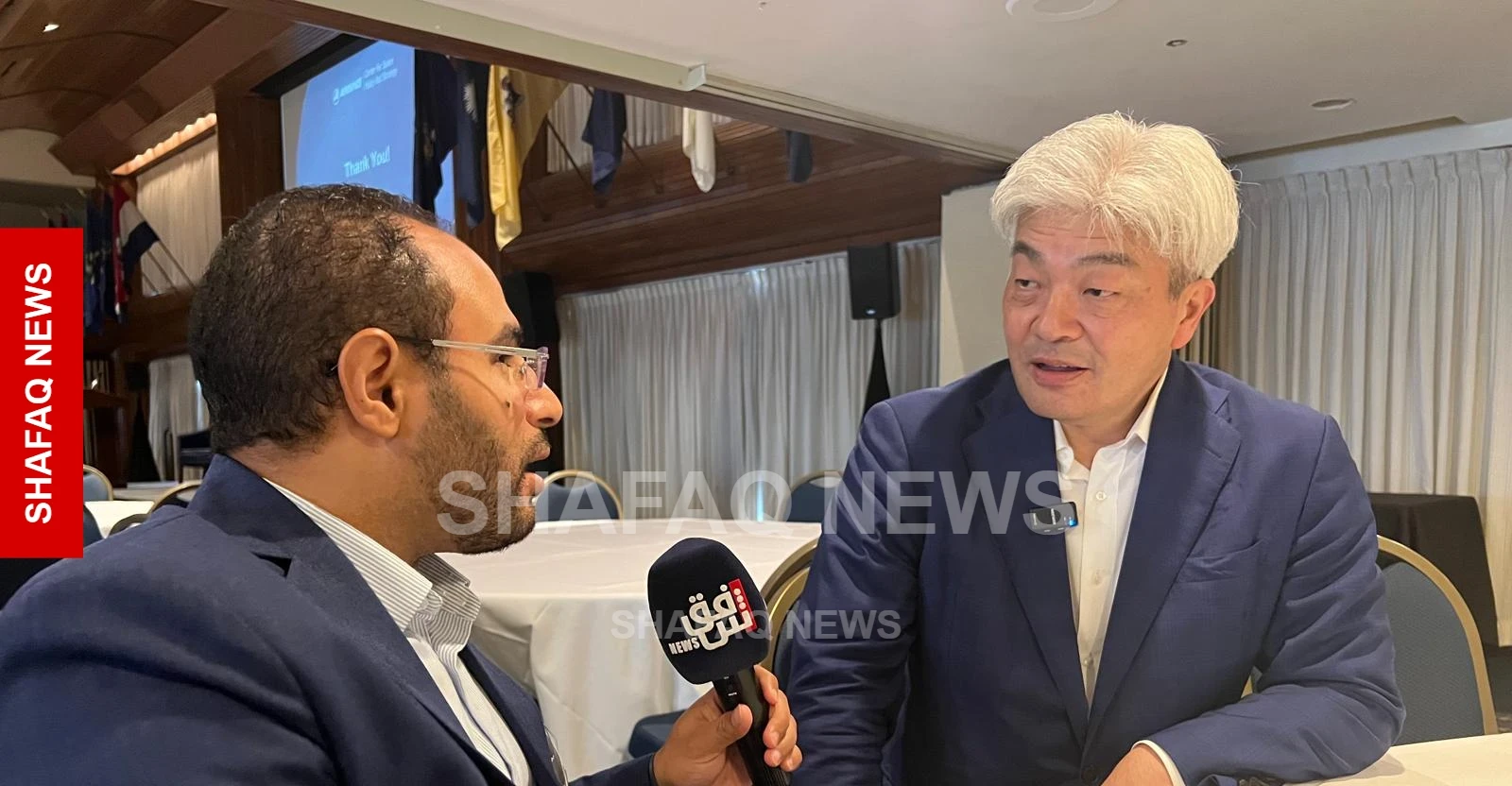
US financial pressure on Iraqi banks cannot stop trade between Iraq and Iran, because most of that commerce moves outside the dollar and beyond Washington's reach, Japanese sanctions expert Kazuto Suzuki* told Shafaq News.
More than six months into the US-Iran war, which began with US and Israeli strikes in late February, Washington has widened its sanctions campaign. Suzuki argued that the measures have failed to give the United States enough leverage to force major concessions from Tehran, with Iraq illustrating the limits of that pressure.
Suzuki's assessment contrasts with Washington's portrayal of its latest measures as an intensified effort to disrupt Iran's remaining financial networks.
On August 24, the US Treasury launched Operation Economic Outcast, designating nearly 60 entities, individuals and vessels based in Hong Kong, China, Malaysia, the United Arab Emirates, Singapore and elsewhere for facilitating Iranian sanctions evasion, and widening the sectors exposed to secondary penalties.
Days later, it moved to cut the UAE branches of Egypt's Banque Misr off from the US dollar system, and on September 4 it sanctioned Turkiye's Golden Global Bank and two subsidiaries, accusing them of moving Iranian oil revenue from China through Turkiye and converting it into cash and gold for the Islamic Revolutionary Guard Corps-Quds Force.
Suzuki did not dispute the breadth of the campaign. His argument was about its marginal effect: after years of adapting to American restrictions, Iran has little left to lose from another round. "The United States has made a very big statement, but the economic impact is very small," he told Shafaq News.
Where Iraq Fits
Iraq is where that limit is most visible. Suzuki called it the "weakest link" in enforcement, citing a long border he compared to those of Afghanistan and Pakistan, informal commercial networks, and the availability of financial channels outside the dollar. Washington has pressed Iraqi banks over illicit dollar transfers to Iran, but he said those controls can only reach transactions that use the dollar in the first place.
Traders on both sides can settle in gold, cryptocurrency, local currencies, and informal transfers built on commercial ties that long predate the dollar, he said, which means pressure on Iraqi banks constrains a channel Baghdad and Tehran can route around.
Suzuki framed this as a structural limit on enforcement rather than a claim that all such trade is illicit and cautioned that nominal measures against Iraqi institutions would not necessarily halt the underlying flow of goods or money.
Read more: After Washington’s warning: What’s next for Baghdad–Tehran economic ties?
The China Obstacle
Scaling the pressure up, in Suzuki's account, would require Washington to blacklist major Chinese banks and companies, and it will not. Although the Treasury has sanctioned smaller facilitators in China and Hong Kong, targeting large Chinese institutions would carry high costs for the American economy at a moment when Washington depends on Chinese rare-earth minerals, and would invite retaliation from Beijing. That dependence, he argued, removes the only instrument heavy enough to change Iran's calculations and leaves Tehran free to keep trading with its largest customer.
Secondary sanctions on other partners carry the same defect. Suzuki described them as a "double-edged sword," saying penalties on Turkiye or the Gulf states over their trade with Iran would cost Washington more in strained alliances than they would deliver in leverage. He noted that the UAE has cooperated voluntarily, while Turkiye, which profits from its trade with Iran, has not; the Banque Misr and Golden Global actions show partner-country institutions are not exempt, but a broader campaign against Turkish commerce, he argued, would produce more diplomatic damage than gain.
Limits of Economic Pressure
Economic pressure alone will not collapse Iran's political system, Suzuki said. Sanctions have worsened living conditions and fed public anger, and the authorities have used force against protests, but unilateral US measures also let Tehran blame Washington for the country's hardship and rally resistance to outside coercion.
He drew a contrast with the period before the 2015 nuclear deal. Many Iranians who backed Hassan Rouhani in 2013 wanted both sanctions relief and a break from the nuclear policies of former President Mahmoud Ahmadinejad, and the sanctions then carried international legitimacy.
Today's restrictions are largely unilateral US measures imposed after President Donald Trump withdrew from the Joint Comprehensive Plan of Action in 2018, which Suzuki said makes them easier for Tehran to portray as unjustified. The 2024 election of President Masoud Pezeshkian reflected a desire for relief, he added, but not acceptance of Trump's claim that more pressure could yield a better agreement.
The Hormuz Question
On the prospect of Trump securing an accord more favorable than the JCPOA, Suzuki was blunt: "The answer is no." A deal requires agreement between two parties, he said, and Iranians are not prepared to concede to American pressure.
He pointed to the memorandum of understanding, known as the Islamabad Memorandum, signed at the Palace of Versailles on June 17, as evidence that Washington ultimately had to negotiate. Under its terms, it extended a ceasefire, provided for reopening the Strait of Hormuz to toll-free shipping and lifted a naval blockade, according to the White House; Suzuki read those provisions as concessions to Tehran rather than proof that pressure works. That ceasefire has since collapsed, and US and Iranian forces were still exchanging strikes around the Strait this week.
The waterway is itself in dispute. Washington says it controls the Strait and that the June deal restored free navigation. Suzuki disagreed, distinguishing the ability to intercept ships leaving Iranian ports from the ability to protect commercial vessels along the Omani side, which he said the United States has failed to do.
With attacks continuing and insurers reluctant to enter, he argued, control belongs to whoever can make the route unusable. "The Americans are not in control; the Iranians are," he said.
A Regional Security Gap
That gap, in his view, points beyond the current war. With US credibility strained by a fight it has not won, and China unwilling to act as anything more than a customer, Suzuki said the Gulf states are being pushed toward building their own security arrangement, one that would have to include Iran, Saudi Arabia, the UAE, Qatar and others rather than rely on either great power.
China has the economic weight to invest across the region, he said, but no appetite to become its military guarantor; in his account, Beijing treats the war as an opportunity, buying Iranian oil at a discount and selling Tehran satellite imagery and other goods.
The Gulf states are not without leverage of their own, Suzuki argued. As the parties with most to lose from a closed Strait, they can press Washington directly by tying an end to the war to lower oil prices and to Trump's standing before the midterm elections and can pump more crude while the waterway stays open. Persuading both Washington and Tehran to keep it open, he said, is where their influence is greatest.
The Remaining Option
Washington's approach, Suzuki argued, has run through a familiar sequence of sanctions, then military action, then negotiation, and the first two rungs are now exhausted. "The economic sanctions do not work, and the military option does not work," he said. "Then the only option is to negotiate."
*Kazuto Suzuki is a professor of science and technology policy at the University of Tokyo's Graduate School of Public Policy and served from 2013 to July 2015 on the United Nations Panel of Experts that monitored sanctions on Iran.